
Care & Maintenance Guide
Expert guidance for keeping your natural stone, engineered quartz, and porcelain surfaces beautiful for a lifetime. Material-specific tips, product recommendations, and best practices.
Stone Care & Maintenance
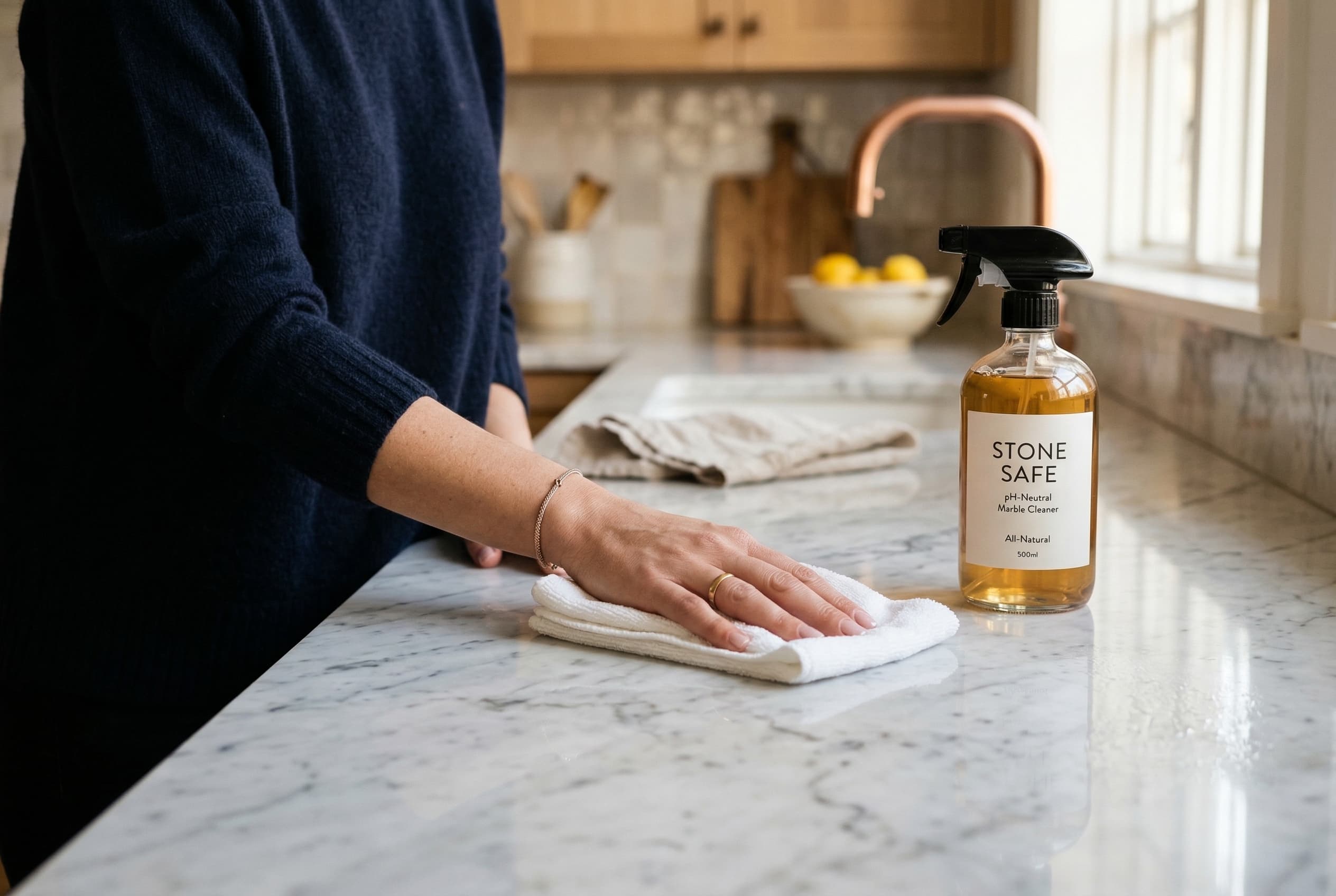
Marble
Every 6-12 months, depending on use and exposure
Use pH-neutral stone cleaners only — never vinegar, lemon, or acidic products.
Wipe up spills immediately, especially wine, citrus, coffee, and tomato sauce.
Use cutting boards and trivets at all times to prevent scratches and heat marks.
Blot spills rather than wiping to prevent spreading the liquid into the pores.
Apply an impregnating sealer to protect against staining without altering appearance.
Light etching can be polished out with marble polishing powder — keep some on hand.
- +Seal regularly with a premium impregnating sealer
- +Clean with warm water and a soft cloth for daily maintenance
- +Use coasters under glasses, especially with acidic drinks
- +Blot spills immediately — time is critical with marble
- +Use stone-specific cleaners from reputable brands
- −Never use vinegar, lemon juice, or bleach on marble
- −Avoid abrasive scrubbers or scouring pads
- −Do not place hot pots or pans directly on the surface
- −Never use generic bathroom or kitchen cleaners
- −Avoid letting standing water pool on the surface
Granite
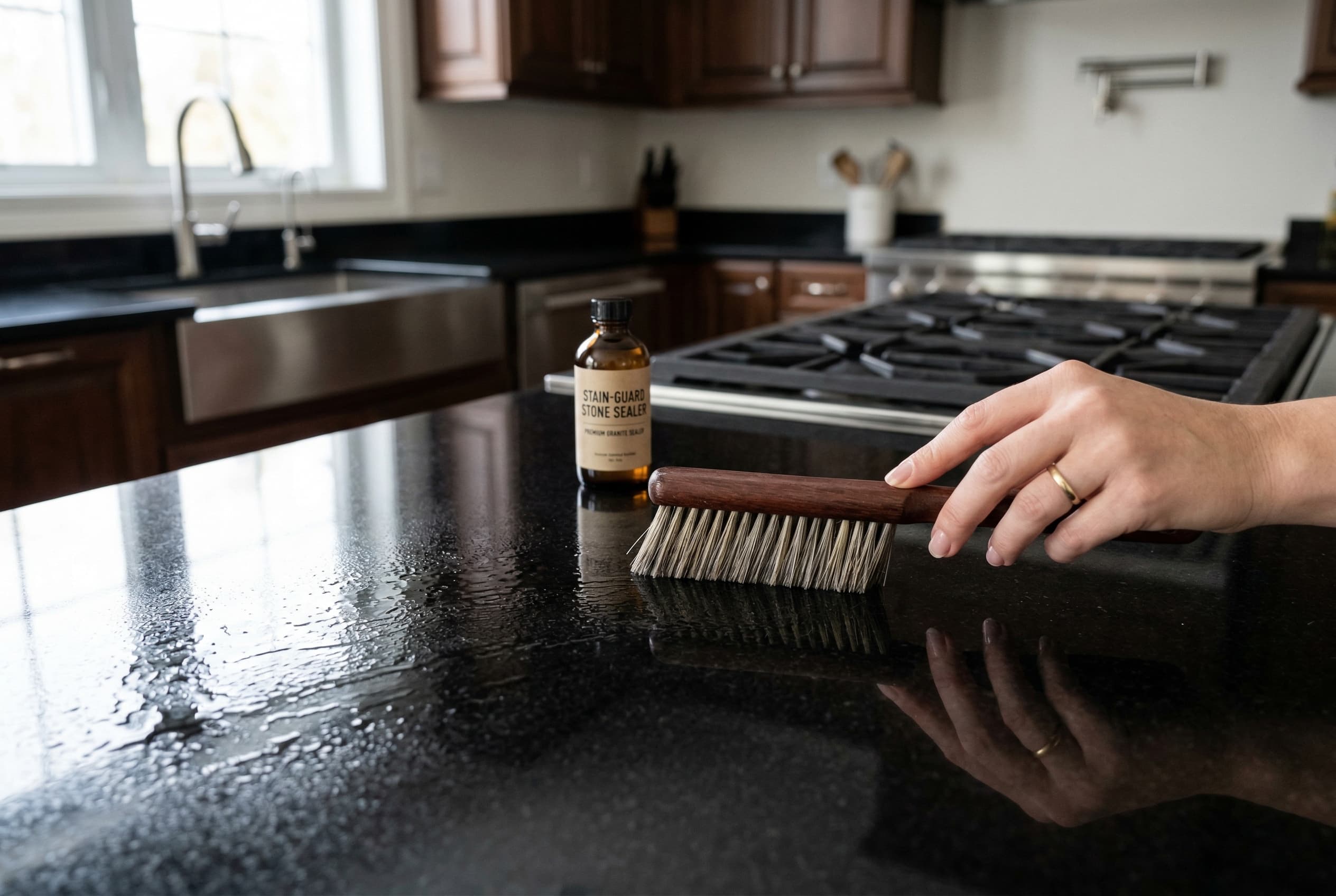
Every 1-3 years — perform a water test to check
Granite is one of the most durable natural stones and requires relatively low maintenance.
Seal with a quality impregnating sealer to maintain stain resistance.
Clean daily with warm water and a mild dish soap or stone-specific cleaner.
Granite is highly heat-resistant but always use trivets as a best practice.
Avoid sitting or standing on unsupported overhangs to prevent stress cracks.
For stubborn stains, use a poultice paste designed for natural stone.
- +Seal periodically — use the water test to determine timing
- +Use warm water and mild soap for daily cleaning
- +Place trivets under hot cookware as a best practice
- +Clean up oil-based spills promptly to prevent darkening
- +Use cutting boards to protect both the stone and your knives
- −Avoid harsh chemicals like bleach or ammonia
- −Do not use abrasive cleaners or steel wool
- −Never use generic multi-surface cleaners
- −Do not ignore chips at edges — repair promptly with color-matched epoxy
- −Avoid dragging heavy objects across the surface
Quartzite
Every 2-3 years — quartzite is dense but benefits from sealing
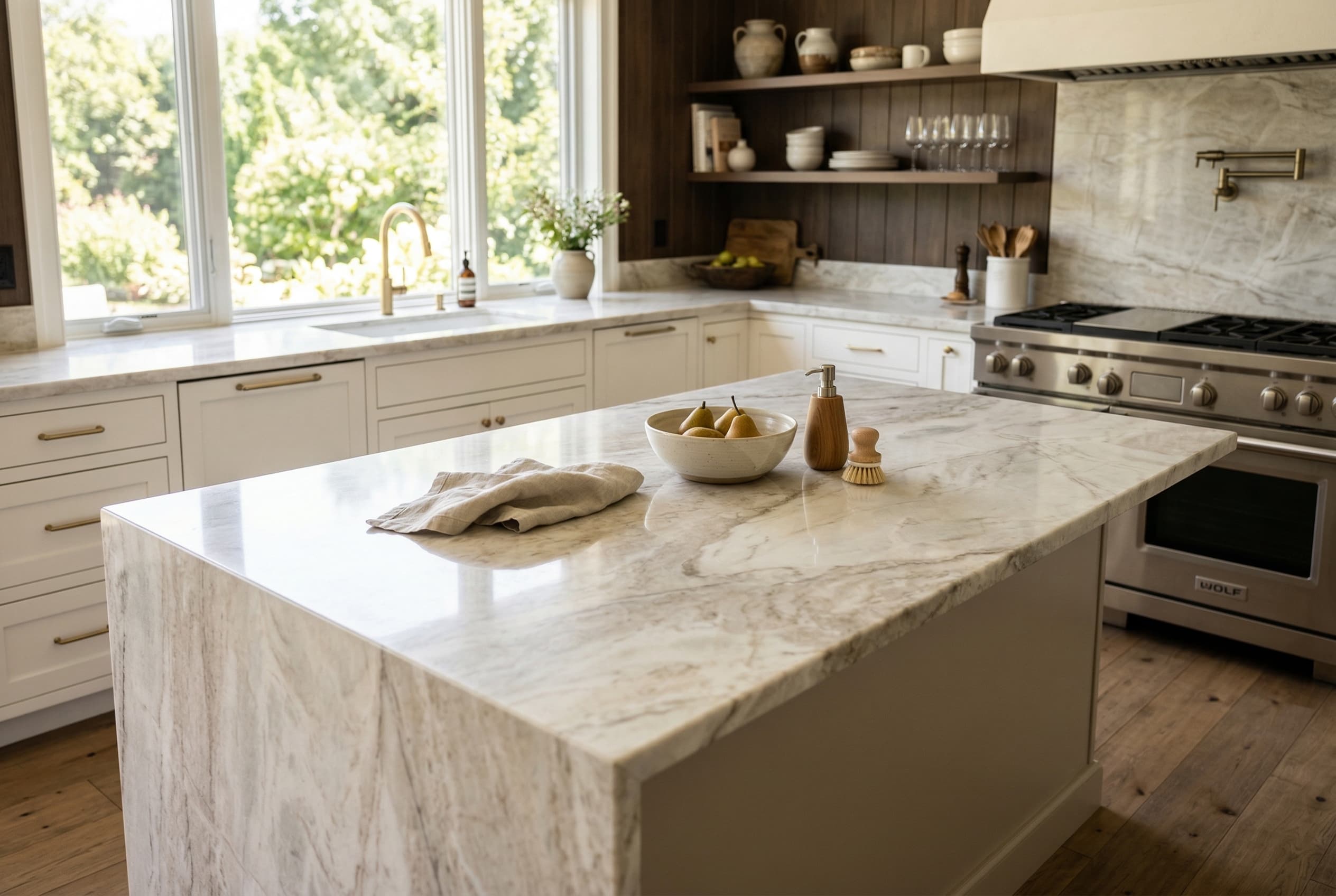
Quartzite combines marble-like beauty with superior durability — it is one of the hardest natural stones.
Seal with a premium impregnating sealer to protect against oil and water-based stains.
Daily cleaning with warm water and a pH-neutral stone cleaner is all that is needed.
Quartzite handles heat better than most stones, but trivets are still recommended.
Some quartzites have natural micro-fissures — these are cosmetic and do not affect performance.
Avoid cutting directly on the surface to protect your knives (the stone will be fine).
- +Seal every 2-3 years with a quality impregnating sealer
- +Clean daily with warm water and pH-neutral stone cleaner
- +Use trivets as a precaution, though quartzite handles heat well
- +Appreciate natural micro-fissures as part of the stone character
- +Wipe up spills reasonably promptly, especially oils
- −Do not confuse quartzite with quartz (engineered) — care needs differ
- −Avoid acidic cleaners, though quartzite resists etching better than marble
- −Do not skip sealing because it is hard — porosity still exists
- −Never use abrasive pads that could dull the finish over time
- −Avoid using the stone as a cutting surface (for your knives' sake)
Quartz (Engineered)
No sealing required — quartz is non-porous
Engineered quartz is one of the lowest-maintenance countertop materials available.
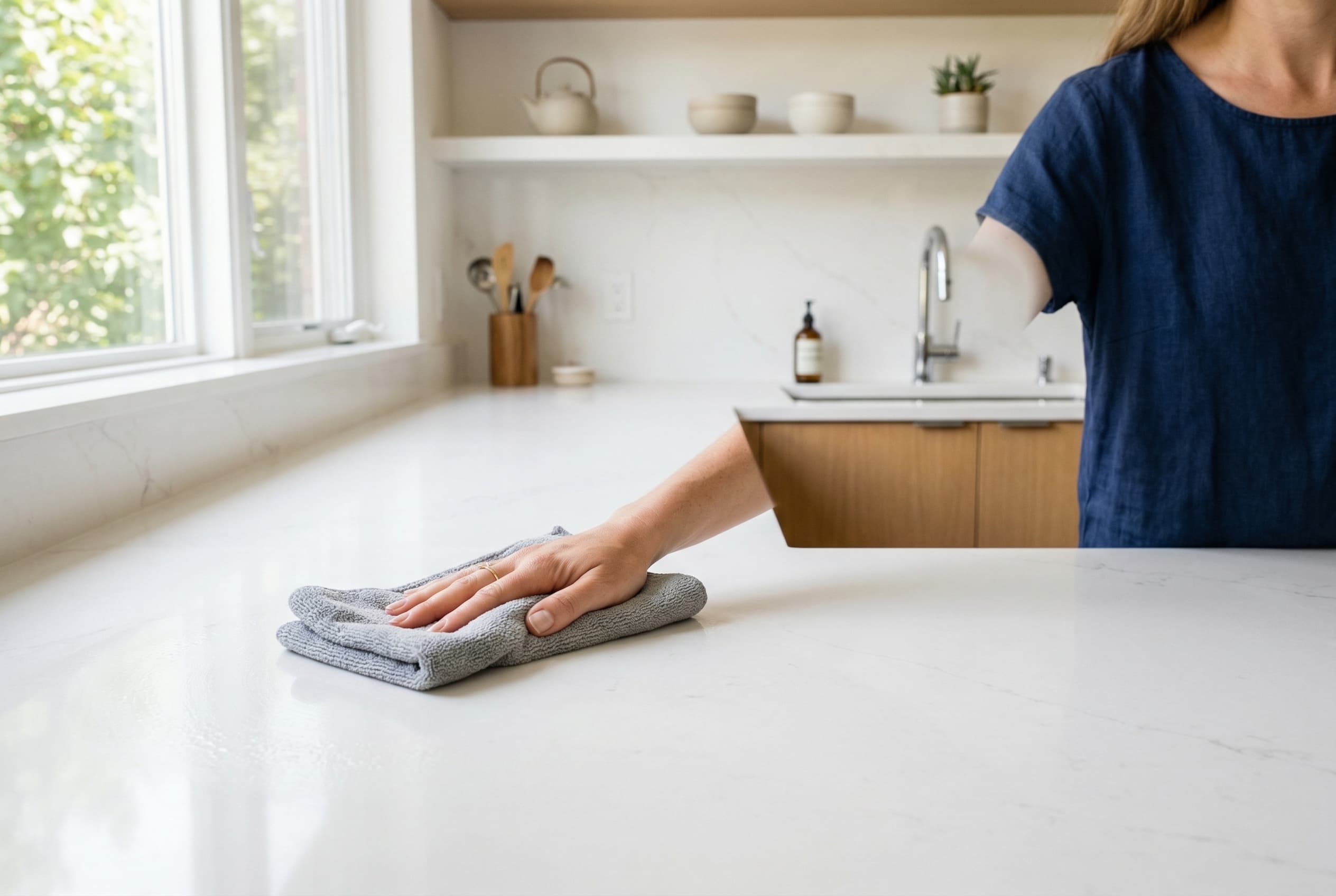
Clean daily with warm water, a soft cloth, and mild dish soap.
Never place hot pots or pans directly on quartz — the resin can scorch and discolor permanently.
Avoid prolonged exposure to direct sunlight, which can cause yellowing over time.
Quartz resists staining, but wipe up strongly pigmented spills (turmeric, beet juice) promptly.
For dried-on residue, use a plastic scraper — never a metal blade.
- +Clean regularly with warm water and mild soap
- +Always use trivets and hot pads — this is essential for quartz
- +Use cutting boards to avoid surface scratches
- +Wipe up pigmented spills like turmeric, wine, or beet juice promptly
- +Use a glass cleaner for extra shine on polished finishes
- −NEVER place hot pots, pans, or baking sheets directly on quartz
- −Avoid permanent markers and strong dyes near the surface
- −Do not use abrasive cleaners, scouring pads, or steel wool
- −Never use quartz outdoors — UV exposure causes yellowing
- −Avoid harsh chemicals like oven cleaner, paint stripper, or acetone
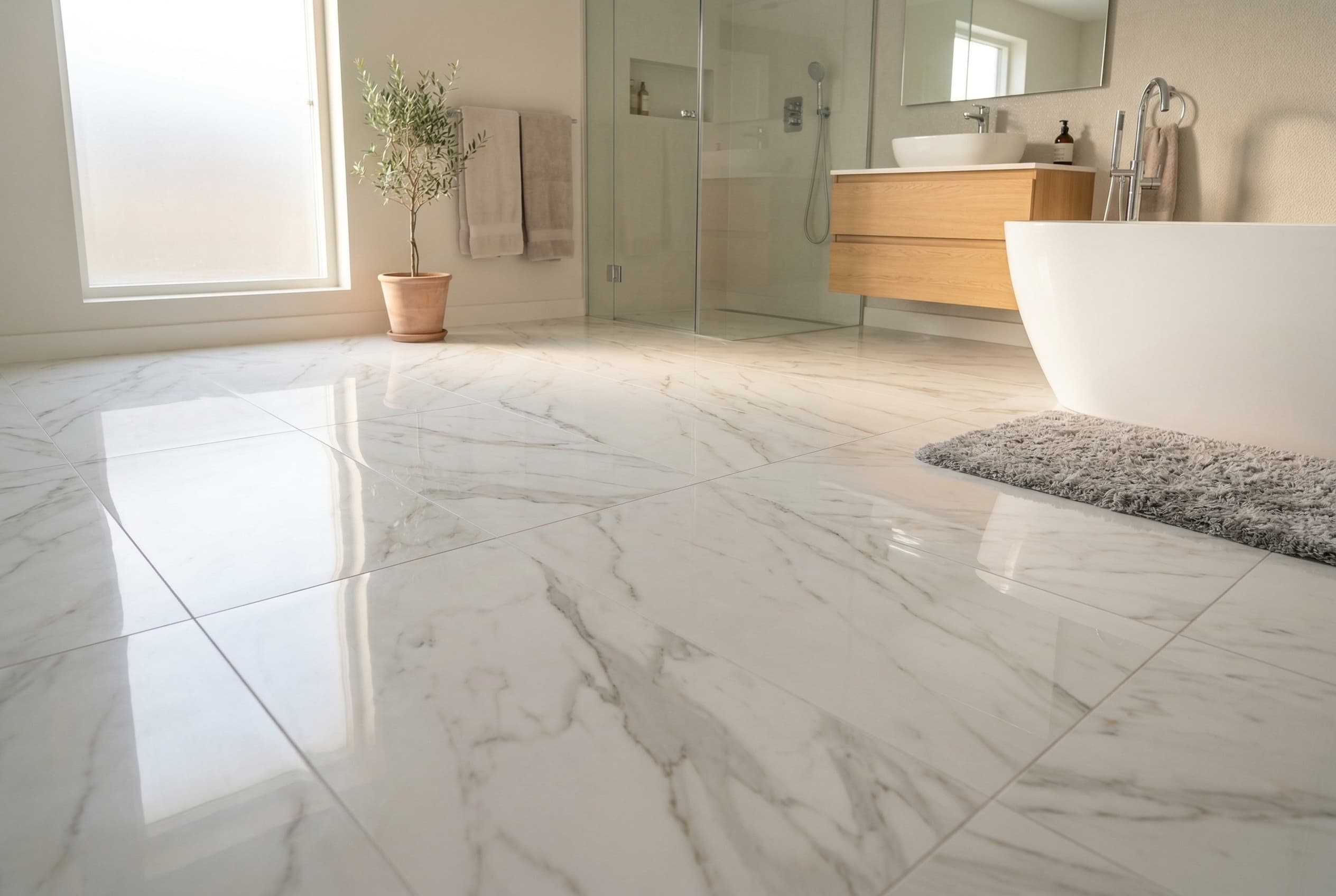
Porcelain
Porcelain surface: No sealing needed. Grout: Seal every 1-2 years
Porcelain is virtually non-porous and extremely easy to maintain.
Clean with any pH-neutral cleaner or simply warm water and a soft mop or cloth.
Focus maintenance on grout lines — seal grout annually to prevent staining and discoloration.
For textured porcelain tiles, use a soft bristle brush to clean grooves where dirt accumulates.
Porcelain is UV-stable and frost-resistant, making it ideal for outdoor installations.
Large-format porcelain slabs have minimal grout lines, reducing overall maintenance.
- +Sweep or vacuum regularly to prevent abrasive grit from scratching
- +Clean with warm water and a mild cleaner
- +Seal grout lines annually with a quality grout sealer
- +Use doormats to reduce tracked-in dirt and sand
- +Address grout discoloration early with a grout cleaner and brush
- −Avoid oil-based or wax-based cleaners that leave residue
- −Do not use steel wool or metal brushes on the surface
- −Never use colored cleaning cloths that might transfer dye to grout
- −Avoid dragging heavy furniture without felt pads
- −Do not neglect grout maintenance — it is the weak point of any tile installation
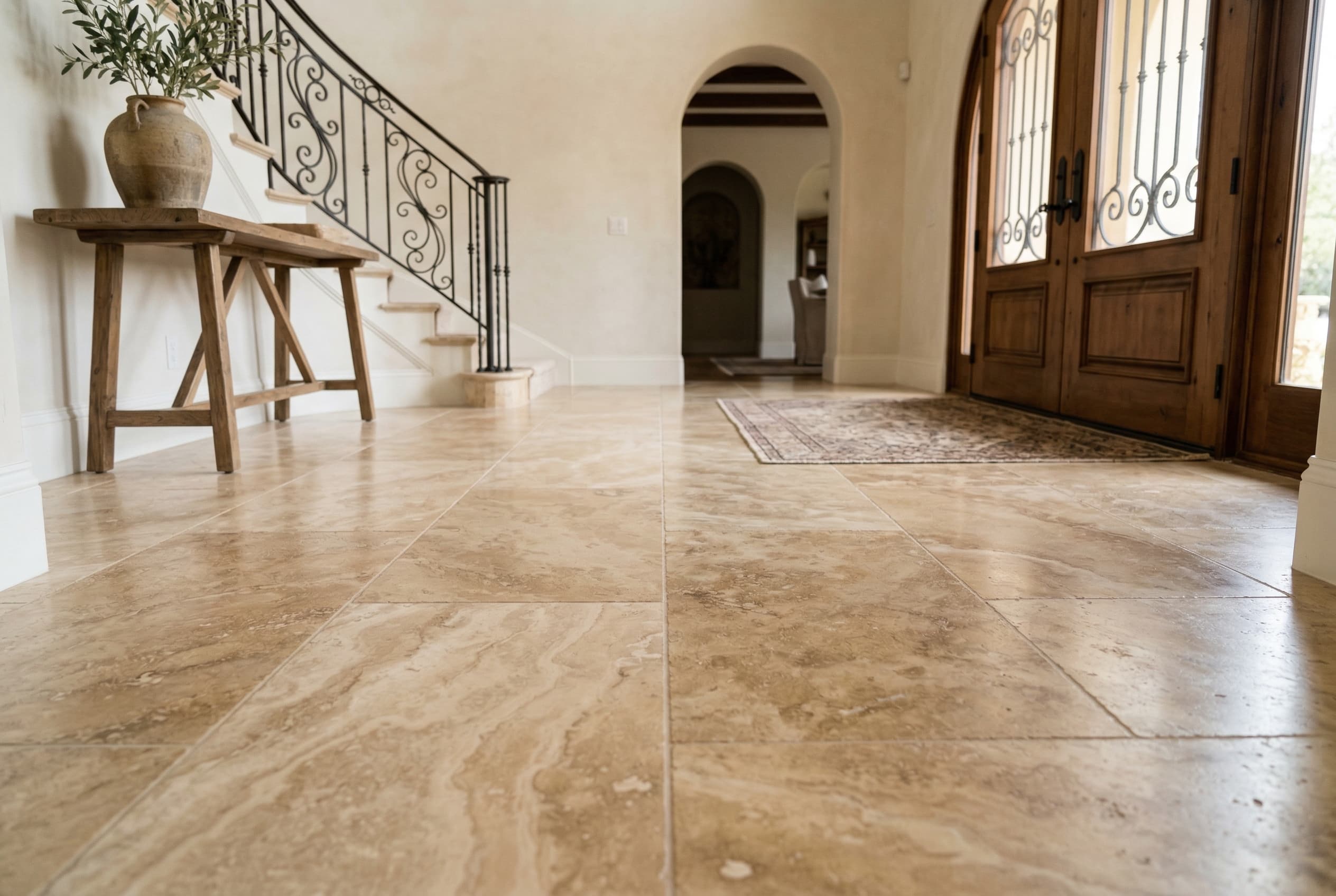
Travertine
Every 6-12 months for countertops; annually for floors
Travertine is a beautiful but porous limestone variety that requires attentive care.
Fill any open pores or holes with color-matched travertine filler to prevent dirt accumulation.
Seal thoroughly with an impregnating sealer — travertine absorbs liquids readily.
Clean with pH-neutral stone cleaner only — travertine is highly sensitive to acids.
Use coasters, trivets, and cutting boards without exception.
Honed and tumbled finishes hide wear better than polished travertine.
- +Seal frequently — travertine is more porous than most natural stones
- +Fill holes and pits with appropriate filler to prevent dirt trapping
- +Use only pH-neutral cleaners designed for natural stone
- +Blot spills instantly — travertine stains quickly
- +Consider honed or tumbled finishes for high-traffic areas
- −NEVER use vinegar, lemon, or any acid-based cleaner
- −Avoid generic bathroom cleaners — they are typically acidic
- −Do not let standing water remain on the surface
- −Never use abrasive scrubbers that could damage the soft surface
- −Avoid placing planters directly on travertine without a waterproof saucer
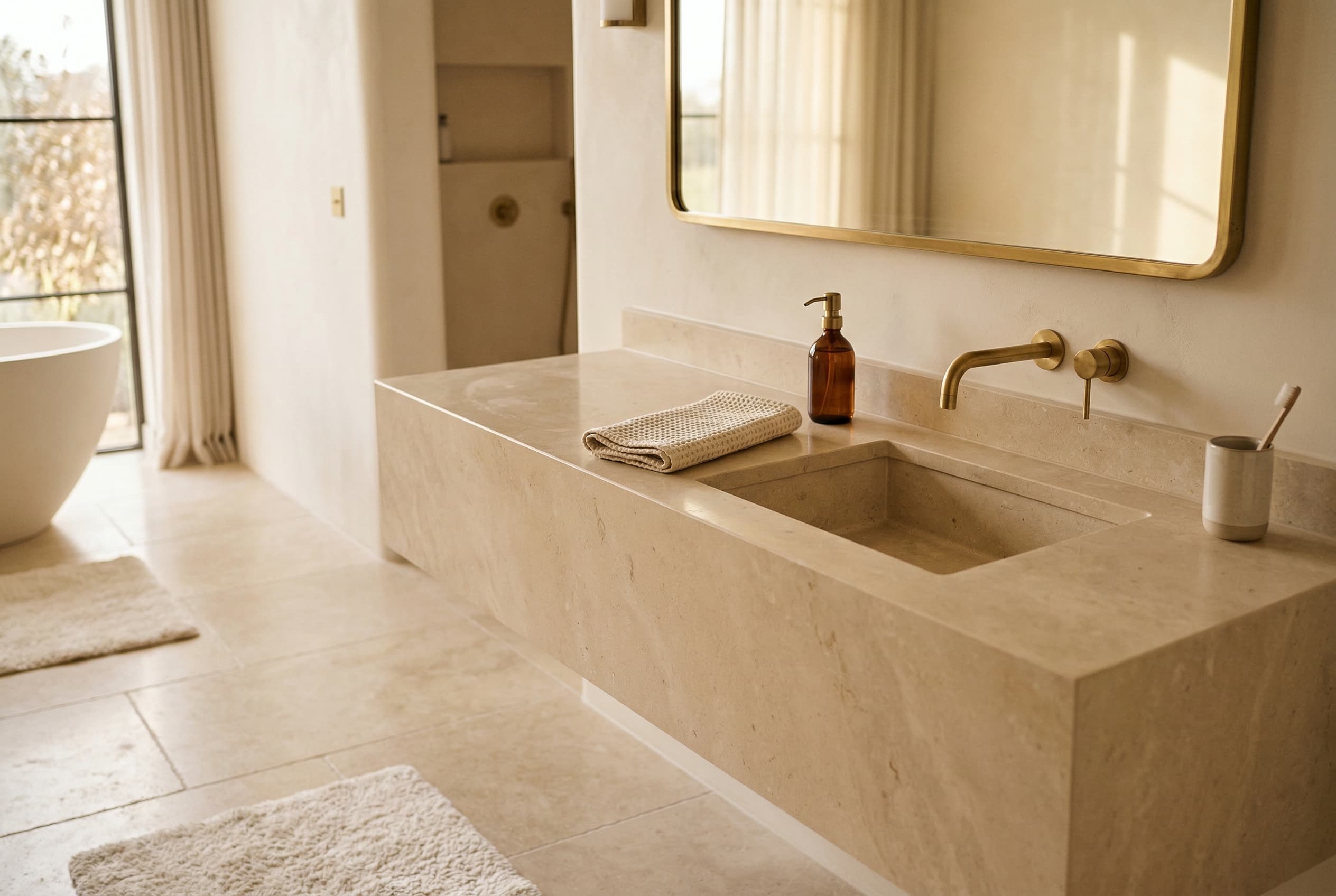
Limestone
Every 6-12 months — limestone is highly porous
Limestone is elegant but among the most porous and acid-sensitive natural stones.
Sealing is critical and should be performed more frequently than with harder stones.
Use only pH-neutral, stone-specific cleaners for daily maintenance.
Avoid all acidic substances including vinegar, citrus, wine, and tomato products.
Limestone develops a beautiful patina over time, which many homeowners appreciate.
For floors, use walk-off mats at entrances to reduce dirt and grit that can scratch.
- +Seal frequently with a high-quality impregnating sealer
- +Clean with warm water and pH-neutral stone cleaner
- +Use mats and rugs in high-traffic areas
- +Blot spills immediately — especially acidic substances
- +Embrace the natural patina that develops over time
- −NEVER use vinegar, lemon, or any acidic cleaner
- −Avoid all generic household cleaners
- −Do not skip regular sealing — limestone is very porous
- −Never place citrus fruits directly on unsealed limestone
- −Avoid using limestone in areas with heavy acid exposure (like bar tops)
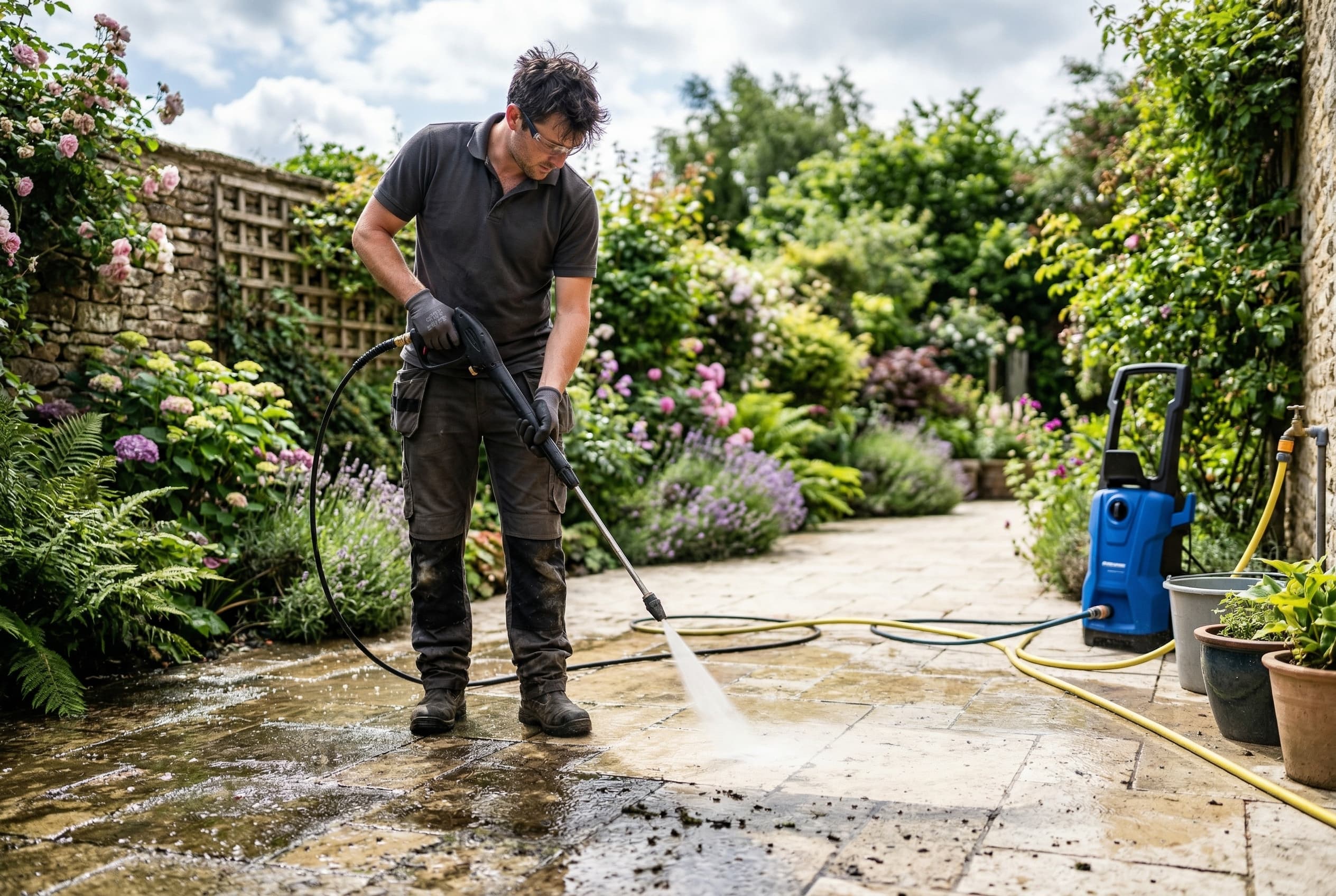
Outdoor Stone
Annually in spring, before the heavy-use season
Outdoor stone requires seasonal attention to maintain its beauty and structural integrity.
Power wash annually at low to medium pressure (1200-1500 PSI) to remove dirt and algae buildup.
Re-seal every spring with a breathable, exterior-rated impregnating sealer.
Check grout and mortar joints annually for cracking or deterioration.
In freeze-thaw climates, ensure proper drainage to prevent water from pooling and cracking stone.
Treat moss and algae growth promptly with a stone-safe biocide before it causes staining.
- +Seal annually with an exterior-rated impregnating sealer
- +Power wash at appropriate pressure (not too high) each spring
- +Maintain proper drainage around stone installations
- +Repair cracked mortar and grout joints promptly
- +Treat biological growth (moss, algae, lichen) early
- −Never use high-pressure washing (above 2000 PSI) on natural stone
- −Avoid de-icing salts directly on natural stone surfaces
- −Do not use acid-based cleaners on limestone, travertine, or marble outdoors
- −Never ignore cracks in mortar — water infiltration causes freeze-thaw damage
- −Avoid leaving metal furniture directly on stone without pads (rust staining)
Need Expert Care Advice?
Our stone specialists can recommend the right care products and maintenance schedule for your specific surfaces. Visit our showroom or reach out for personalized guidance.