
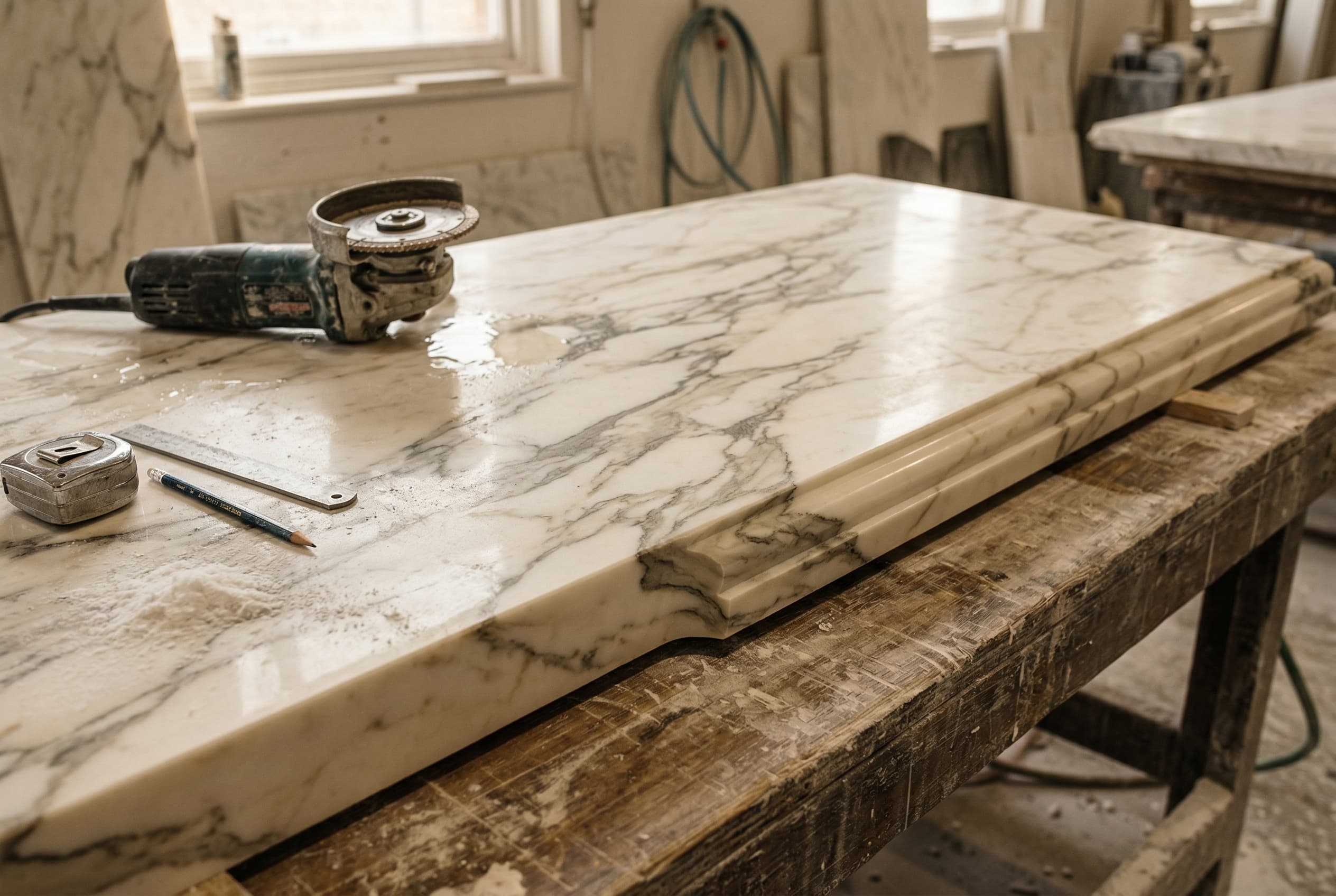
Edge Profile Guide
Explore the most popular countertop edge profiles. From clean and modern to classic and ornate, the right edge profile completes your stone installation.
Choose Your Edge
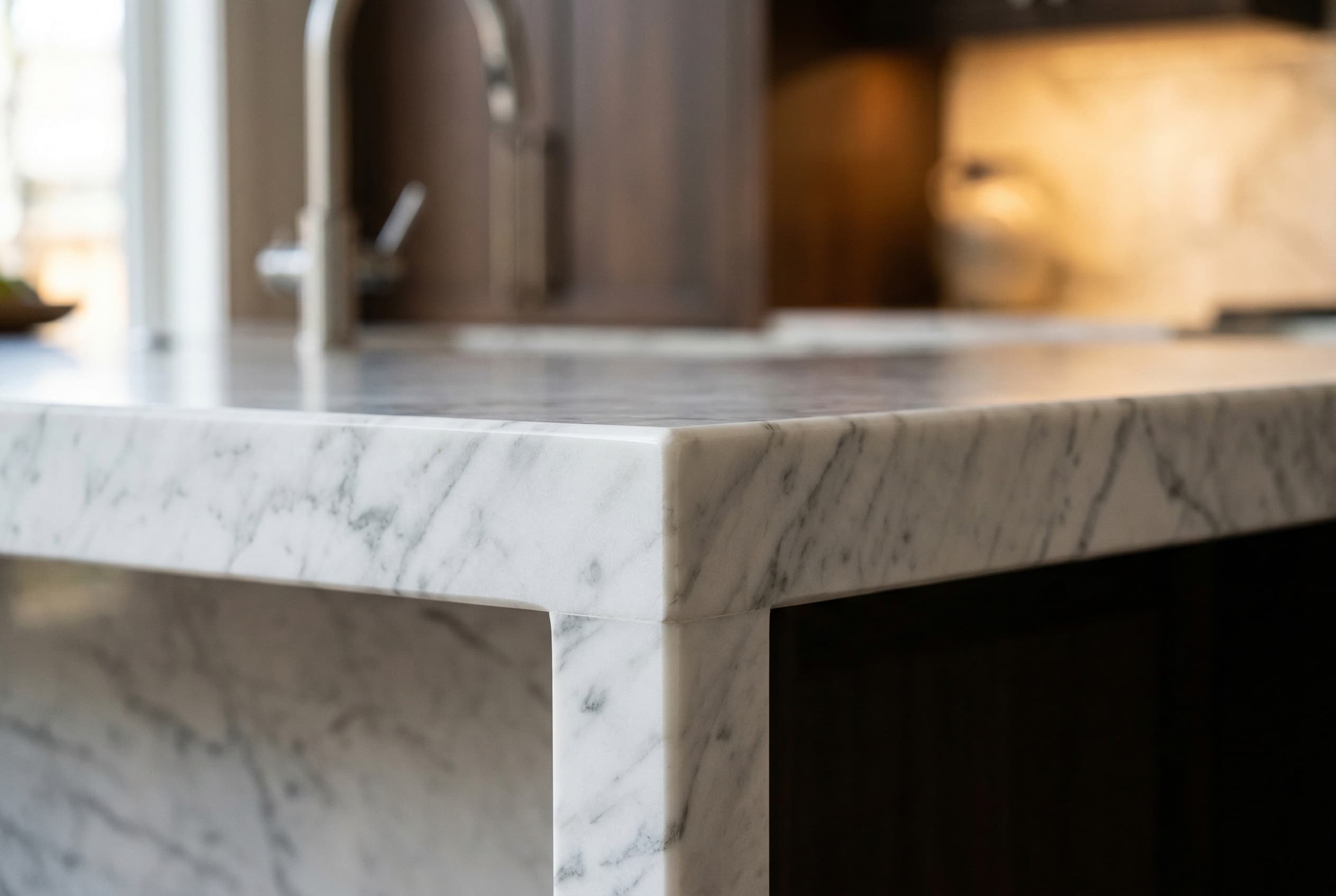
Straight / Eased
The most common and versatile edge profile. A flat, squared edge with very slightly eased (rounded) top and bottom corners to prevent chipping. Clean, modern, and timeless.
A flat, 90-degree edge with micro-rounded corners — think of a clean, sharp rectangle in cross-section.
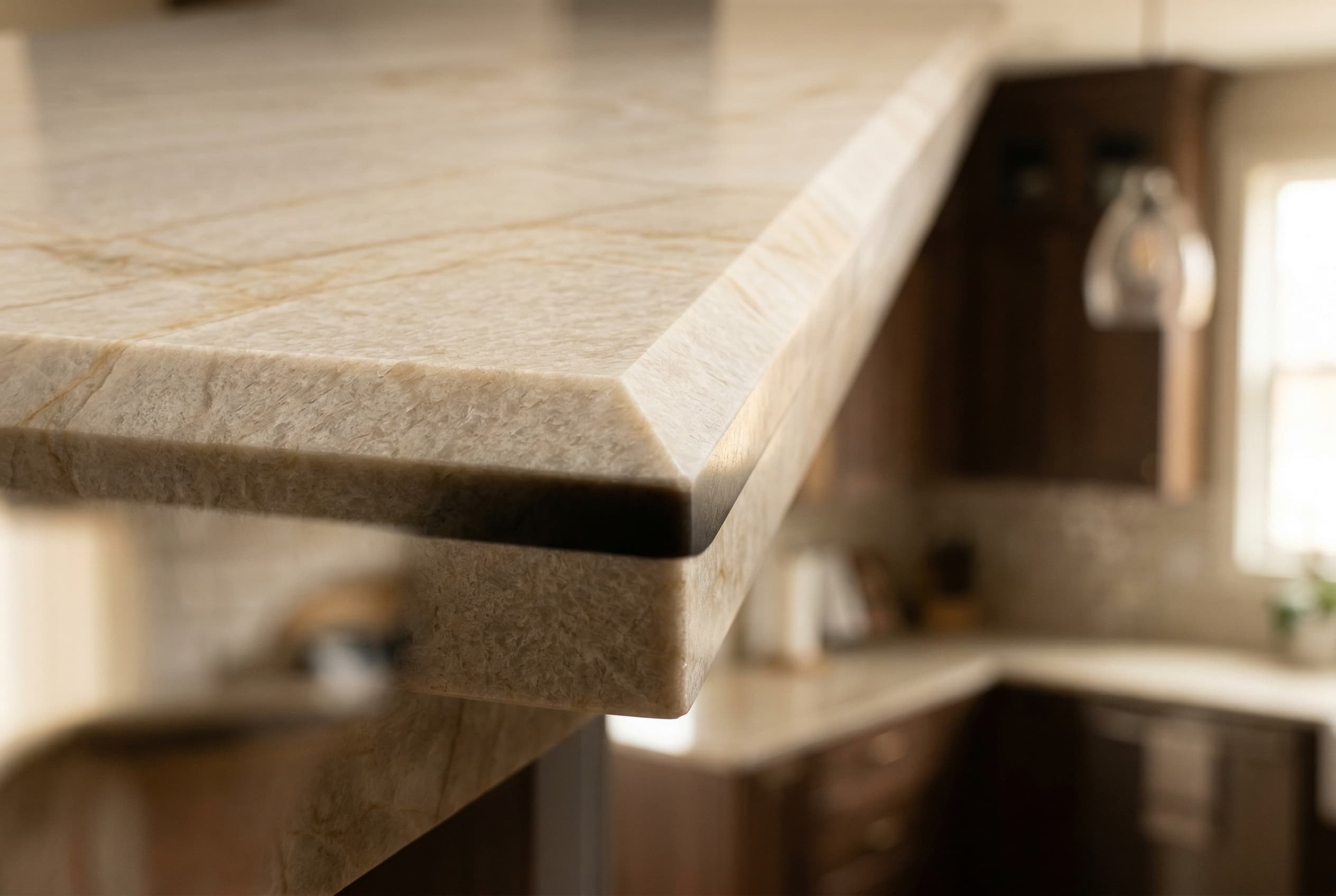
Beveled
Features an angled cut along the top edge of the countertop, typically at 45 degrees. Adds visual interest and shadow line without being overly ornate. A step up from straight with minimal additional cost.
A flat face with a small angled cut at the top — like a narrow chamfer that catches light and creates a subtle accent line.
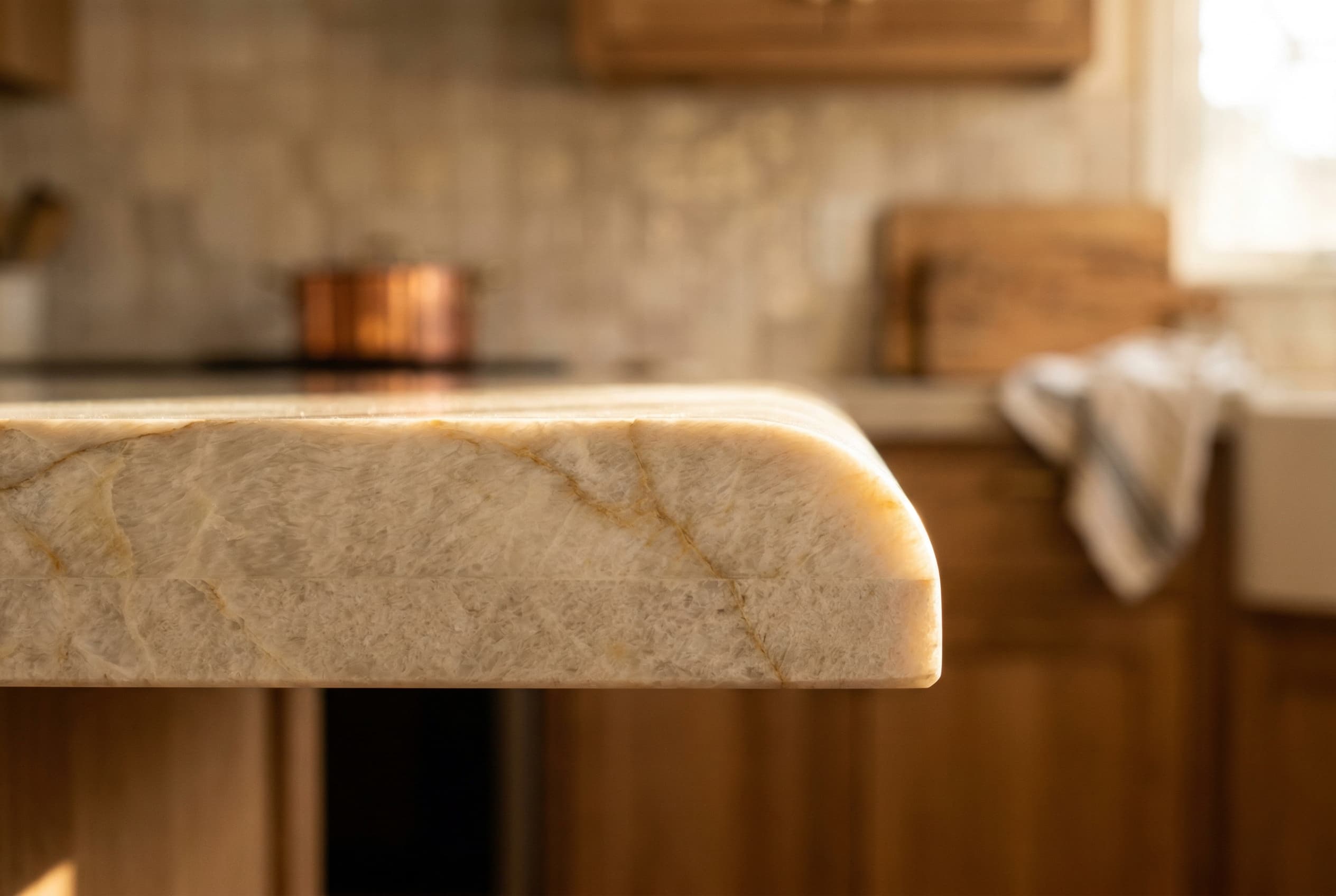
Half Bullnose
The top edge is rounded to a smooth half-circle while the bottom remains flat and squared. Softer and more inviting than a straight edge, with a comfortable feel along countertop edges.
The top half of the edge curves into a smooth arc, while the bottom stays flat — a "D" shape in profile.
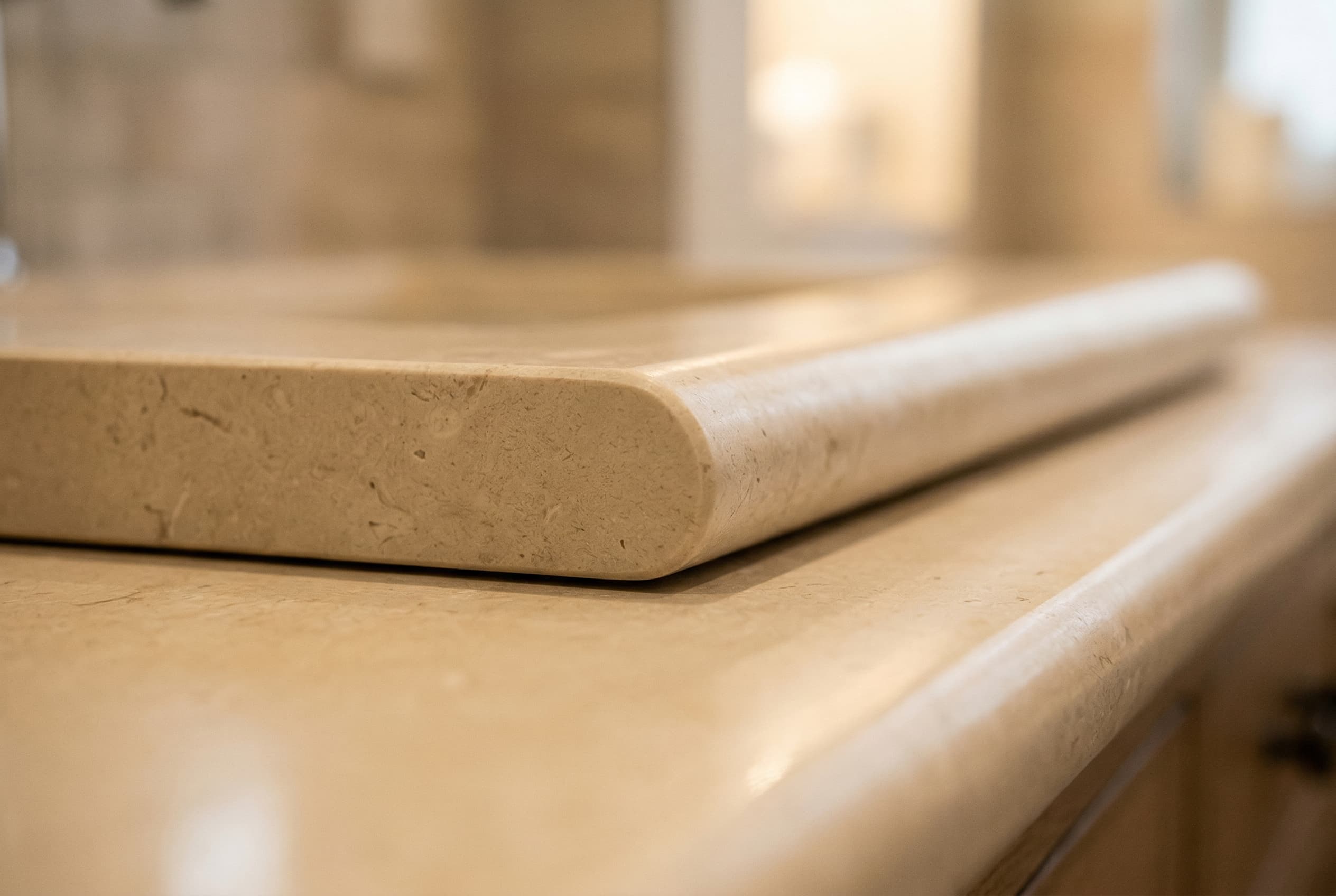
Full Bullnose
Both the top and bottom edges are rounded into a smooth, continuous curve. Creates a very soft, pillow-like profile that is gentle to the touch and ideal for families with young children.
A fully rounded edge — a complete half-circle in profile, like a smooth cylinder along the countertop edge.
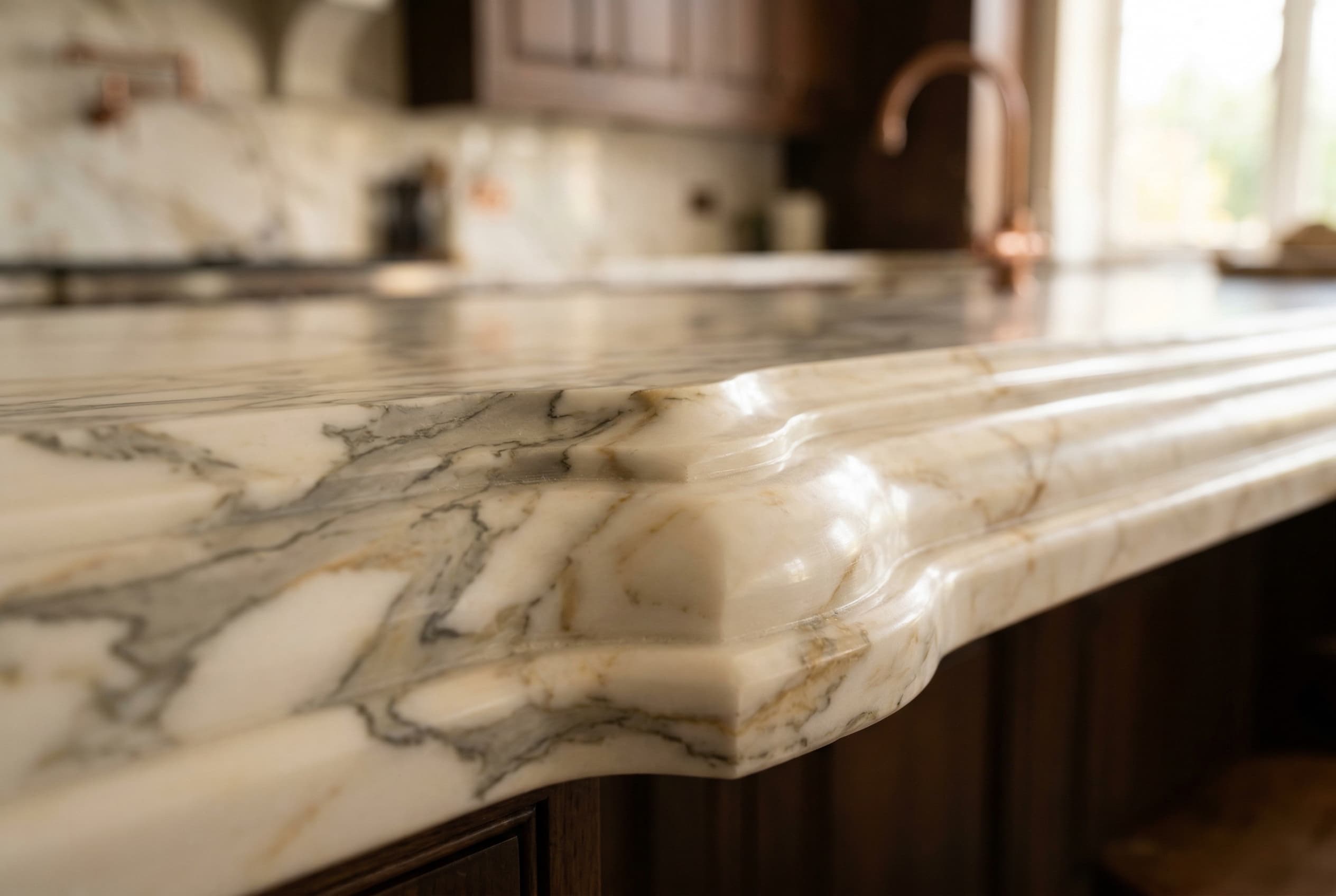
Ogee
An elegant, S-shaped profile that combines a concave curve on top flowing into a convex curve below. One of the most classic and ornate edge profiles, associated with traditional luxury and European design.
An S-curve in profile — the top dips inward (concave) then curves outward (convex) at the bottom, creating an elegant wave.
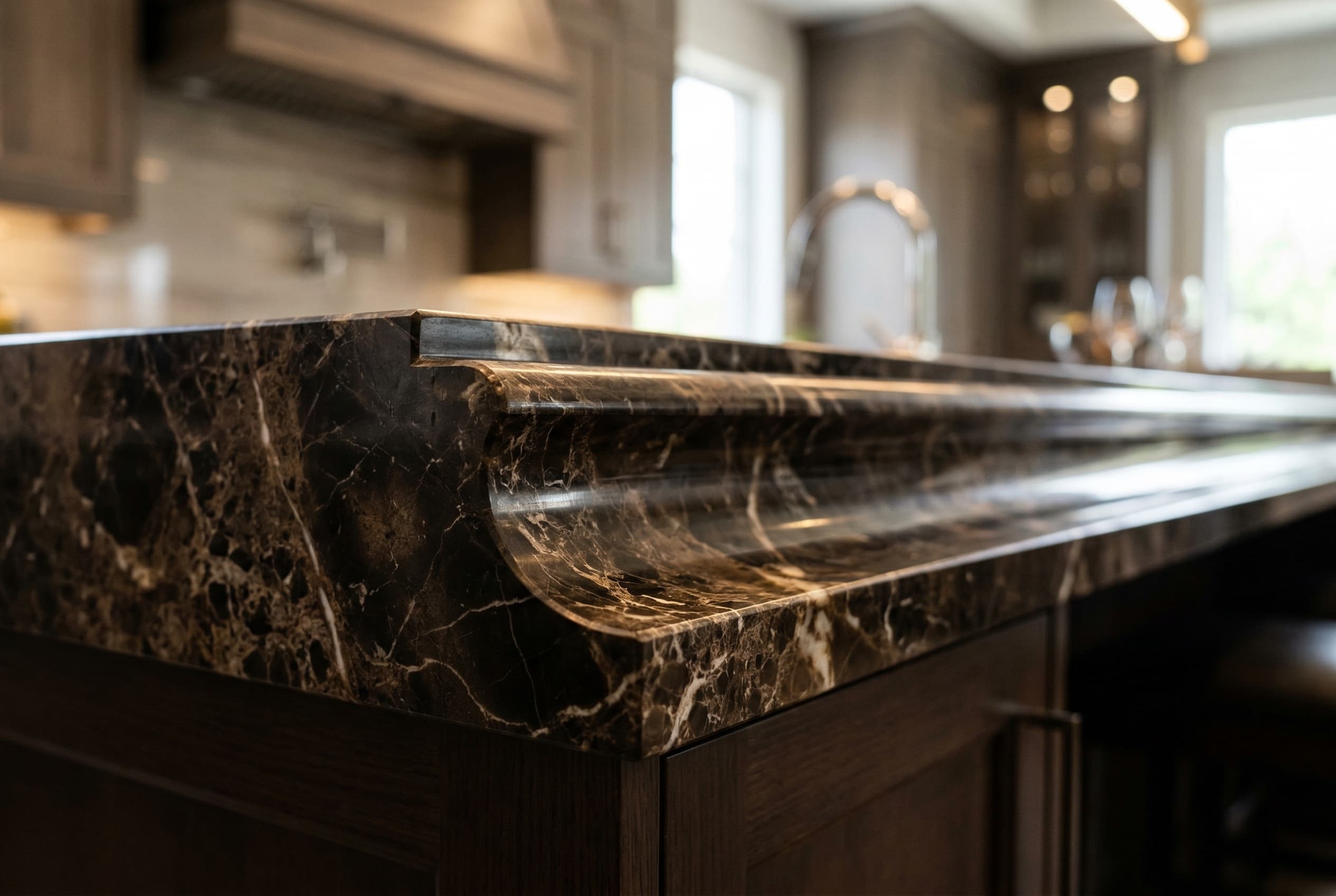
Dupont
Features a short, beveled top edge above a longer, curved lower section. Creates a distinctive shelf-like look that adds depth and sophistication. Named after the classic French edge treatment.
A small flat step at the top, followed by a sweeping concave curve that flows to the bottom — looks like a subtle ledge.
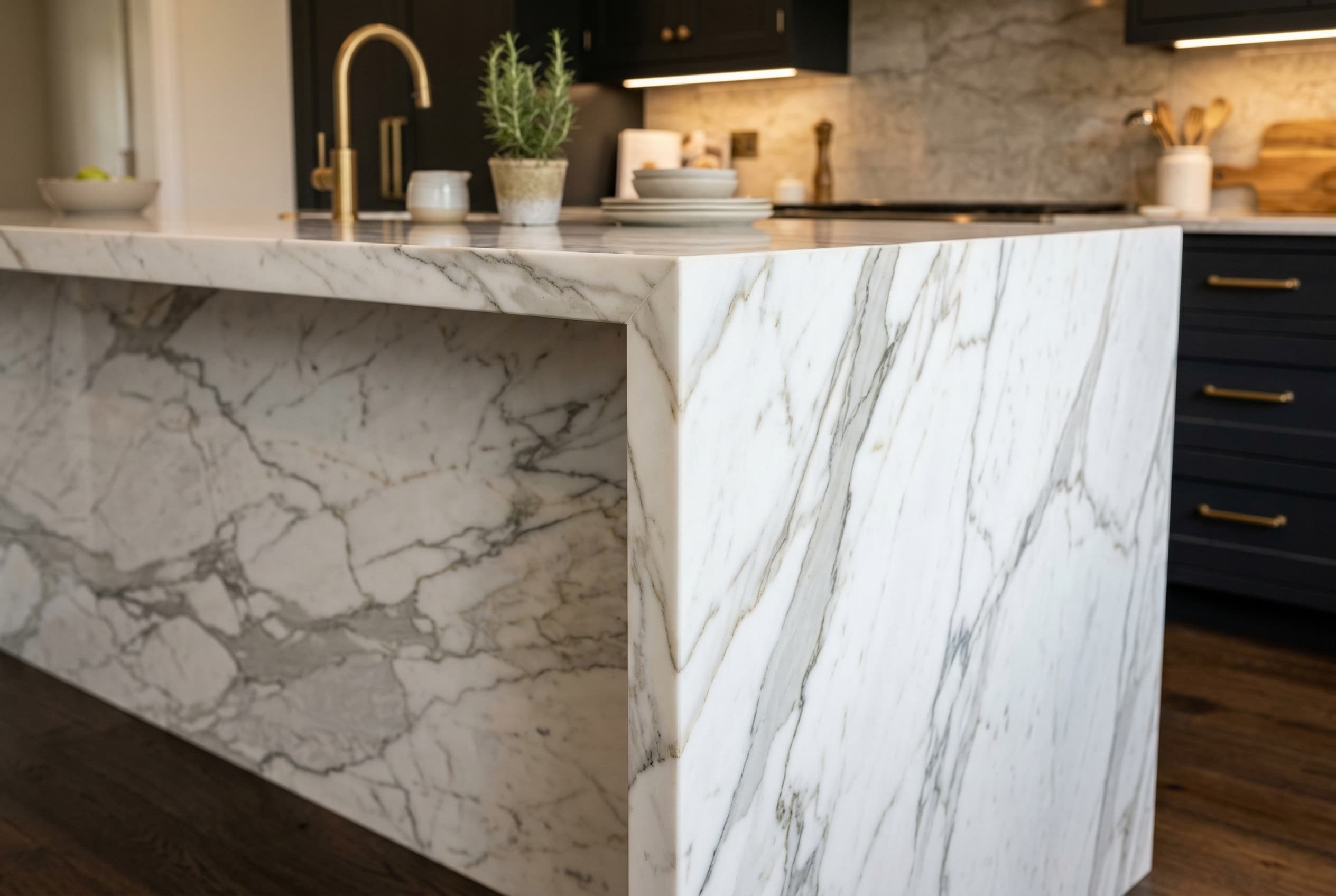
Waterfall
Not an edge profile in the traditional sense, but a design technique where the countertop material cascades vertically down the side of an island or cabinet. Requires precise mitre joints and careful veining alignment.
The countertop surface continues seamlessly down the vertical side of the cabinet, like water flowing over a ledge.
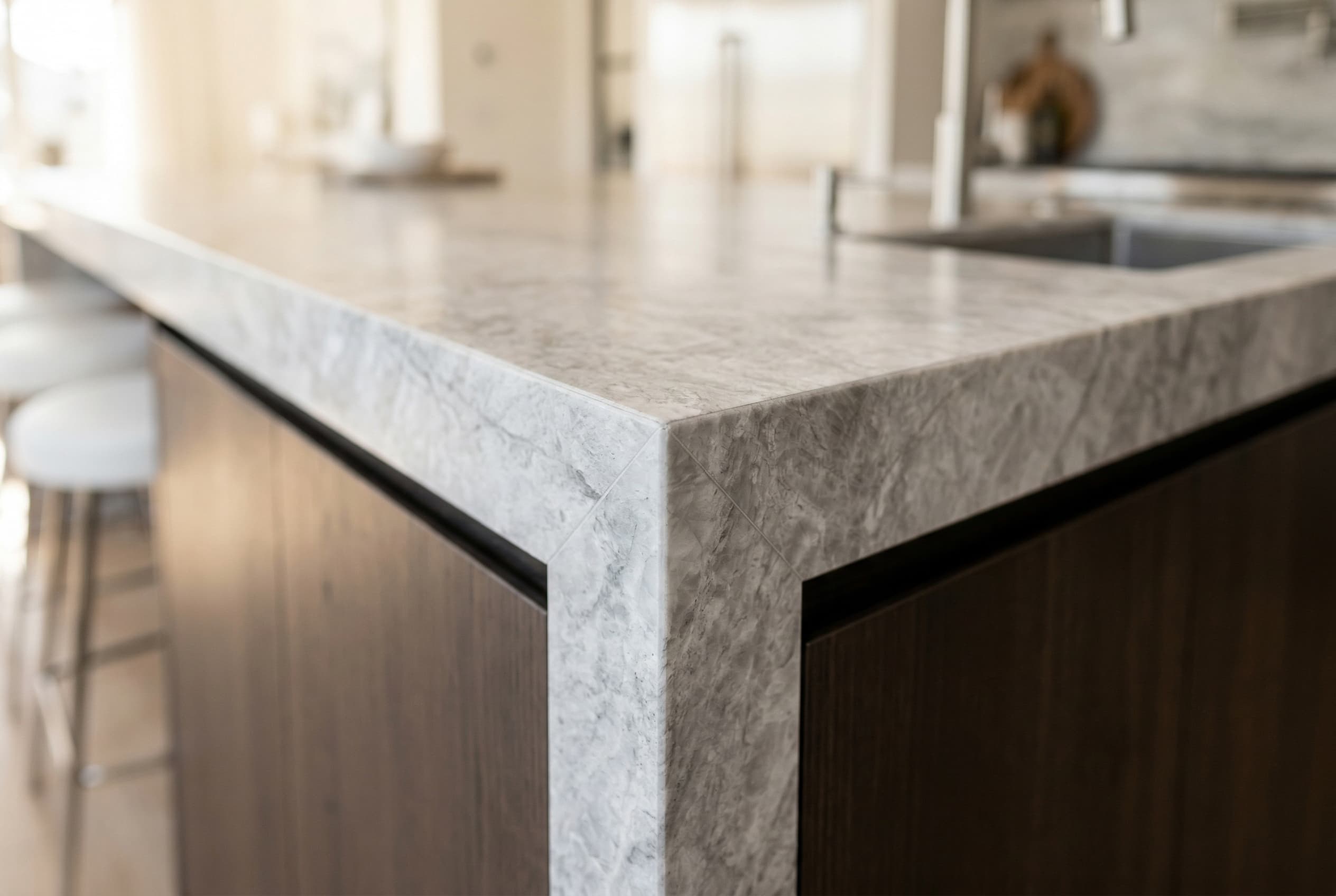
Mitered
Two pieces of stone are cut at 45-degree angles and joined to create the appearance of a much thicker slab. A mitered edge can make a 3cm slab look like 6cm or even 9cm, adding substantial visual weight.
Two angled pieces joined at a seam to create a thick, squared edge — the slab appears twice or three times its actual thickness.
Laminated
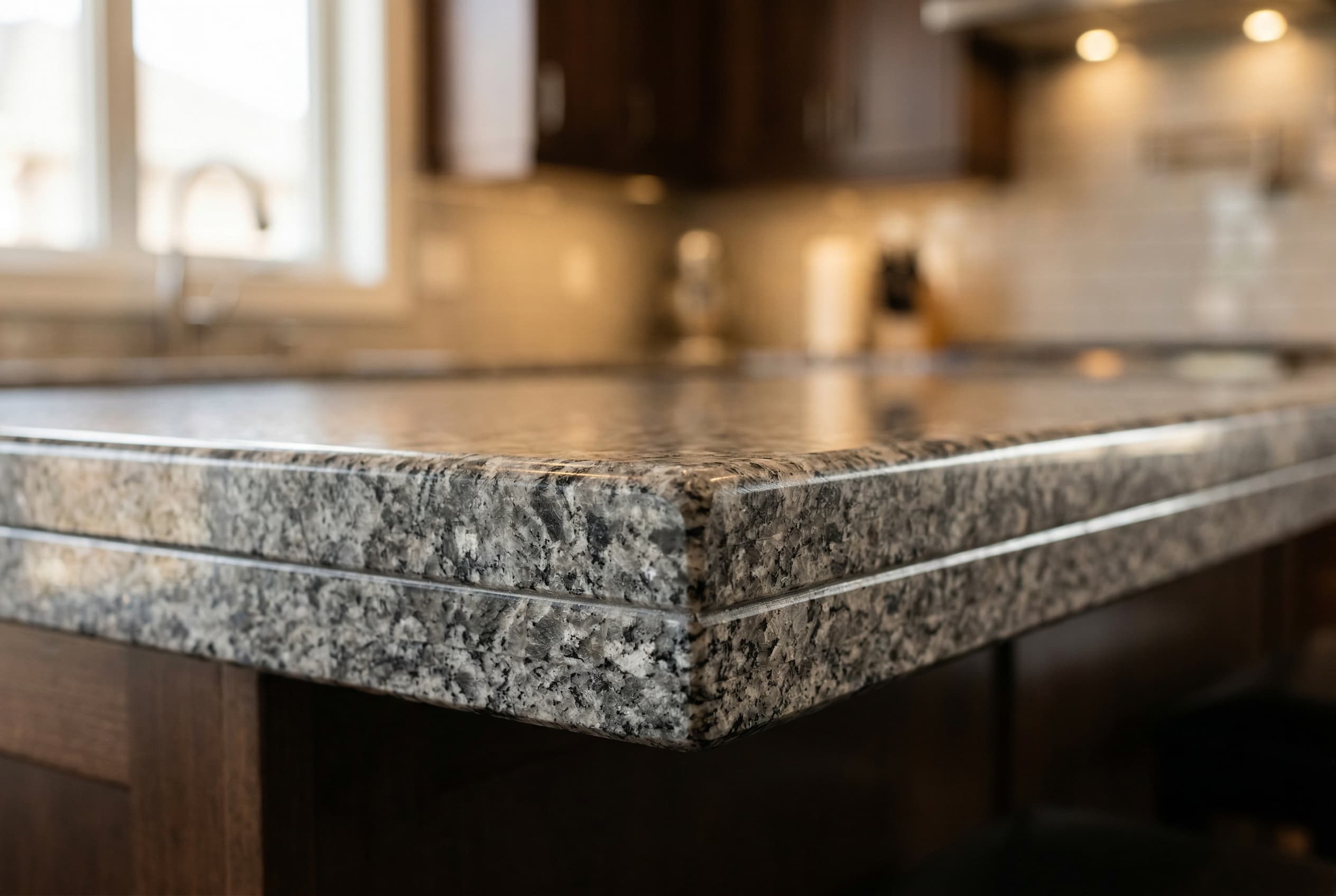
Pieces of stone are stacked and bonded together to create an extra-thick edge, typically doubling the visible thickness. Unlike mitering, the seam is at the bottom rather than at an angle. Can be combined with other profiles.
An additional strip of stone is bonded underneath the countertop edge, making it appear twice as thick with a visible seam line.
Understanding Costs
Price Level Guide
Included with most fabrication packages. No additional cost, providing excellent value for clean, modern looks.
Moderate upcharge. Requires more fabrication time and skill, adding subtle character to your stone.
Significant additional cost. Complex fabrication and joinery designed for maximum visual impact.
See Edge Profiles in Person
Our showroom has physical samples of every edge profile. Touch, compare, and visualize the perfect finish for your countertops with guidance from our fabrication specialists.