
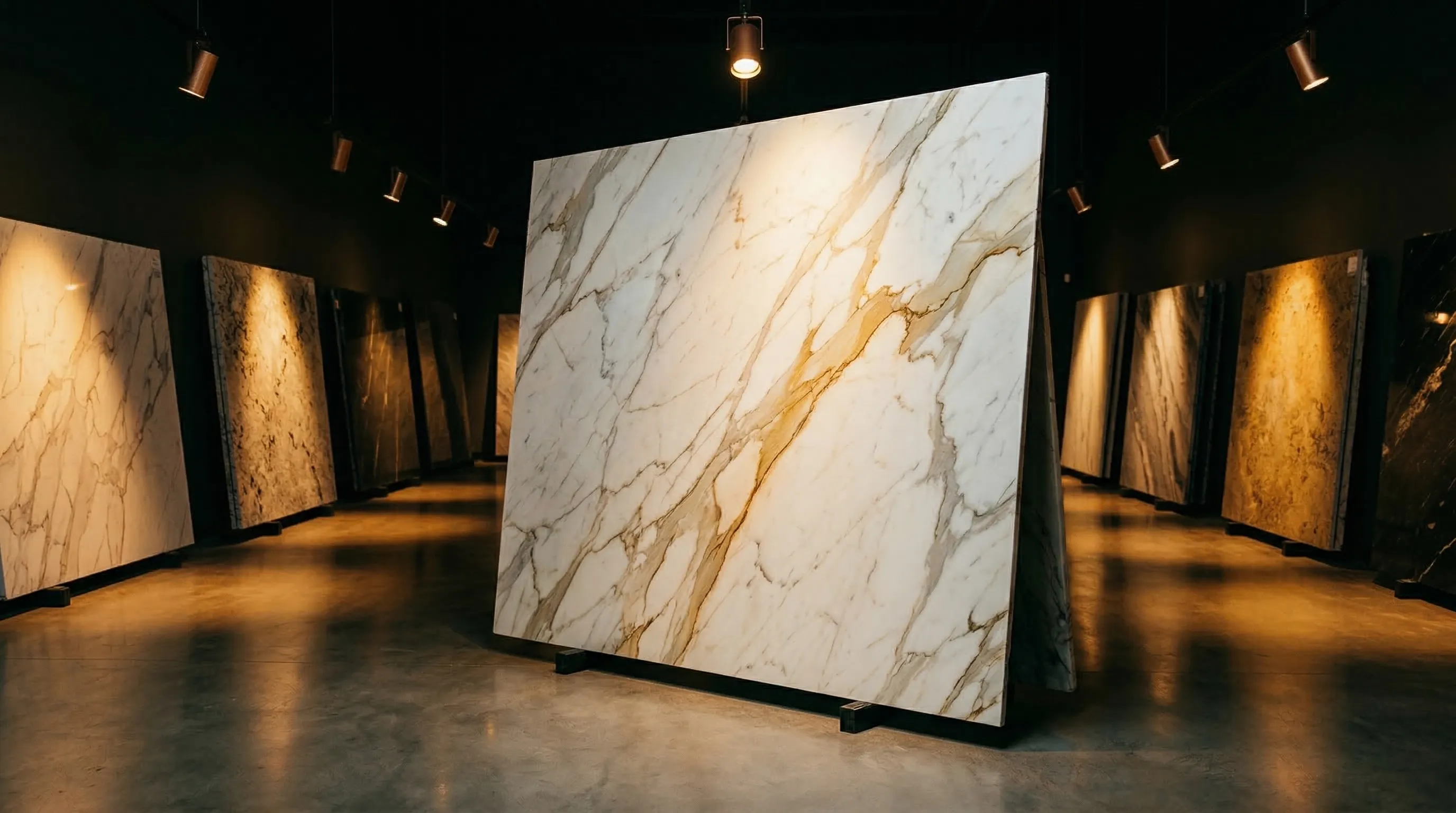
Marble vs. Quartzite: Which Is Right for Your Kitchen?
Marble and quartzite are two of the most sought-after natural stones for kitchen countertops. While they can look remarkably similar — both feature dramatic veining and a luxurious presence — their performance characteristics differ significantly. Understanding these differences is essential to making the right investment for your home.
How They Compare
| Attribute | Marble | Quartzite |
|---|---|---|
| Durability (Mohs Hardness) | 3-5 (Softer) | 7-8 (Very Hard) |
| Maintenance | High — seal annually, careful cleaning | Medium — seal every 2-3 years |
| Cost (per sq ft installed) | $75 - $250+ | $80 - $200+ |
| Heat Resistance | Moderate — use trivets | Excellent — highly heat resistant |
| Stain Resistance | Low — porous, etches with acid | Good — less porous when sealed |
| Appearance | Soft, luminous veining; classic elegance | Bold veining; marble-like beauty with depth |
| Best For | Low-traffic kitchens, bathrooms, feature walls | High-traffic kitchens, islands, any application |
The Full Picture
Marble has been the gold standard for luxury surfaces for thousands of years. Its soft, luminous quality and unmistakable veining create an atmosphere of timeless sophistication. Calacatta, Statuario, and Carrara are among the most coveted stones in the world. However, marble is a relatively soft stone that is susceptible to scratching, etching from acidic foods and beverages, and staining if not properly sealed and maintained.
Quartzite, on the other hand, offers a compelling alternative. Formed when sandstone is subjected to extreme heat and pressure deep within the earth, quartzite emerges as one of the hardest natural stones available. Many premium quartzites — such as Taj Mahal, Mont Blanc, and Sea Pearl — rival marble in beauty while dramatically outperforming it in durability. Quartzite resists scratching, tolerates heat far better, and is less prone to etching.
The choice often comes down to lifestyle. If you have a formal kitchen with light use, or if the patina that marble develops over time appeals to you, marble can be an exquisite choice. If you have a busy household, love to cook, or simply want the look of marble with far less worry, quartzite is the smarter investment.
At Baystone, we carry an extensive selection of both marble and quartzite slabs. Our stone specialists can help you compare options side by side and select the material that best suits your kitchen, your lifestyle, and your budget. Visit our San Jose showroom to see the full range in person.
Best Choice by Use Case
Superior hardness and stain resistance for daily use
Lower exposure to acids; unmatched elegance
Heat and scratch resistance for a high-traffic surface
No food contact; pure aesthetic impact
Better weather and UV resistance
See Both Materials in Person
Photographs cannot capture the depth and character of natural stone. Visit our San Jose showroom to compare Marble and Quartzite side by side with guidance from our stone specialists.