
Quartz vs. Natural Stone: The Complete Guide
Choosing between engineered quartz and natural stone is one of the biggest decisions in any kitchen or bathroom renovation. Each has distinct advantages. Understanding the trade-offs will help you select the surface that best matches your priorities.
How They Compare
| Attribute | Quartz (Engineered) | Natural Stone |
|---|---|---|
| Durability | Very durable; scratch-resistant | Varies — granite/quartzite very hard; marble softer |
| Maintenance | Low — no sealing required | Medium to High — periodic sealing needed |
| Cost (per sq ft installed) | $60 - $150 | $50 - $300+ (depends on stone) |
| Heat Resistance | Moderate — can scorch or discolor | Good to Excellent (granite, quartzite) |
| Stain Resistance | Excellent — non-porous | Good when sealed; varies by stone |
| Appearance | Consistent pattern; wide color range | Unique, one-of-a-kind slabs; natural variation |
| Best For | Low-maintenance kitchens, bathrooms | Luxury kitchens, unique design statements |
The Full Picture
Engineered quartz is manufactured by combining approximately 90-94% ground natural quartz crystals with polymer resins and pigments. The result is a non-porous surface that never needs sealing, resists staining, and offers consistent color and pattern from slab to slab. Brands like Caesarstone, Silestone, and Cambria have perfected designs that mimic marble, concrete, and other natural materials.
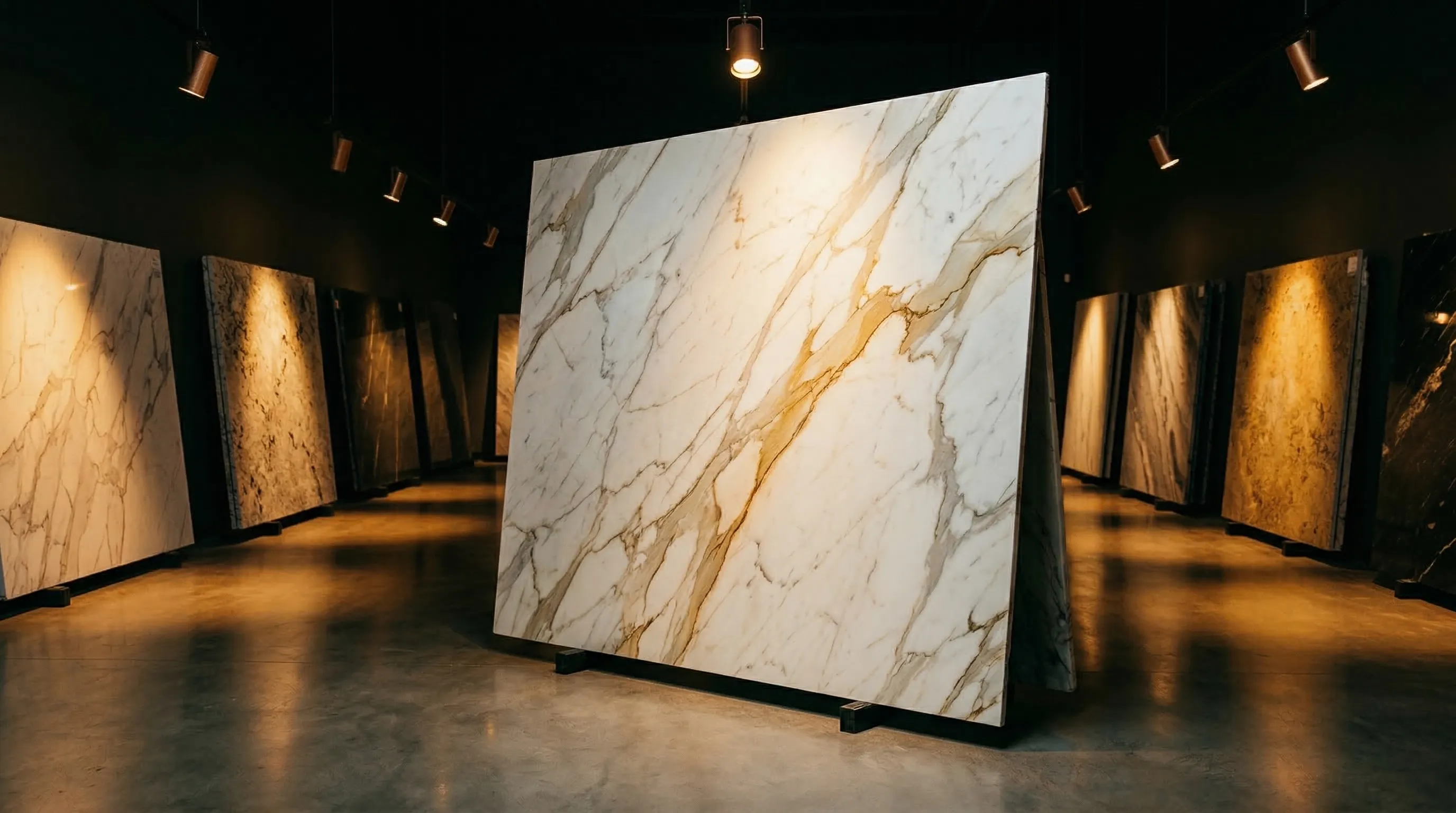
Natural stone — whether marble, granite, quartzite, or another material — is quarried directly from the earth. Every slab is genuinely one of a kind, with veining, color variations, and character that no engineered product can truly replicate. For homeowners and designers who value authenticity and uniqueness, natural stone is irreplaceable.
The practical considerations are meaningful. Quartz requires virtually no maintenance and handles everyday kitchen life with ease. Natural stone requires periodic sealing and more careful cleaning, but rewards you with depth, warmth, and the unmistakable feel of real geological material. Natural stone also handles heat better — particularly granite and quartzite — while quartz can be damaged by hot pots placed directly on the surface.
Many of our customers at Baystone ultimately choose natural stone for primary surfaces like kitchen islands and feature walls, while using quartz for utility areas like laundry rooms or butler pantries. Our design consultants can help you find the perfect combination for your project.
Best Choice by Use Case
No sealing, easy cleaning, stain-proof
Unique beauty and depth no engineered product can match
Quartz can discolor under UV; natural stone is UV-stable
Minimal maintenance for tenants
Both perform well; choose based on aesthetic preference
See Both Materials in Person
Photographs cannot capture the depth and character of natural stone. Visit our San Jose showroom to compare Quartz (Engineered) and Natural Stone side by side with guidance from our stone specialists.