
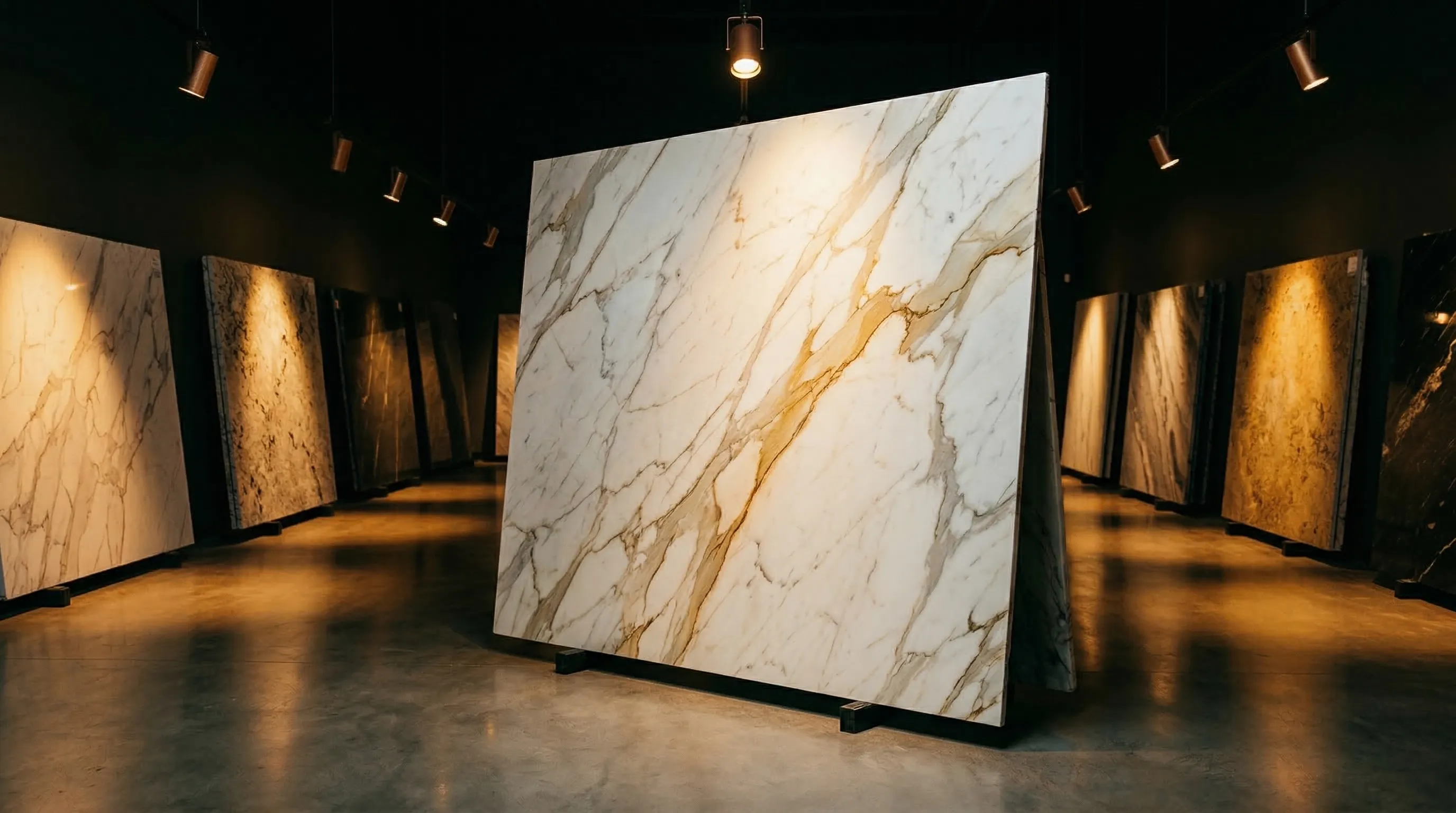
Quartzite vs. Quartz: What's the Difference?
Despite their similar names, quartzite and quartz are fundamentally different materials. Quartzite is a natural metamorphic rock quarried from the earth. Quartz (engineered) is a manufactured product made from ground quartz crystals and resin. Here is how they compare.
How They Compare
| Attribute | Quartzite (Natural Stone) | Quartz (Engineered) |
|---|---|---|
| Origin | Natural — quarried metamorphic rock | Manufactured — ground quartz + resin |
| Durability (Mohs Hardness) | 7-8 (Extremely Hard) | 7 (Hard, engineered) |
| Maintenance | Medium — seal every 2-3 years | Low — no sealing required |
| Cost (per sq ft installed) | $80 - $200+ | $60 - $150 |
| Heat Resistance | Excellent | Moderate — sensitive to direct heat |
| Stain Resistance | Good when sealed | Excellent — non-porous |
| Appearance | Unique natural veining; stunning movement | Consistent patterning; wide color range |
| Best For | Luxury kitchens, islands, outdoor areas | Busy kitchens, bathrooms, commercial spaces |
The Full Picture
The confusion between quartzite and quartz is one of the most common in the stone industry. Quartzite is a natural stone formed when sandstone is subjected to extreme heat and pressure deep within the earth. The result is one of the hardest and most beautiful natural stones available, with dramatic veining that rivals marble.
Quartz countertops, by contrast, are engineered products. Manufacturers combine roughly 90-94% ground quartz crystals with polymer resins and pigments to create a non-porous, consistent surface. While quartz countertops contain natural quartz mineral, they are not natural stone — the manufacturing process fundamentally changes the material's character.
In terms of performance, quartzite is actually harder than most engineered quartz and handles heat significantly better. However, quartzite is a natural material that requires periodic sealing and can be susceptible to staining if the seal deteriorates. Quartz never needs sealing and offers superior stain resistance out of the box.
Aesthetically, quartzite wins for those who value natural character. Each quartzite slab is unique, with veining, movement, and color that cannot be replicated. Quartz offers more uniformity and predictability, which appeals to different design sensibilities. At Baystone, we recommend seeing both materials in our showroom — the difference in depth and character is immediately apparent in person.
Best Choice by Use Case
Unmatched natural beauty and exceptional durability
Zero sealing, easy daily care
UV-stable and weather-resistant; quartz can yellow
Uniform color across many slabs
Excellent heat tolerance without risk of scorching
See Both Materials in Person
Photographs cannot capture the depth and character of natural stone. Visit our San Jose showroom to compare Quartzite (Natural Stone) and Quartz (Engineered) side by side with guidance from our stone specialists.