
How to Clean and Maintain Calacatta Marble to Prevent Etching and Staining
Calacatta marble is widely regarded as one of the most luxurious and breathtaking natural stones available for high-end residential design. Its signature bright white background and bold, dramatic veining instantly elevate kitchens, bathrooms, and feature walls into architectural masterpieces.
However, because it is a premium natural material, maintaining its pristine, showroom-quality brilliance requires specialized knowledge. Implementing a proper care routine is the only definitive way to preserve its flawless sheen and prevent permanent damage over time.
Understanding Etching vs Staining on Natural Stone
Homeowners frequently confuse etching and staining, yet they are entirely different chemical reactions that require distinct preventative measures. Understanding this core difference is the first step toward long-term stone preservation.
What is Marble Etching?
Etching is a form of physical surface damage that occurs when calcium carbonate, the primary mineral component of marble, comes into direct contact with acidic substances.
Common culprits like lemon juice, vinegar, wine, and tomato sauce chemically dissolve a micro-layer of the stone's polished or honed finish. This chemical burn leaves behind a dull, hazy, whitish mark that alters the texture of the stone rather than altering its color.
What is Marble Staining?
Staining occurs when liquids penetrate deep into the microscopic pores of the stone, altering its actual coloration.
If a liquid like dark coffee, red wine, or cooking oil is allowed to pool on the surface for an extended period, the stone acts like a sponge and absorbs the substance. This results in a discoloration that sits beneath the surface layer rather than a localized physical dullness.
Why Calacatta is Vulnerable to Both
Calacatta marble possesses a highly refined geological composition that makes it uniquely sensitive to environmental factors. Because it is a softer, more porous natural material compared to dense stones like granite or manufactured surfaces, liquids migrate into its structural pores with relative ease.
Its signature bright white background also means that even minor instances of discoloration or light surface etching stand out vividly under direct kitchen lighting.
Essential Tools and Cleaners for Calacatta
Caring for premium marble surfaces requires choosing tools that preserve the integrity of the stone. Using the incorrect chemical can quickly dull its reflective finish.
- Soft Microfiber Cloths: Ideal for daily wiping because they trap dust and absorb liquids without creating micro-scratches on the polished surface.
- pH-Neutral Stone Cleaners: Formulated specifically to break down grease and grime without stripping away protective stone sealants or etching the surface.
- Non-Abrasive Sponges: Safe for stubborn, dried-on food particles when combined with light pressure and plenty of warm water.
- Prohibited Acidic Cleaners: Traditional household items like lemon juice, white vinegar, window cleaners, and bleach must be avoided entirely.
- Prohibited Scrubbing Tools: Steel wool, stiff bristle brushes, and abrasive scouring pads will permanently scratch and dull the marble facade.
The Daily Cleaning Routine for Marble Countertops
A simple, consistent daily routine prevents the buildup of abrasive grit and acidic residues that can silently wear down your stone's finish over time.
Wiping Away Dust and Debris
The first line of defense is removing dry surface particles that can act like sandpaper under shifting items. Use a dry, clean microfiber cloth or a dedicated stone duster to sweep away loose crumbs, dust, and outdoor grit before performing any wet cleaning methods.
Using pH-Neutral Cleansers
Once loose debris is removed, mist the entire surface lightly with a professional, pH-neutral cleaner. Work in circular motions with a clean microfiber cloth to lift surface oils and grime, taking care not to oversaturate the seams or edges where moisture can pool.
The Importance of Drying the Surface
Never allow marble countertops to air dry after cleaning, as tap water often contains minerals like iron, lime, and calcium that can leave behind dull hard-water spots. Always use a secondary, bone-dry microfiber towel to thoroughly buff the surface until it is completely dry and perfectly reflective.
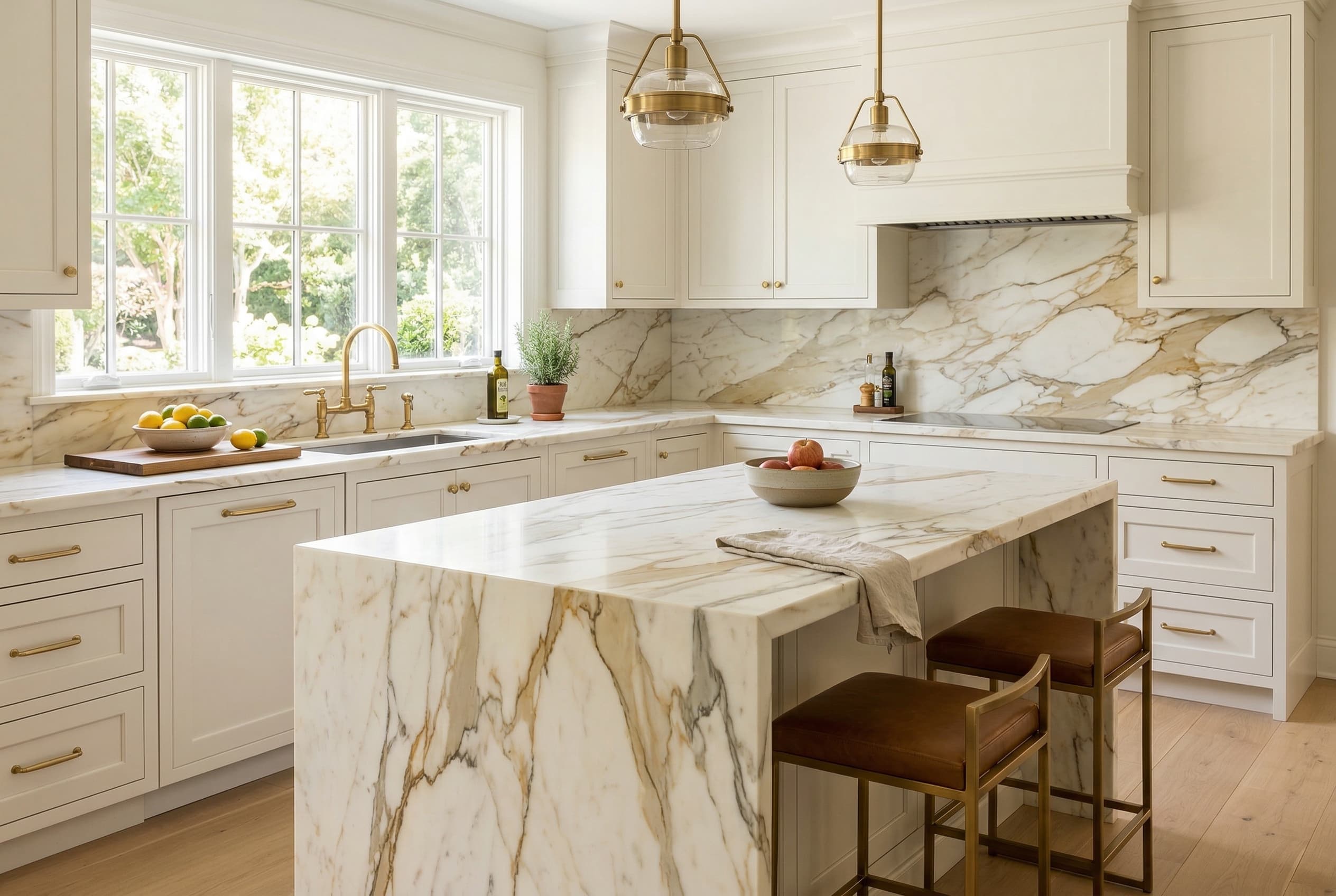
Emergency Protocol for Spills and Splatters
When a spill occurs on a luxury marble countertop, your immediate reaction determines whether it becomes a permanent blemish. The absolute gold standard of spill management is blotting rather than wiping.
When you wipe a liquid, you inadvertently spread it across a larger surface area and push the fluids deeper into the stone's microscopic pores. Instead, take a clean, dry paper towel or microfiber cloth and press down firmly directly over the spill to draw the liquid upward out of the surface.
Time is your greatest enemy when dealing with high-risk substances like red wine, hot coffee, balsamic vinegar, or citrus juices. If these substances sit for even a few minutes, they can simultaneously etch the top finish and stain the inner core.
Keep decorative trays, stone coasters, and heat-resistant trivets readily available across your counter spaces to act as physical barriers, ensuring that everyday kitchen items never make direct, unshielded contact with your delicate stone.
Creating a Poultice for Stubborn Stains
If an oily substance or organic pigment bypasses your sealant and migrates deep into your stone, traditional surface cleaning will not remove it. To fix this, you must build a custom poultice designed to reverse the absorption process and pull the stain back out.
Create a thick, paste-like paste by mixing pure baking soda with a few drops of water until it reaches the consistency of peanut butter, ensuring there are no dry pockets left in the mixture.
Clean the affected area with water, apply a thick layer of the baking soda paste directly over the stain, and cover it completely with plastic wrap. Tape down the edges of the plastic wrap to seal in the moisture, then poke a few tiny holes in the top to allow for slow evaporation.
Leave the poultice undisturbed for twenty-four to forty-eight hours; as the paste slowly dries, it creates a powerful capillary action that extracts the deep-seated stain from the stone, allowing you to carefully scrape away the dried powder with a plastic spatula.
The Professional Sealing Schedule
Maintaining an active barrier against moisture absorption requires a consistent sealing routine based on the specific location of your stone.
Application Type | Sealing Frequency | Traffic Level | Primary Risk Factors |
Kitchen Countertops | Every 6 Months | High | Cooking oils, wine, acidic juices, hot grease |
Bathroom Vanities | Every 12 Months | Medium | Cosmetic oils, hard water, soaps, toothpaste |
Shower Walls | Every 12 to 18 Months | Medium | Continuous water exposure, mold, mildew |
Feature Accent Walls | Every 2 to 3 Years | Low | Airborne dust, ambient indoor humidity |
Ready to protect your luxury stone surfaces? Book a free consultation with the maintenance experts at Bay Stone Depot to determine the best care products for your home.
Long-Term Preventative Care Strategies
Preserving the majestic beauty of your stone over several decades requires adopting a few mindful household habits. Even the strongest stone sealants cannot protect against physical surface abrasion or intense heat shocks. You should always use dedicated, thick cutting boards during food preparation to ensure that heavy chef knives never scratch the stone or wear down its polished layer.
If you have installed premium stone slab elements as luxury flooring, place thick, high-quality area rugs or runners in your primary high-traffic pathways. This simple step effectively catches outdoor dirt, small pebbles, and abrasive grit that could otherwise grind into the marble surface under footwear.
Conclusion
Calacatta marble remains one of the most magnificent and timeless stones you can introduce into an interior design project. While its softer, more porous chemistry makes it inherently susceptible to acid etching and deep staining, these risks are easily managed with an informed, disciplined care strategy.
By committing to routine pH-neutral cleaning, reacting quickly to emergency spills with a blotting technique, and maintaining a strict seasonal sealing schedule, you can keep your stone looking completely flawless.