
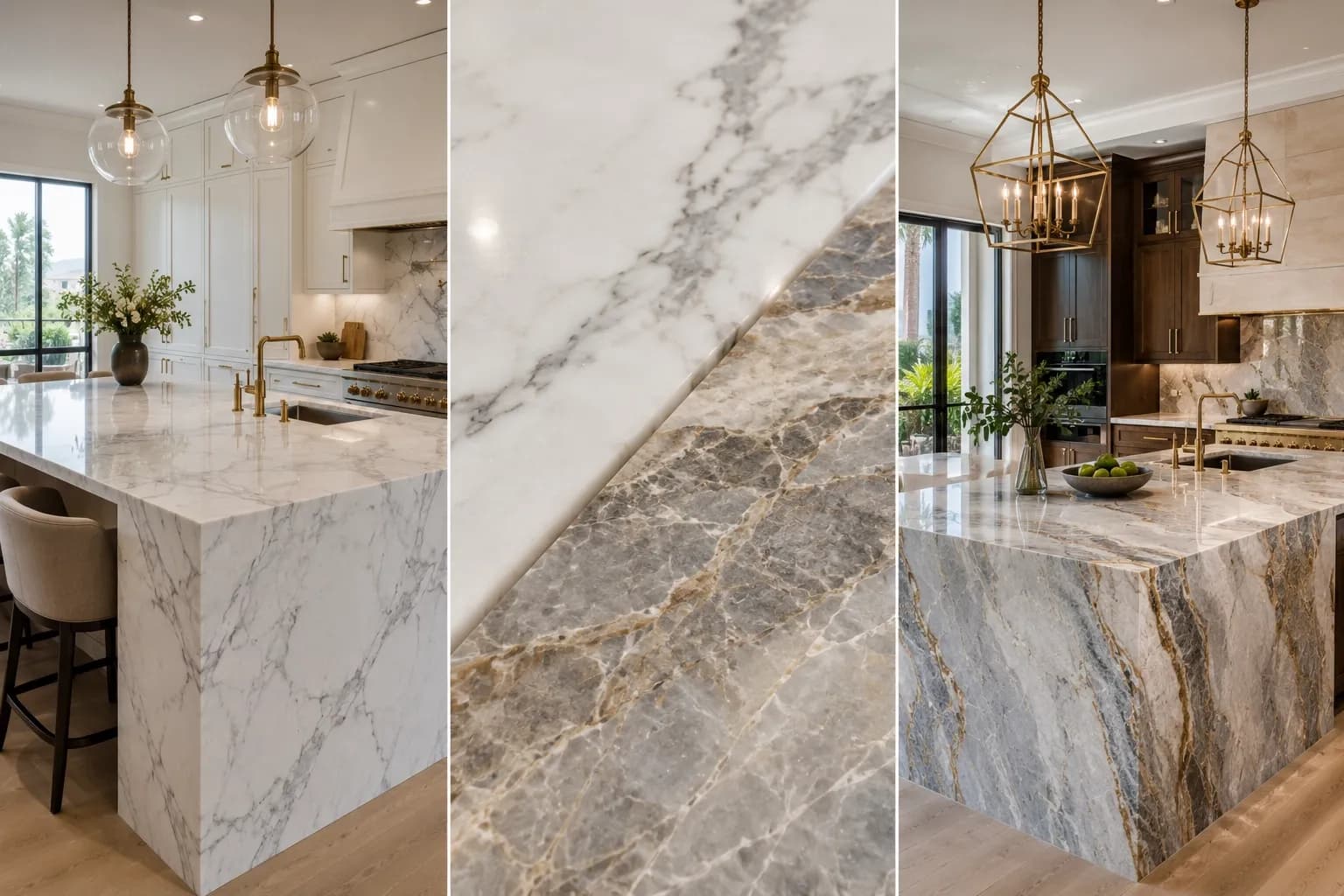
Marble vs. Quartzite: The Complete Comparison Guide for Kitchen Countertops
Marble and quartzite are both natural stones, but quartzite generally offers greater resistance to everyday wear, while marble is prized for its classic veining and timeless appearance. The better choice depends on how you use your kitchen, the look you want, and how much maintenance you are comfortable with.
Choosing between marble vs quartzite is about more than color. Each material responds differently to scratches, staining, etching, heat, and daily kitchen activity. Understanding those differences can help you select a countertop that fits both your design and lifestyle.
Marble Countertops: Beauty and Classic Character
Marble has been used in architecture and interiors for centuries, and its appeal comes largely from its distinctive veining and natural variation. No two slabs look exactly alike, making marble a strong choice when the countertop itself is intended to become a design feature.
Appearance and Natural Veining
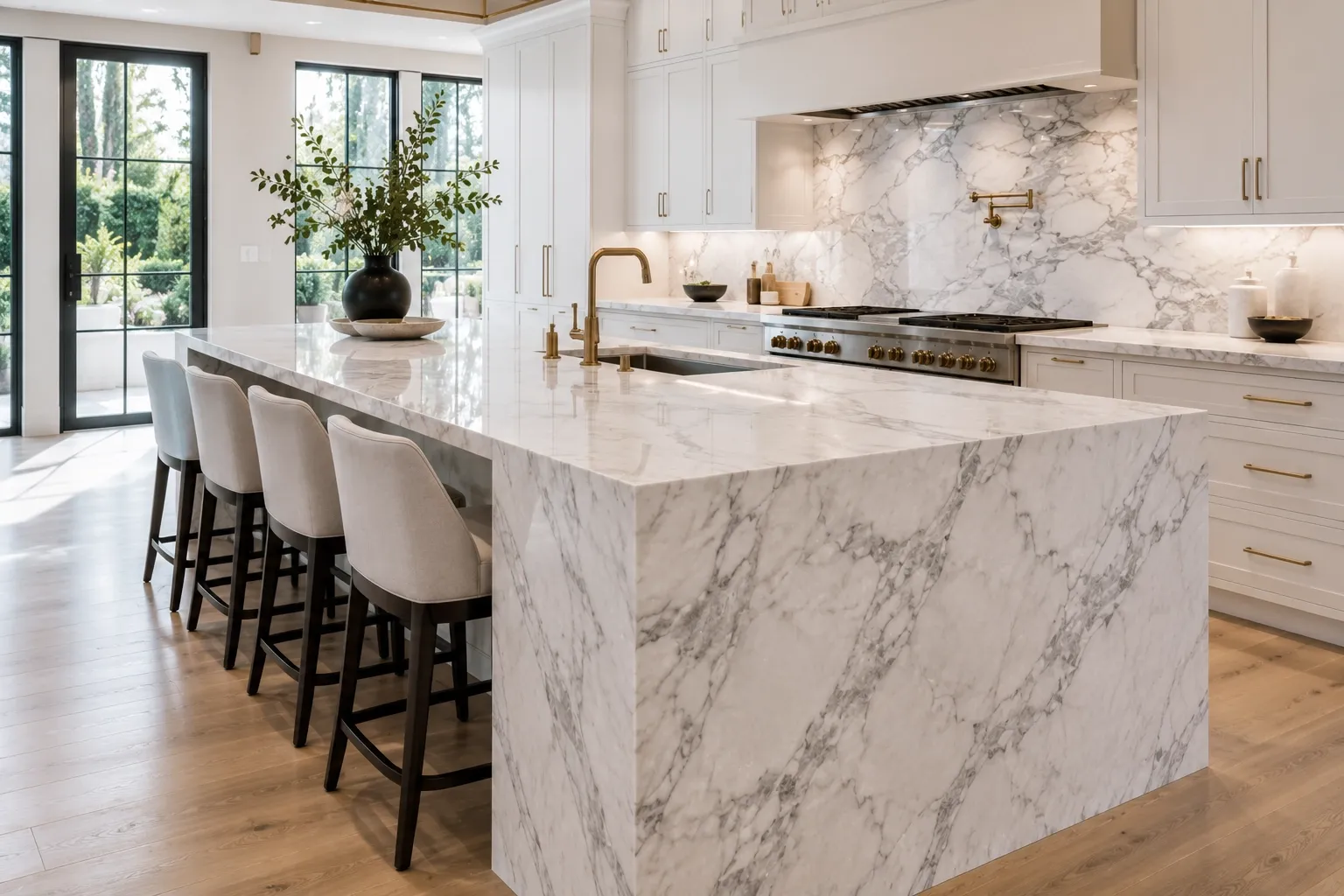
Marble countertops are known for flowing veins, soft color movement, and a wide range of backgrounds. Depending on the variety, marble can range from bright white and subtle gray to deeper tones with dramatic veining.
For a kitchen island, a carefully selected slab can create a strong focal point. Large-scale veining can also be bookmatched or positioned during fabrication to create a more intentional visual effect.
Durability and Everyday Use
Marble is a durable natural stone, but it is softer than quartzite and can be more vulnerable to scratching and surface changes from everyday kitchen use. Sharp objects, abrasive materials, and heavy activity can affect the surface over time.
Marble is also susceptible to etching. Acidic foods and liquids, such as lemon juice, vinegar, and some tomato-based products, can react with the stone and leave dull areas on the surface.
That does not make marble unsuitable for kitchens. It simply means homeowners should understand its characteristics and be comfortable with the patina that natural stone can develop.
Maintenance and Care
Marble maintenance starts with proper cleaning habits. Use products recommended for natural stone and avoid harsh or acidic cleaners that may damage the surface.
Sealing can help protect certain marble surfaces from staining, although a sealer does not make marble completely stain-proof or prevent etching. Spills should still be cleaned promptly.
Regular care is straightforward when the appropriate products and practices are used. For example, a marble kitchen countertop can remain beautiful for years when it is cleaned properly and treated according to the specific stone's requirements.
Quartzite Countertops: Durability With Natural Beauty
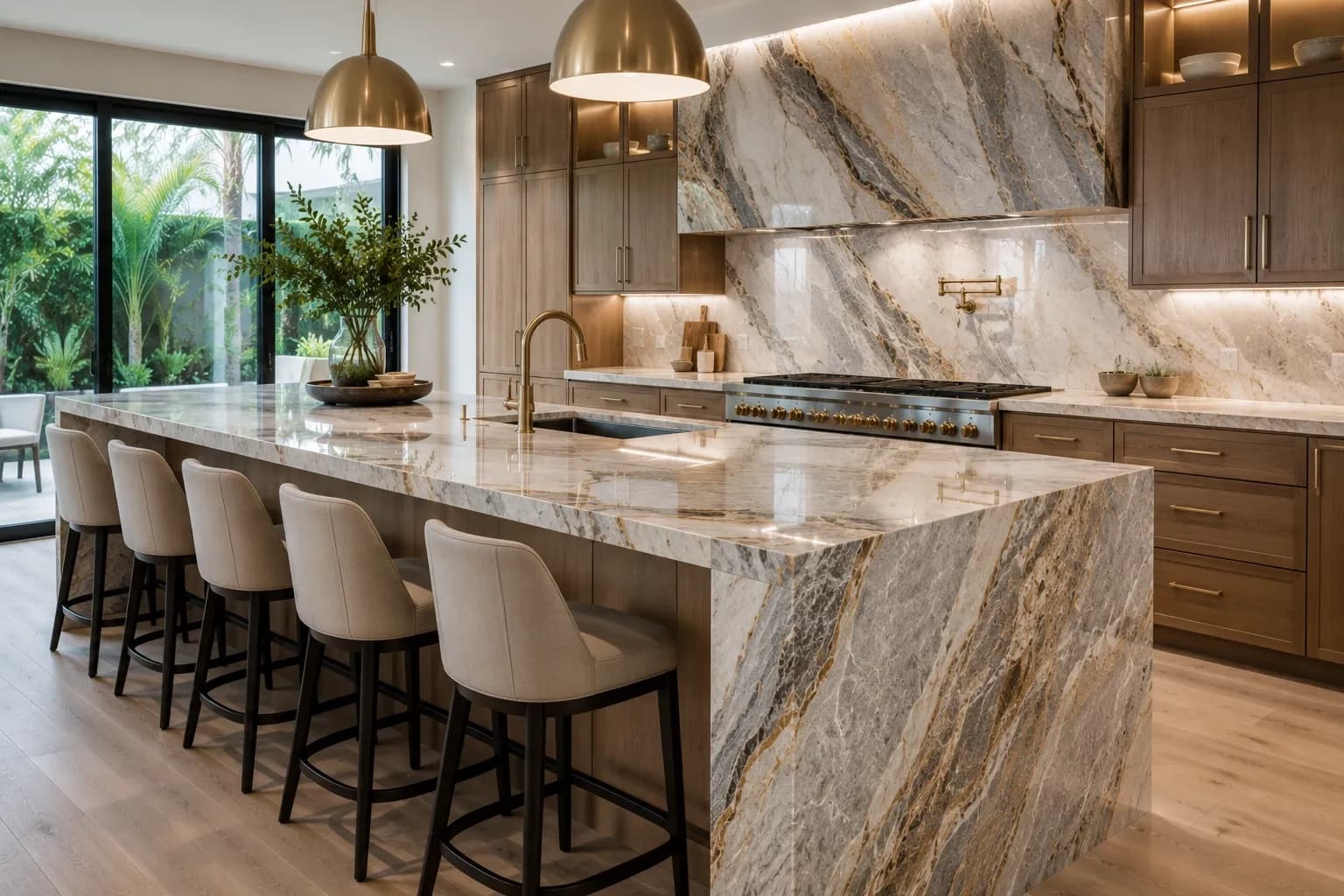
Quartzite has become popular for kitchens because it combines the visual character of natural stone with strong performance characteristics. It can provide dramatic veining while offering greater resistance to everyday wear than marble.
Appearance and Stone Characteristics
Quartzite countertops can resemble marble, making them appealing to homeowners who want a bright, elegant stone with pronounced natural movement. Colors and patterns vary significantly between quartzite varieties, from light backgrounds with subtle veins to bold slabs with contrasting mineral patterns.
The full slab is important when choosing quartzite because a small sample may not show the scale or direction of the natural veining.
Durability and Resistance
Quartzite is generally harder than marble, giving it an advantage for busy kitchens where countertops are exposed to frequent preparation and everyday activity. It has good resistance to scratching, although no natural stone should be treated as completely scratch-proof.
Quartzite is also less prone to acid-related etching than marble. However, individual stones can vary, and proper care remains important.
Maintenance and Care
Quartzite maintenance is similar to the care required for many other natural stones. Routine cleaning should use suitable stone-safe products, while spills should not be left sitting unnecessarily.
Some quartzite may benefit from sealing based on its porosity and intended application. A qualified stone professional can help determine the appropriate care approach for a particular material.
Marble vs. Quartzite: Key Differences
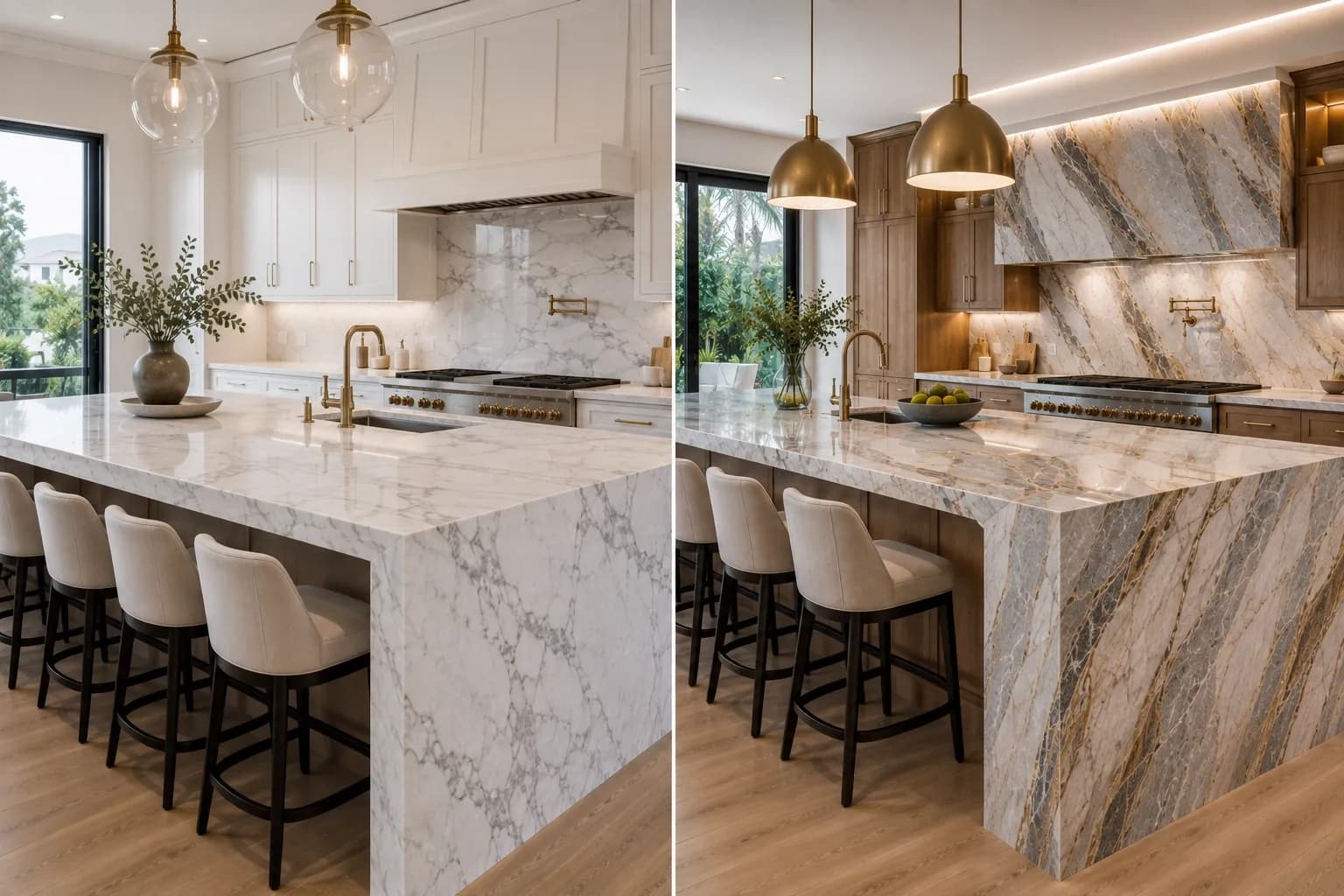
Looking at the materials side by side makes the decision easier. Both offer natural variation and premium visual appeal, but they differ in how they respond to everyday kitchen use.
Durability and Scratch Resistance
Quartzite generally has the advantage in hardness and scratch resistance. Marble is comparatively softer, so it requires more care around knives, abrasive objects, and rough use.
Neither material should be viewed as indestructible. Cutting directly on any stone countertop is best avoided, and trivets or protective surfaces can help reduce unnecessary wear.
Staining and Etching
Staining and etching are two different concerns. A stain occurs when a substance penetrates or leaves discoloration, while etching is a surface reaction that can create a dull or altered area.
Marble is more vulnerable to etching from acidic substances. Quartzite generally provides better resistance to this type of surface reaction, making it attractive for homeowners who want natural stone with fewer concerns about acidic kitchen ingredients.
Maintenance Requirements
Both materials require sensible natural stone care. Cleaning spills, using appropriate cleaners, and following recommended sealing practices can help protect the countertop.
Marble may demand greater attention because etching and staining can be more noticeable, particularly on lighter surfaces. Quartzite can be easier for homeowners who prioritize durability but still want genuine natural stone.
Style, Color, and Veining
Marble remains a leading choice for classic, elegant kitchens because of its recognizable veining and soft visual character. Quartzite offers a broader range of dramatic natural patterns and can provide a similar sophisticated appearance with different performance characteristics.
The best choice should be based on the actual slab rather than the material name alone. Natural stone varies considerably, even within the same category.
Which Is Better for Kitchen Countertops?
There is no universal winner in the marble or quartzite for kitchen debate. Quartzite is usually the stronger practical choice for high-use kitchens because of its hardness and resistance to everyday wear, while marble can be the better fit for homeowners who value distinctive veining and accept more careful maintenance.
Think about how you cook, how frequently the kitchen is used, and whether you are comfortable with natural surface changes over time. A busy household that wants to minimize concerns about scratches and etching may lean toward quartzite. Someone who appreciates the character that marble develops with use may prefer marble.
The countertop should also work with the cabinetry, flooring, backsplash, and lighting. A dramatic slab can look very different once installed across a large island.
Marble vs. Quartzite Cost
Marble vs quartzite cost varies significantly based on the specific stone, slab quality, color, veining, thickness, edge profile, fabrication, installation, and project size. There is no single price that accurately represents every marble or quartzite countertop.
Cost Factor | Marble | Quartzite |
|---|---|---|
Material price | Varies by stone and slab | Varies by stone and slab |
Slab selection | Color, rarity, and veining affect cost | Pattern, rarity, and quality affect cost |
Fabrication | Depends on size and design | Depends on size and design |
Edge details | Added fabrication cost may apply | Added fabrication cost may apply |
Installation | Depends on project requirements | Depends on project requirements |
Long-term value | Strong design appeal | Strong durability and design appeal |
When comparing marble countertop cost with quartzite countertop cost, look at the complete project rather than only the slab price. A more expensive material may have characteristics that better suit the way your kitchen is used.
How to Choose Between Marble and Quartzite
Start with function, then consider appearance. Think about cooking habits, cleaning expectations, children or pets in the household, and how much activity the countertop will handle each day.
Next, consider the visual direction of the kitchen. Marble can create a soft, classic appearance, while quartzite can deliver anything from understated movement to bold, dramatic veining.
Finally, inspect the actual slab whenever possible. Natural stone is not uniform, and the pattern you see on a small sample may not represent what will appear across an entire island.
Bay Stone Depot works with natural stone for residential and commercial applications, giving homeowners and design professionals an opportunity to compare materials and select a surface suited to the project.
Conclusion
Marble vs quartzite ultimately comes down to the balance between appearance, performance, maintenance, and budget. Marble offers exceptional natural character and timeless veining, while quartzite generally provides greater hardness and resistance for demanding kitchen environments.
Neither material is automatically better for every homeowner. The right choice is the stone that matches how you use your kitchen and the level of care you are willing to provide.
Whether you prefer the classic movement of marble or the durability and natural beauty of quartzite, reviewing full slabs and discussing fabrication and care requirements can make the selection process much easier.