Quartz vs Quartzite Countertops: What is the Difference and Which is Better?
When selecting the perfect centerpiece for a luxury kitchen or master bath, the choice often narrows down to two of the most sought-after surfaces on the market: quartz and quartzite. Despite their remarkably similar names, these premium materials are fundamentally different in their makeup, performance, and aesthetic appeal.
Understanding the unique characteristics of engineered quartz versus natural quartzite is essential to choosing the right surface for your architectural vision and daily lifestyle.
The Origins and Composition of Both Materials
The structural and visual differences between these two premium surfaces begin at their very creation. Exploring how each material is formed reveals exactly what you are bringing into your home.
The Manufacturing Process of Engineered Quartz
Quartz countertops are manufactured, highly engineered surfaces. They are created by blending roughly ninety percent crushed natural quartz minerals with ten percent high-quality polymer resins and pigments.
This industrial process binds the raw materials together into a completely solid, non-porous slab that is highly predictable in its structure.
The Geological Formation of Natural Quartzite
Quartzite is a one-hundred-percent natural stone quarried directly from the earth. It begins its lifecycle as sandstone. Over millions of years, intense subterranean heat and massive tectonic pressure fuse the sand grains together, crystalizing them into a remarkably hard, dense, and naturally occurring stone.
How Composition Affects the Final Product
These distinct origins completely dictate the nature of the final slab. Because quartz is a factory-engineered product, it is designed for absolute consistency and uniformity.
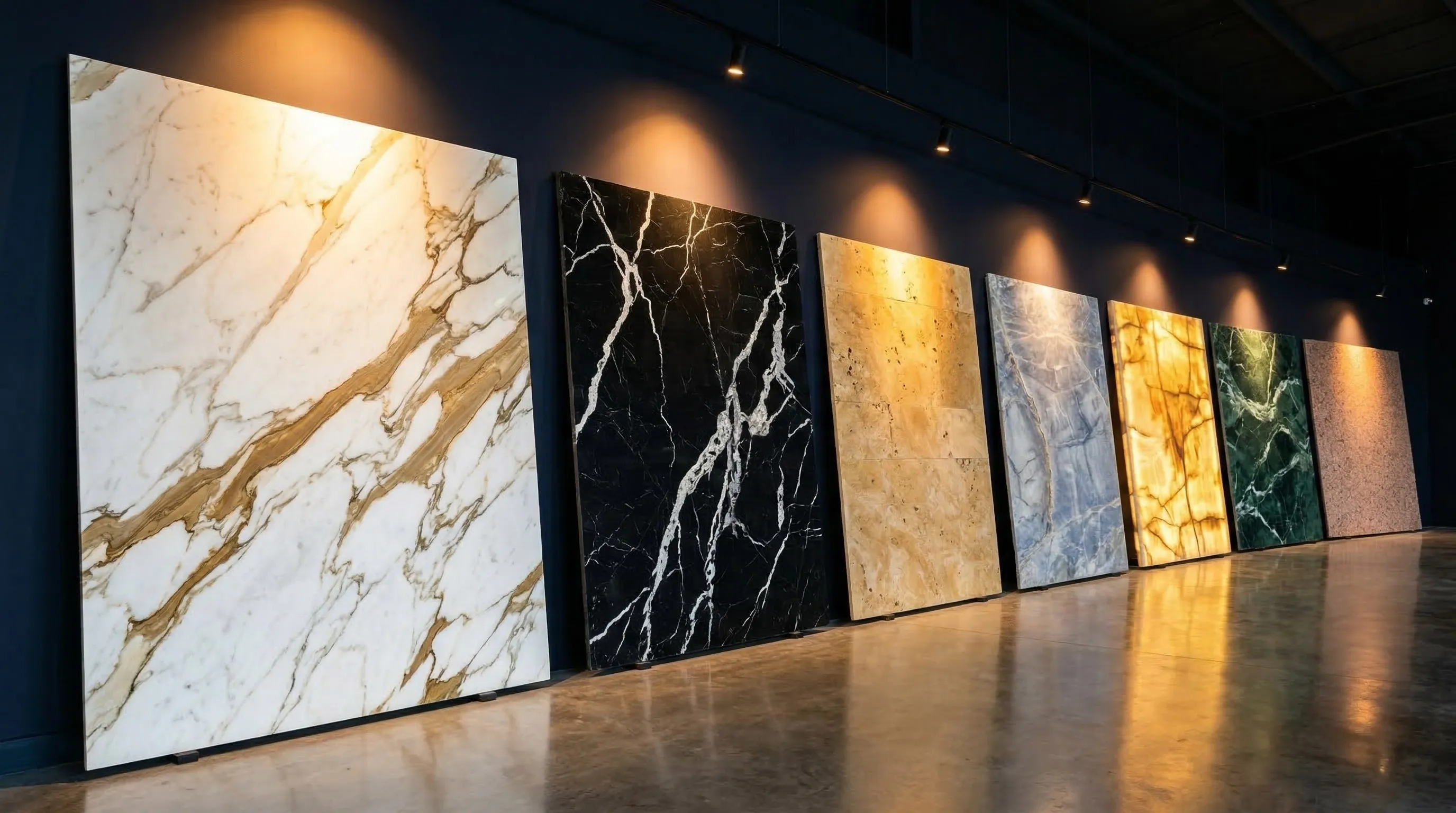
Conversely, quartzite is a geological wonder sculpted by nature; its composition ensures that every single slab features completely unique mineral patterns that cannot be replicated by human hands.
Comparing Visual Aesthetics and Design Options
The aesthetic differences between engineered and natural stone cater to entirely different design philosophies. Here is how their visual characteristics compare:
- Pattern Consistency: Engineered quartz offers perfect uniformity. If your design requires exact color matching across a massive kitchen island and multiple perimeter counters, quartz delivers a predictable, flawless match.
- Organic Veining: Natural quartzite provides sweeping, dramatic, and entirely unique veining. It is ideal for custom bookmatched feature walls where organic beauty is the focal point.
- Color Availability: Quartz is manufactured in virtually every color imaginable, from solid ultra-modern whites to pigments that mimic marble.
- Natural Hues: Quartzite colors are dictated by the minerals present during its formation, offering breathtaking, earthy tones ranging from crystalline whites and grays to exotic, vibrant greens and blues.
Durability Benchmarks for Busy Kitchens
Both surfaces are celebrated for their immense strength, but their distinct compositions mean they react differently to heavy daily use in a high-traffic kitchen.
Evaluating Scratch Resistance and Hardness
Natural quartzite is incredibly dense and ranks higher on the Mohs hardness scale than granite, making it highly resistant to deep scratches from knives or sharp objects.
While engineered quartz is also extremely scratch-resistant, the polymer resins give it a slight flexibility, making it somewhat less prone to edge chipping upon heavy impact compared to rigid natural stone.
Assessing Heat Tolerance and Scorch Risks
Quartzite excels in high-temperature environments. Because it was forged by immense geothermal heat, it can easily withstand hot pots and pans resting directly on its surface.
Engineered quartz, however, contains synthetic resins that can scorch, warp, or permanently discolor if exposed to extreme heat from cooking equipment.
Understanding Porosity and Stain Vulnerability
Engineered quartz dominates when it comes to stain resistance. Its resin-bound, non-porous nature means spilled wine, coffee, or oil simply wipe away without penetrating the surface.
Quartzite is slightly porous by nature; if its protective seal is neglected, it can absorb highly acidic liquids, leading to potential dark stains or etching.
Maintenance and Sealing Requirements
Daily care and long-term upkeep vary significantly between engineered and natural surfaces. Review the breakdown below to understand the commitment required for each.
Maintenance Factor | Engineered Quartz | Natural Quartzite |
Routine Cleaning | Mild soap and water | pH-neutral stone cleaner |
Sealing Required | Never | Yes (Annually) |
Porosity Level | 100% Non-porous | Slightly porous |
Sanitation | Naturally antimicrobial | Safe when properly sealed |
Breaking Down the Costs of Materials and Fabrication
Budgeting for luxury kitchen and bath surfaces involves evaluating both the raw material pricing and the labor-intensive fabrication processes.
Generally, natural quartzite demands a higher premium than engineered quartz. Because quartzite is an authentic natural stone sourced from exclusive global quarries, its availability fluctuates, and exotic color variations or dramatic veining can significantly drive up the initial slab cost.
Furthermore, custom fabrication plays a massive role in the final price tag. Natural quartzite is substantially harder than granite and quartz, sitting near the top of the Mohs hardness scale. Cutting and shaping it requires specialized diamond-tipped tools, state-of-the-art CNC machinery, and significantly more time from skilled artisans.
Engineered quartz is more predictable to cut and handle, which streamlines the fabrication timeline and lowers overall labor expenses. While high-end designer quartz brands can approach the cost of standard quartzite, the natural alternative almost always carries a higher total project cost due to these advanced fabrication demands.
Installation Considerations for Heavy Stone Slabs
The path from selecting a slab to enjoying it in your home requires meticulous preparation and expert handling. Both materials are exceptionally dense, but natural quartzite is heavier and more rigid, making structural readiness a top priority.
Before any stone is cut, a precise digital template must be created using laser technology to ensure a flawless fit against your existing cabinetry and walls, accounting for every curve, cut-out, and seam location.
Because of the immense weight of these materials, your cabinetry must be perfectly level and structurally sound to support the load without bowing or shifting over time. Attempting a do-it-yourself installation or hiring uncertified general labor risks catastrophic cracking or poor seam alignment.
Professional, certified installers use specialized vacuum-suction lifters, seam setters, and heavy-duty transport carts to maneuver the massive slabs into place safely. Choosing experienced pros protects your investment, guarantees tight, virtually invisible seams, and ensures that complex edge profiles or waterfall elements are aligned with mathematical precision.
Choosing the Right Surface for Your Lifestyle
Selecting the ultimate winner between these two elite materials depends entirely on your daily habits, household dynamic, and overall design goals.
If you have a busy, high-traffic household with young children, do frequent casual cooking, and want a surface that requires absolutely zero long-term maintenance, engineered quartz is the most practical choice. It offers ultimate peace of mind against accidental juice spills, never requires sealing, and gives you complete control over color and pattern consistency across large spaces.
Conversely, if you are a culinary enthusiast who values heat resistance, or a design purist captivated by the breathtaking, unrepeatable artistry of the earth, natural quartzite is the ultimate luxury investment. It elevates your home with an organic visual presence that cannot be duplicated in a factory setting.
Conclusion
Both quartz and quartzite are premium, top-tier surfaces that instantly elevate the aesthetic allure and long-term resale value of any home. Engineered quartz delivers unmatched contemporary consistency, total stain resistance, and effortless, zero-maintenance longevity, making it a reliable staple for modern living. Natural quartzite offers incredible heat tolerance, diamond-like hardness, and a majestic, entirely unique visual character that transforms a simple countertop into a work of art.
Take the next step in your luxury design journey. Visit the Bay Stone Depot showroom in San Jose to compare premium quartz and rare quartzite slabs side-by-side with our dedicated architectural consultants.