
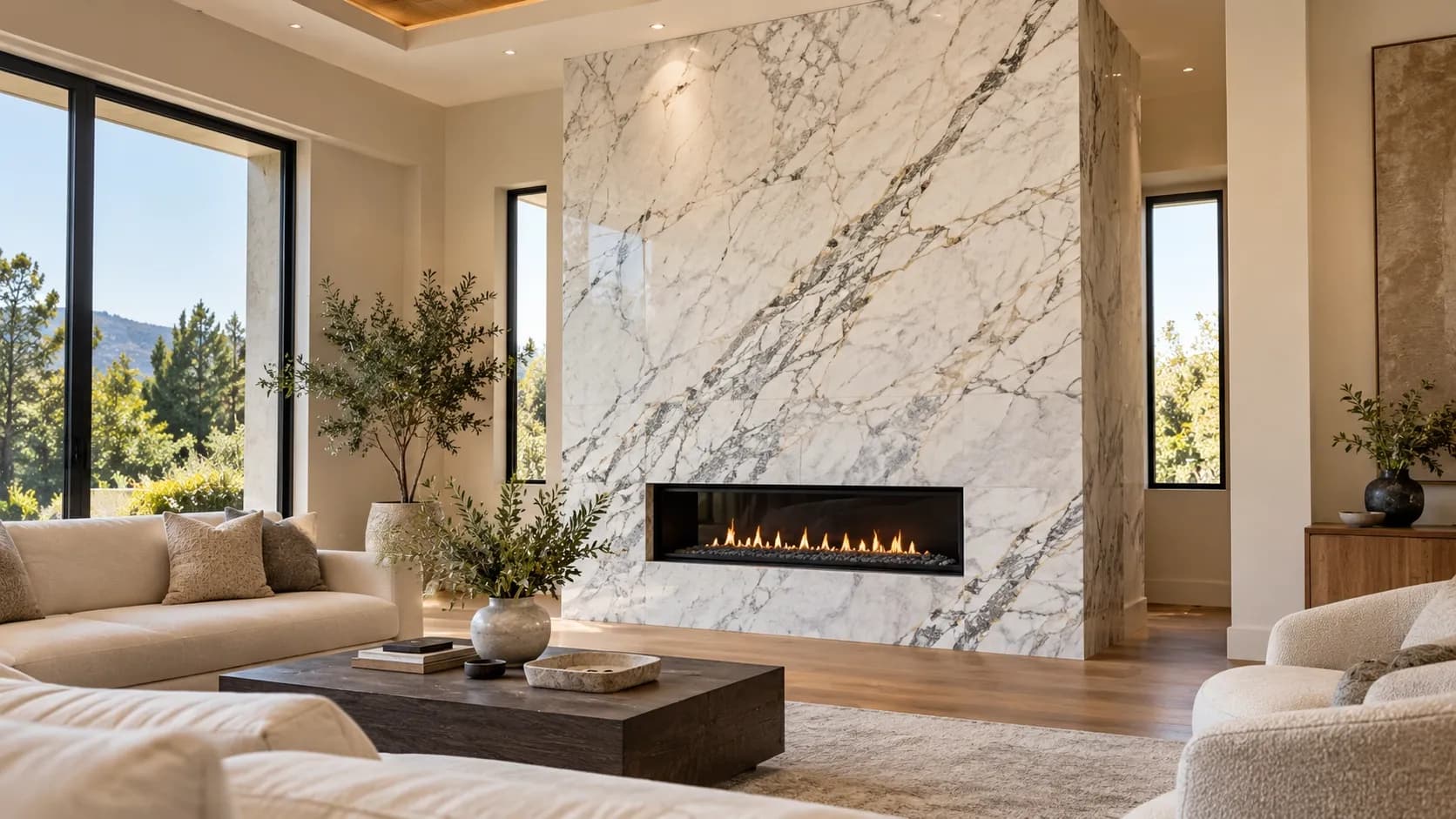
Custom Stone Fireplace Surrounds: Material Choices and Design Ideas
Custom stone fireplace surrounds combine natural beauty, durability, and design flexibility. Homeowners can choose from marble, granite, quartzite, travertine, and onyx to create a fireplace that complements their interior style. The right material depends on the desired appearance, maintenance needs, budget, and fireplace requirements.
A well-designed stone surround can become the focal point of a living room, bedroom, or open-concept space. From minimalist slab installations to dramatic floor-to-ceiling designs, natural stone offers many possibilities. Understanding the differences between materials and installation options helps you plan a fireplace that looks beautiful and performs reliably.
Why Choose Natural Stone for a Custom Fireplace Surround?
Natural stone brings distinctive colors, patterns, and textures to fireplace designs. Because each slab forms naturally, its veining and mineral variations create a unique appearance. This makes stone a strong choice for homeowners seeking something more individual than standard manufactured surrounds.
Durability is another important benefit. Granite and quartzite are generally hard, while marble and travertine offer softer visual character. With suitable care, many natural stone surfaces can maintain their appearance for years.
Stone also works with different interior styles. Polished marble suits elegant spaces, while textured travertine complements rustic interiors. Large slabs can create a clean, contemporary look with fewer visible seams.
Material selection still matters. Not every stone or finish suits every fireplace application. Always confirm the manufacturer's requirements and applicable fire-safety clearances before selecting materials.
Best Stone Materials for Fireplace Surrounds
Different stones offer different combinations of appearance, maintenance needs, and practical performance. Understanding these differences helps narrow your choices before selecting slabs.
Marble Fireplace Surrounds for Timeless Elegance
Marble is known for its distinctive veining and sophisticated appearance. White marble with gray veins creates a bright, classic look, while darker varieties introduce depth and contrast.
A marble fireplace surround works particularly well in traditional, transitional, and contemporary interiors. Large marble slabs can create a continuous visual pattern across the surround.
Marble is softer than granite and quartzite, so it can scratch or stain under certain conditions. Some varieties are also sensitive to acidic cleaners. Choose appropriate cleaning products and ask whether sealing is recommended for your selected stone.
Granite Fireplace Surrounds for Durability
Granite offers a wide range of colors, mineral patterns, and finishes. Its hardness makes it a practical option for homeowners who want a durable surface with a natural appearance.
A granite fireplace surround can suit both modern and traditional spaces. Dark granite creates a bold contrast against light walls, while lighter varieties help maintain an airy interior.
Granite maintenance depends on the specific variety and finish. Ask your stone supplier whether the selected slab needs sealing and which cleaning products are suitable.
Quartzite Fireplace Surrounds for Natural Beauty
Quartzite combines striking natural patterns with a hard surface. Many varieties feature flowing veins that resemble marble, making them attractive for statement fireplace designs.
A quartzite fireplace surround can complement neutral interiors, contemporary spaces, and rooms featuring natural wood. Its distinctive patterns also work well when the fireplace serves as the room's main visual feature.
Confirm that the material is genuine quartzite, as similarly marketed stones can have different properties. Fabrication requirements and maintenance recommendations should be based on the specific slab.
Travertine Fireplace Surrounds for Warm, Textured Appeal
Travertine features warm beige, cream, and earthy tones that create a relaxed atmosphere. Its natural pores and layered patterns give it a distinctive appearance.
This material suits Mediterranean, rustic, and traditional interiors. Depending on the finish, travertine can look smooth and refined or retain a more textured character.
Travertine is generally more porous than granite and quartzite. Filled and honed finishes can provide a more uniform appearance, but the stone still requires appropriate care.
Onyx Fireplace Surrounds for a Dramatic Statement
Onyx is prized for its striking patterns, rich colors, and translucent qualities in certain varieties. It can create an eye-catching focal point in luxury interiors.
Some onyx installations incorporate carefully planned backlighting to highlight the stone's translucency. This effect depends on the specific slab, lighting design, and installation system.
Onyx is typically softer and more delicate than granite or quartzite. It is best considered for applications where appearance takes priority and the surface can receive appropriate care.
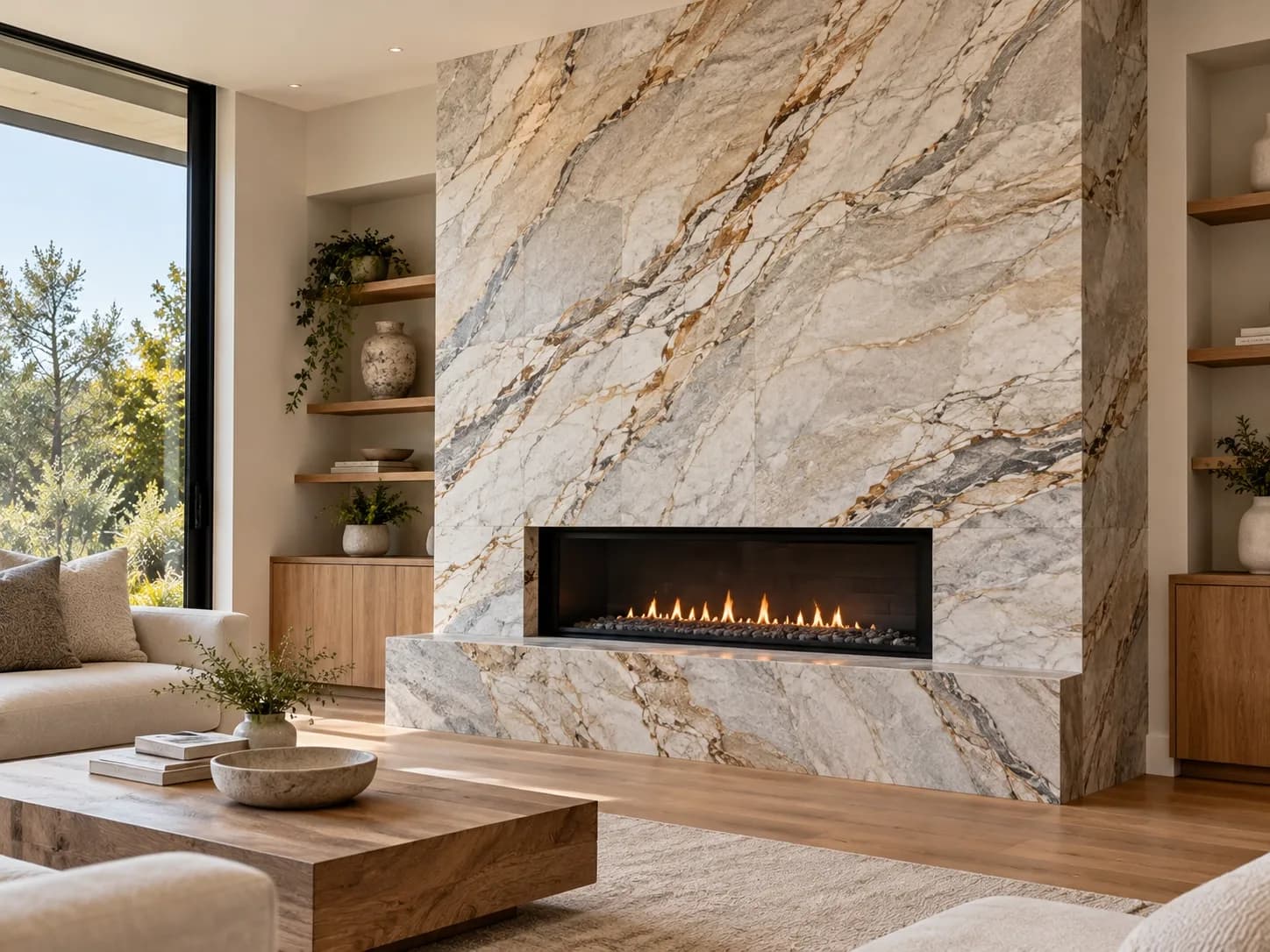
Custom Stone Fireplace Surround Design Ideas
The stone itself is only one part of the design. Layout, scale, finish, and surrounding architectural details determine how the fireplace fits into the room.
Floor-to-Ceiling Stone Fireplace Walls
A floor-to-ceiling stone fireplace creates a strong vertical feature. It can make a room feel more dramatic and draw attention toward high ceilings.
Large-format slabs work particularly well when their veining continues across the installation. Proper measurements and slab selection help create visual continuity.
Minimalist Fireplace Surrounds With Clean Lines
Minimalist designs use simple shapes, restrained colors, and uncluttered surfaces. A smooth stone slab surrounding a linear fireplace can complement modern furniture and neutral walls.
Choose subtle veining or a consistent color if you prefer a quiet appearance. Precise fabrication becomes especially important when the design includes narrow joints and clean edges.
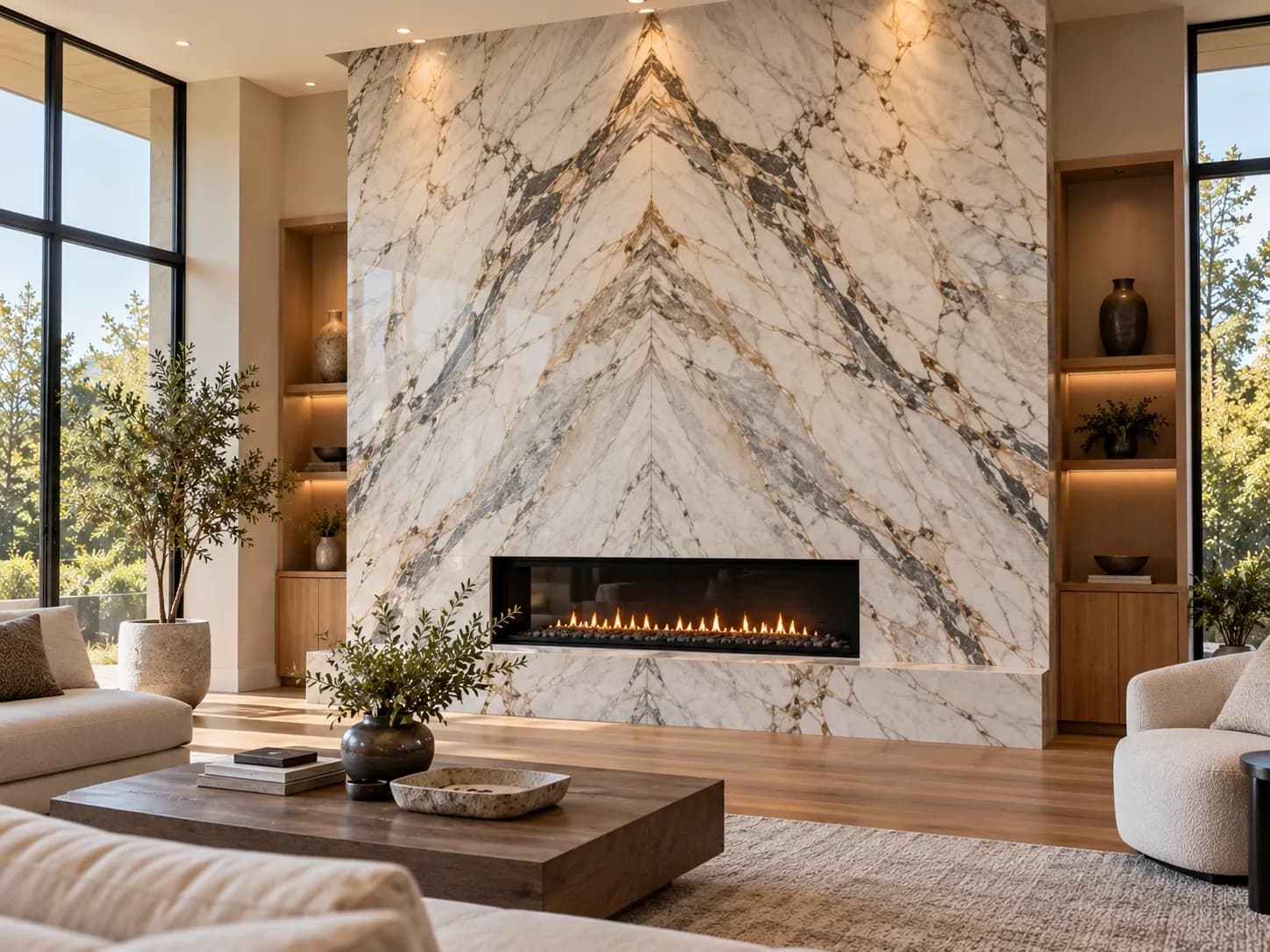
Bookmatched Stone Slabs for a Striking Focal Point
Bookmatching uses adjacent stone slabs cut from the same block and arranged to create mirrored patterns. This technique can produce a symmetrical design resembling an open book.
It works especially well with marble and selected quartzite slabs featuring prominent veining. Careful planning is necessary to align the patterns and minimize visual interruptions.
Rustic Stone Fireplaces With Natural Textures
Honed, brushed, or naturally textured stone can add warmth to rustic interiors. Earthy travertine and other stones with visible natural variation work well alongside timber beams and textured finishes.
Balance is important. A heavily textured surround can dominate a small room, so consider the fireplace's size and the surrounding materials.
Modern Fireplace Surrounds With Contrasting Materials
Pairing stone with wood, metal, or painted walls can create visual contrast. For example, dark stone against light walls makes the fireplace stand out, while warm stone and natural wood create a softer effect.
Choose complementary finishes and colors rather than introducing too many competing patterns. The goal is to make the fireplace feel connected to the overall interior.
Stone Fireplace Surrounds With Built-In Shelving
Built-in shelving can frame a fireplace and provide space for books, artwork, and decorative objects. Stone provides a strong central feature while shelves add practical storage.
Plan shelf placement, fireplace clearances, and access to equipment before fabrication begins. Materials near the firebox must meet the applicable installation requirements.
Choosing the Right Stone for Your Fireplace
Choosing the right stone involves balancing appearance, durability, maintenance, and installation requirements. Consider these factors before making your selection:
- Appearance: Marble and onyx create striking focal points, granite offers varied patterns, quartzite features distinctive veining, and travertine adds warm, earthy tones.
- Maintenance: Consider each stone's porosity, susceptibility to staining, and cleaning requirements. Ask your supplier whether sealing is recommended.
- Interior design: Match the stone's color, pattern, and finish with your flooring, walls, furniture, and overall interior style.
- Room size and lighting: Lighter stones can help smaller spaces feel more open, while darker materials create contrast and visual depth.
- Heat exposure and safety: Confirm that the selected material, backing, and installation method meet the fireplace manufacturer's specifications and applicable building codes.
- Slab selection: Review full slabs whenever possible. Natural veining and color variations can look different in small samples, affecting the finished design.
A professional design consultation can help you compare materials and coordinate your selection with the fireplace's dimensions and installation requirements.
Custom Stone Fireplace Surrounds for Different Fireplace Types
The fireplace type influences the surround's design and installation requirements. Natural stone can suit several fireplace styles, but the complete assembly must meet the relevant safety standards.
Wood-Burning Fireplace Surrounds
Wood-burning fireplaces produce significant heat, so clearances and material specifications require careful attention. Stone may be suitable for the surround, but the firebox, hearth, backing, and adjacent materials must also comply with applicable codes and manufacturer instructions.
A professional should confirm the installation details before fabrication begins.
Gas Fireplace Surrounds
Gas fireplaces offer flexible design possibilities, including linear openings and contemporary slab surrounds. However, required clearances vary between models and installation configurations.
Review the appliance manual before finalizing the stone dimensions. This helps prevent costly adjustments during installation.
Electric Fireplace Surrounds
Electric fireplaces can work well with minimalist designs, decorative walls, and large stone slabs. Their installation requirements differ from those of wood-burning and gas appliances.
Even so, follow the manufacturer's instructions for ventilation, mounting, and clearances. Confirm that the selected stone and installation method are appropriate for the specific unit.
Custom Stone Installation and Fabrication
A successful stone fireplace installation requires careful planning, precise fabrication, and appropriate support. Important considerations include:
- Accurate measurements: Measure the fireplace opening, wall dimensions, hearth, and surrounding surfaces before finalizing the design.
- Stone slab selection: Choose slabs that suit the design, required dimensions, and intended application. Plan the layout to achieve the desired pattern and visual continuity.
- Custom cutting: Specialized fabrication equipment, including CNC waterjet cutting where appropriate, can create precise shapes and cutouts.
- Edge profiles and seams: Decide on edge finishes and seam placement before fabrication. These details influence the finished appearance.
- Substrate and support: Confirm that the wall, backing, and mounting system can support the stone's weight and meet installation requirements.
- Fireplace safety: Follow the appliance manufacturer's instructions for clearances, ventilation, and material compatibility. Requirements vary by fireplace type and model.
- Professional installation: Use qualified professionals to handle heavy slabs, secure the surround, and verify that the completed installation meets applicable requirements.
Planning these details before fabrication helps reduce installation problems and creates a more cohesive finished fireplace.
Maintaining a Natural Stone Fireplace Surround
Routine care helps preserve the appearance of natural stone. Dust the surface regularly with a soft cloth and clean it with a product approved for the specific material.
Avoid harsh chemicals, abrasive pads, and acidic cleaners unless the stone manufacturer confirms they are suitable. These products can damage certain finishes or affect the stone's surface.
Sealing requirements vary. Some stones and finishes benefit from sealing, while others may need different care. Ask your supplier which treatment is appropriate and how often it should be reassessed.
Inspect the surround occasionally for loose components, damaged grout, or changes around joints. Address installation issues promptly, and never ignore signs of heat damage or movement.
Conclusion
Custom stone fireplace surrounds offer a versatile way to combine natural materials with your home's interior design. Marble, granite, quartzite, travertine, and onyx each bring different colors, patterns, and maintenance considerations.
The best choice balances appearance, practical care, fabrication requirements, and fireplace safety. Consider the room's proportions, review complete slabs, and confirm installation specifications before committing to a design.