
Integrated Natural Stone Sinks: A Guide to Seamless Luxury Vanities
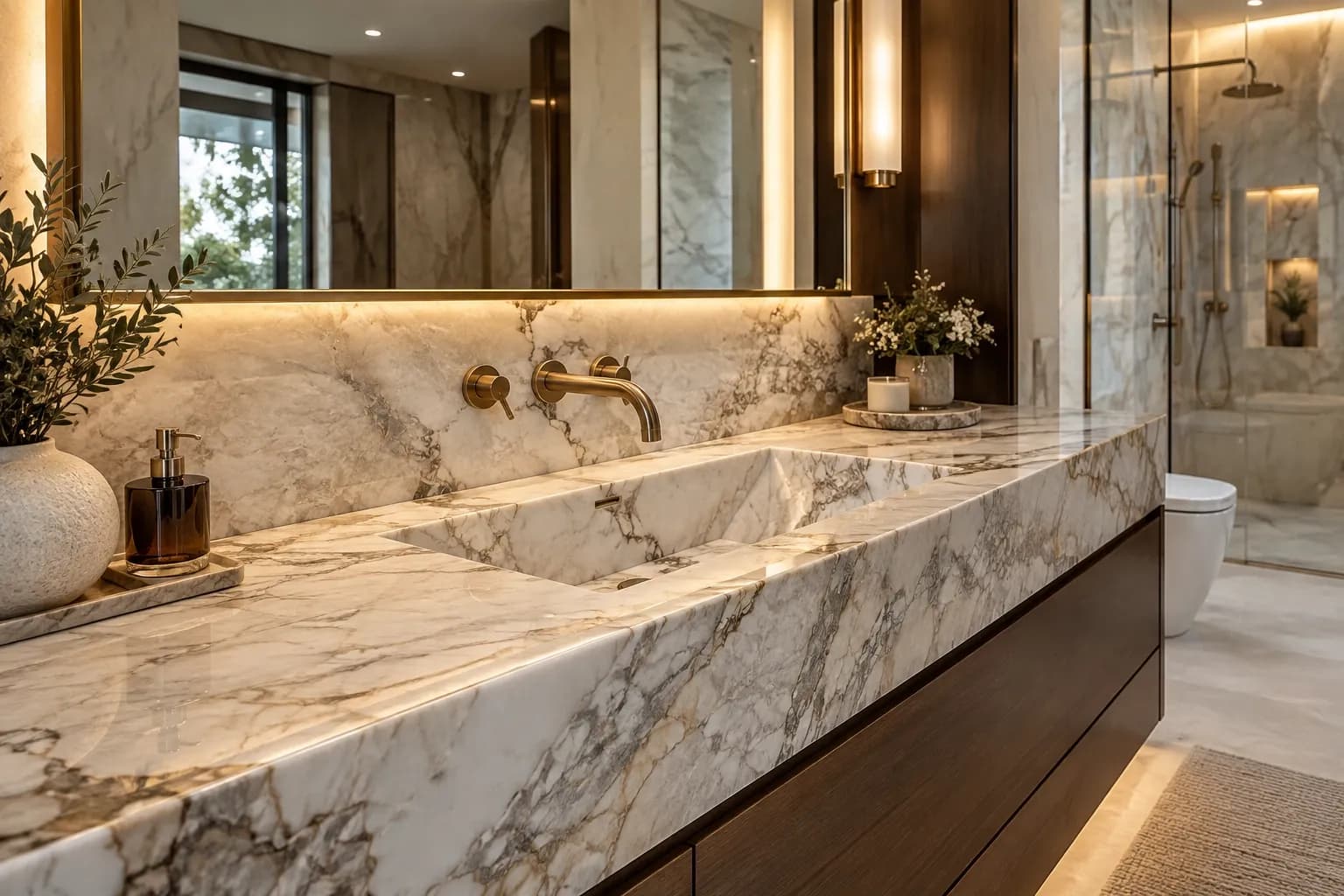
An integrated natural stone sink is a bathroom basin formed as part of the same stone surface as the vanity countertop, creating a clean, continuous look with fewer visual breaks. Instead of placing a separate sink into the vanity, the basin and countertop are designed together for a seamless bathroom surface.
This approach works especially well in luxury bathrooms where material continuity and custom proportions matter. The right stone can turn a practical vanity into a defining architectural feature. Understanding those differences helps you choose a natural stone vanity that fits both your design and daily routine.
What Is an Integrated Natural Stone Sink?
An integrated natural stone sink combines the countertop and basin into one coordinated vanity design. The sink may be carved, shaped, or fabricated from the same stone selected for the surrounding countertop, depending on the design and fabrication method.
Unlike a conventional drop-in or undermount sink, there is no need to visually separate the basin from the vanity surface. The result is a streamlined appearance that can make the entire bathroom feel more intentional.
An integrated bathroom sink can be designed around the available vanity width, faucet placement, basin depth, and storage configuration. This makes it particularly useful for custom bathrooms where standard vanity dimensions may not provide the desired proportions.
Because natural stone varies from slab to slab, the stone itself also becomes part of the design. Veining, color movement, texture, and finish can influence how the finished seamless stone vanity looks from different angles.
Why Choose Natural Stone for an Integrated Sink?
Natural stone offers a combination of visual character and customization that works well for high-end bathroom vanities. When properly selected and fabricated, it can create a strong connection between the countertop, basin, walls, and other stone surfaces.
- Seamless visual design: A coordinated countertop and basin create fewer visual interruptions and give the vanity a refined appearance.
- Custom proportions: The basin, countertop, edges, and surrounding surface can be planned around the dimensions of the bathroom rather than relying only on standard sink sizes.
- Natural variation: Marble, granite, quartzite, and other stones have individual veining and color patterns, so each installation has its own character.
- Design flexibility: Natural stone can complement modern, traditional, transitional, and other bathroom styles through different slab selections, shapes, and finishes.
- Material continuity: Using related stone throughout the vanity and bathroom can create a cohesive design from the countertop to the backsplash or shower area.
For projects requiring carefully coordinated stone surfaces, selecting the slab early is important.
Best Natural Stone Options for Integrated Bathroom Sinks
The best material depends on the bathroom's design, expected use, maintenance preferences, and desired appearance. Natural stone is not one uniform category; each stone has its own characteristics that should be considered before fabrication.
Marble
Marble is a popular choice for a luxury bathroom vanity because of its distinctive veining and sophisticated appearance. White marble can create a bright, elegant setting, while darker or more heavily veined varieties can become a dramatic focal point.
Marble is relatively softer and more porous than some other stones, so it requires appropriate care. Acidic cleaners and spills should be avoided, and the specific marble should be evaluated for its sealing and maintenance requirements before installation.
Granite
Granite is known for its hardness and broad range of colors and patterns. It can be a practical option for bathrooms where the vanity needs to withstand frequent everyday use.
Because granite patterns can range from subtle to highly varied, slab selection is important when designing a custom stone sink. A fabricator can help determine how the pattern will appear across the countertop and basin.
Quartzite
Quartzite offers natural stone character with a range of dramatic and subtle patterns. Many varieties resemble marble while offering a different performance profile, making quartzite an appealing choice for homeowners seeking distinctive veining.
As with any natural stone, the specific variety matters. Fabricators should evaluate the selected slab and recommend suitable care based on its characteristics.
Travertine and Other Natural Stones
Travertine brings a warmer, more textured appearance than many polished marble or granite surfaces. It can work particularly well in bathrooms inspired by Mediterranean, organic, or traditional design.
Other natural stones, including onyx, can also create striking vanity designs. Onyx is especially suited to statement applications where its translucent qualities and strong visual movement are intended to stand out.
Design Considerations for a Seamless Stone Vanity
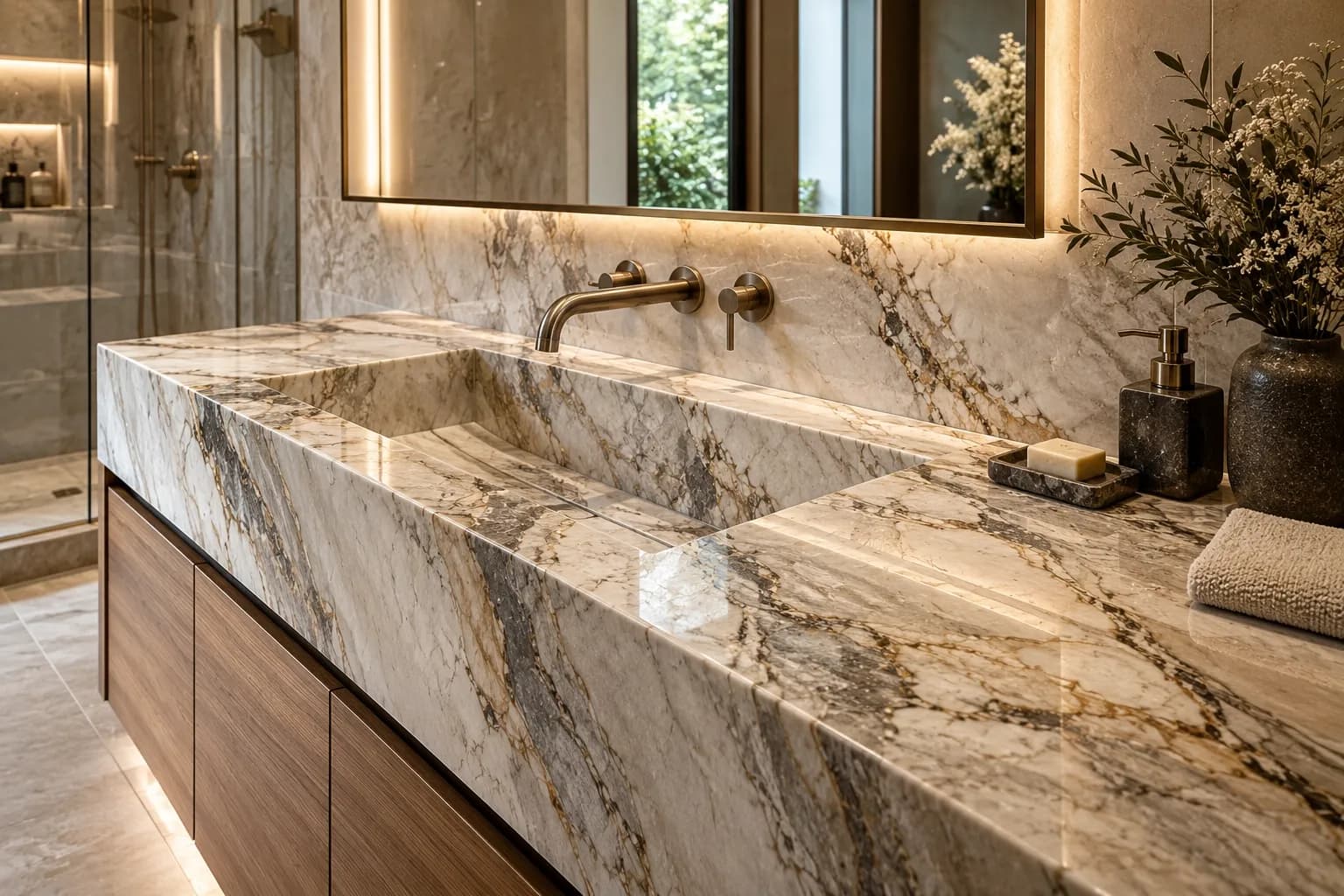
An integrated sink should be planned as part of the entire vanity rather than treated as an isolated fixture. The basin shape, stone pattern, countertop profile, faucet position, and surrounding walls all affect the finished result.
Sink Shape and Basin Configuration
Sink geometry should complement the overall bathroom design. Rectangular basins can reinforce clean contemporary lines, while softer curves may suit more traditional or organic spaces.
Consider how many basins the vanity needs, where the faucets will sit, and how much usable counter space should remain around them. A custom integrated sink can be particularly useful when the available wall width or vanity footprint is unusual.
Countertop Thickness and Edge Details
Countertop thickness influences the visual weight of the vanity. A thicker edge can create a substantial architectural appearance, while a slimmer profile can feel lighter and more contemporary.
Edge treatment also deserves attention. Options such as eased, beveled, or more decorative profiles can change the character of the stone. The right choice should work with the vanity cabinetry and other architectural details. For more context on how edge treatments affect stone surfaces, different countertop edge profiles can help with the design decision.
Backsplash and Wall Coordination
The vanity does not exist in isolation. Coordinate the stone with the backsplash, shower walls, flooring, hardware, and cabinetry.
You do not need every surface to use identical stone. A better approach is often to repeat one color, undertone, or visual characteristic so the different materials feel connected without becoming overly matched.
How Integrated Stone Sinks Are Fabricated and Installed
A successful integrated sink begins with careful planning and precise fabrication. Natural stone is a finished architectural material, so measurements and fabrication decisions need to be made before installation begins.
Selecting and Planning the Stone Slab
The first step is choosing a slab that suits both the design and fabrication requirements. Veining direction, slab dimensions, thickness, color variation, and the planned sink location should all be considered.
For highly veined materials, slab layout is especially important. The fabricator can determine how the stone should be positioned so its natural movement works with the countertop and basin instead of appearing randomly interrupted.
Precision Cutting and Sink Fabrication
Once the design is finalized, the stone is cut and shaped according to the approved dimensions. Precise fabrication is important for the basin, faucet openings, edges, and other details.
Advanced equipment can help achieve accurate stone cuts and detailed custom shapes. Bay Stone Depot uses in-house CNC waterjet stone fabrication, which is particularly useful for projects requiring carefully controlled cuts and custom stone work.
Professional Installation and Finishing
Installation requires accurate measurements and careful handling of the finished stone. The vanity must be properly supported, positioned, and connected to the bathroom's plumbing.
The final result depends on more than fabrication alone. Proper installation helps ensure that the stone surfaces align correctly and that the finished vanity looks intentional from every angle.
How to Maintain an Integrated Natural Stone Sink
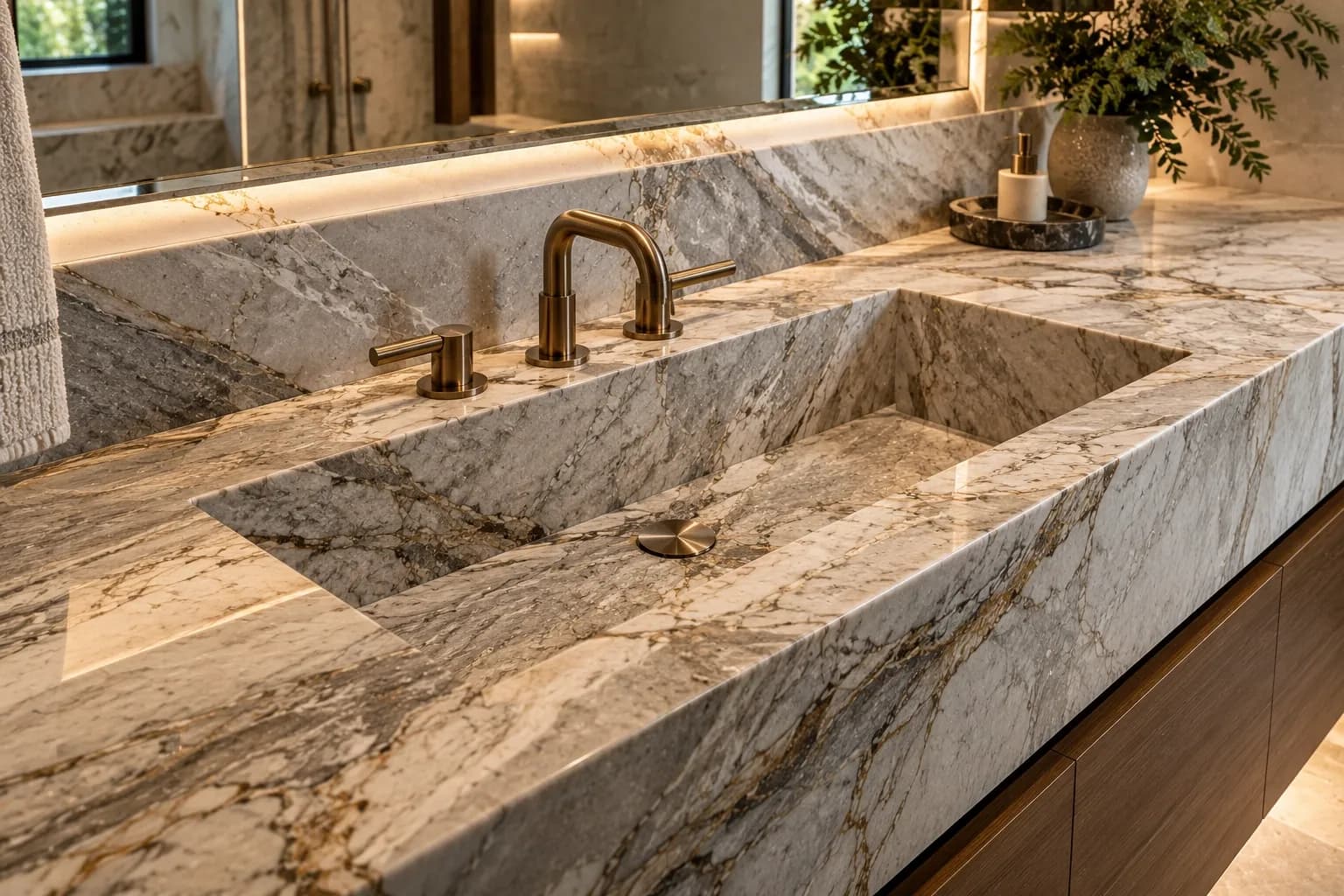
Natural stone can remain attractive for years when it receives care appropriate to its specific material and finish. Natural Stone maintenance should focus on gentle cleaning, prompt spill removal, and following the stone manufacturer's or fabricator's recommendations.
- Clean regularly: Use a soft cloth or sponge with a cleaner appropriate for the specific natural stone.
- Wipe spills promptly: Cosmetics, toiletries, and other substances should not be left sitting on the surface unnecessarily.
- Avoid harsh cleaners: Abrasive products and acidic cleaners can damage or dull some natural stone surfaces.
- Follow sealing recommendations: Some stones benefit from periodic sealing, but the appropriate schedule depends on the stone and finish.
- Use suitable accessories: Trays or mats beneath frequently used products can help reduce repeated exposure to moisture and spills.
How to Choose the Right Integrated Natural Stone Sink for Your Bathroom
Start by considering how you want the vanity to look and how you expect it to perform. A dramatic marble may suit a formal primary bathroom, while granite or quartzite may be better suited to a design where durability and strong natural patterning are priorities.
Consider these factors before selecting the stone:
- Bathroom style: Decide whether you want subtle movement, bold veining, warm texture, or a clean contemporary appearance.
- Daily use: Think about how frequently the vanity will be used and how much maintenance you are comfortable with.
- Available space: Measure the vanity wall and determine the appropriate basin configuration and counter area.
- Stone characteristics: Compare the specific stone varieties rather than judging an entire material category by name alone.
- Fabrication requirements: Confirm that the selected slab can accommodate the desired basin, edges, faucet openings, and dimensions.
- Overall material palette: Coordinate the vanity with flooring, backsplash, cabinetry, fixtures, and other bathroom surfaces.
Seeing full slabs in person can make the selection process easier because photographs may not capture the complete variation and movement of natural stone.
Conclusion
Integrated natural stone sinks combine the countertop and basin into a cohesive vanity design, creating a clean architectural feature for a luxury bathroom. Marble, granite, quartzite, travertine, and other stones can each produce a different result, so the best choice depends on appearance, use, maintenance, and fabrication requirements.
Careful slab selection and precision fabrication are just as important as the stone itself. When the basin, countertop, edges, backsplash, and surrounding materials are planned together, a custom integrated sink can become a natural focal point rather than simply another bathroom fixture.
For a custom natural stone bathroom project, contact Bay Stone Depot to discuss stone options, fabrication, and design considerations with the project team.