
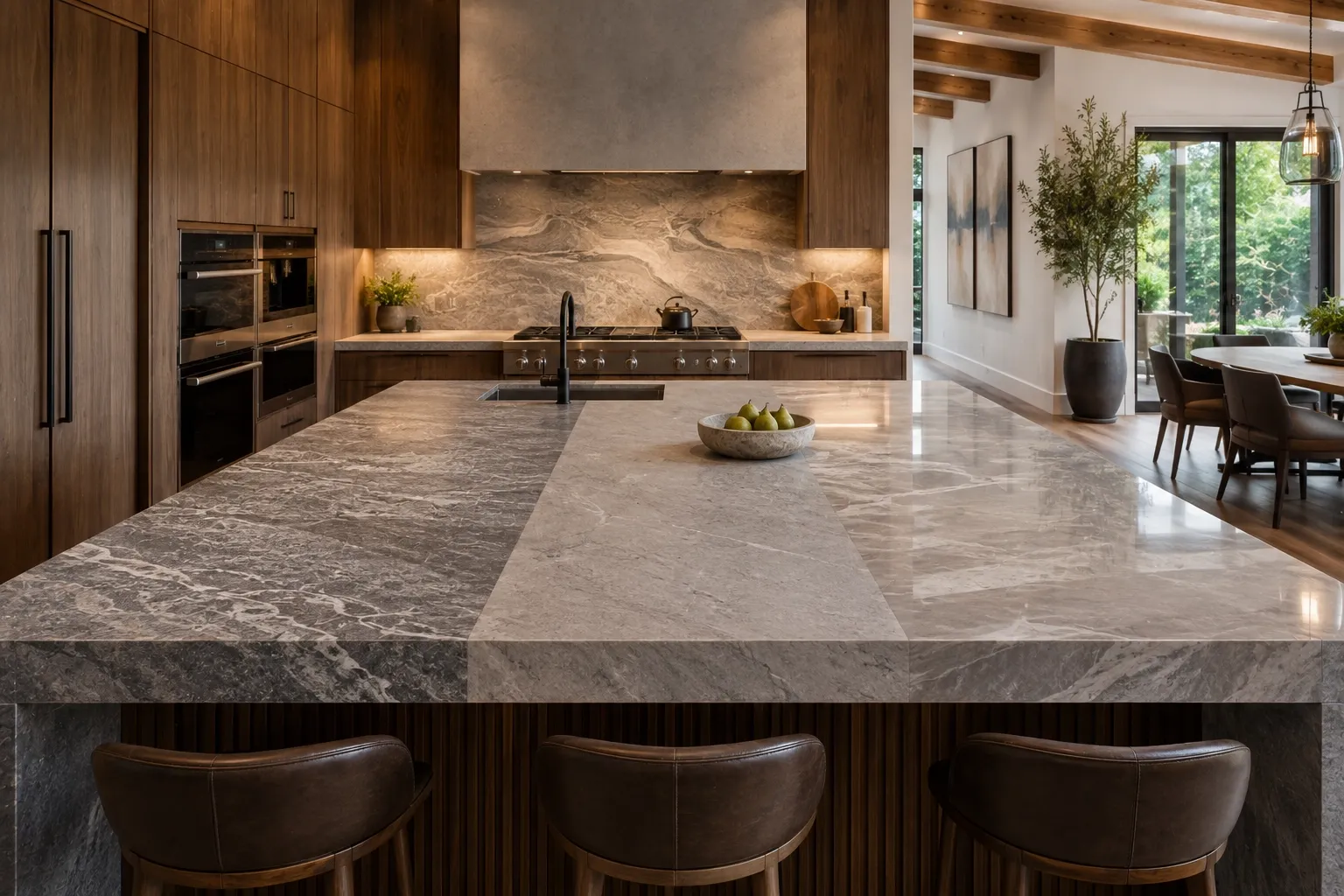
Leathered vs Honed vs Polished Stone: Which Finish is Right for Your Kitchen?
The best finish for your kitchen depends on the look you want, how the surface will be used, and how much maintenance you prefer. Leathered, honed, and polished stone each create a different combination of texture, light reflection, and everyday performance.
A stone finish is more than a visual detail. It changes how a countertop feels to the touch, how much light it reflects, and how certain marks appear on the surface. The right choice can help your countertops, island, backsplash, or other stone features fit both the design and daily routine of your kitchen.
How Stone Finishes Change the Look and Feel of a Kitchen
The finish is the final surface treatment applied to natural stone. While the underlying material still matters, the finish can significantly change its appearance and character.
A polished surface is smooth and reflective, while a honed surface has a softer, matte appearance. A leathered finish adds subtle texture that makes the stone feel more tactile and natural. These differences can affect everything from the way a countertop looks under kitchen lighting to how comfortable it feels during food preparation.
When comparing stone finishes for a kitchen, consider three things together: appearance, surface feel, and practical use. A finish that looks beautiful in a showroom may not be the best fit if it conflicts with how you use the kitchen.
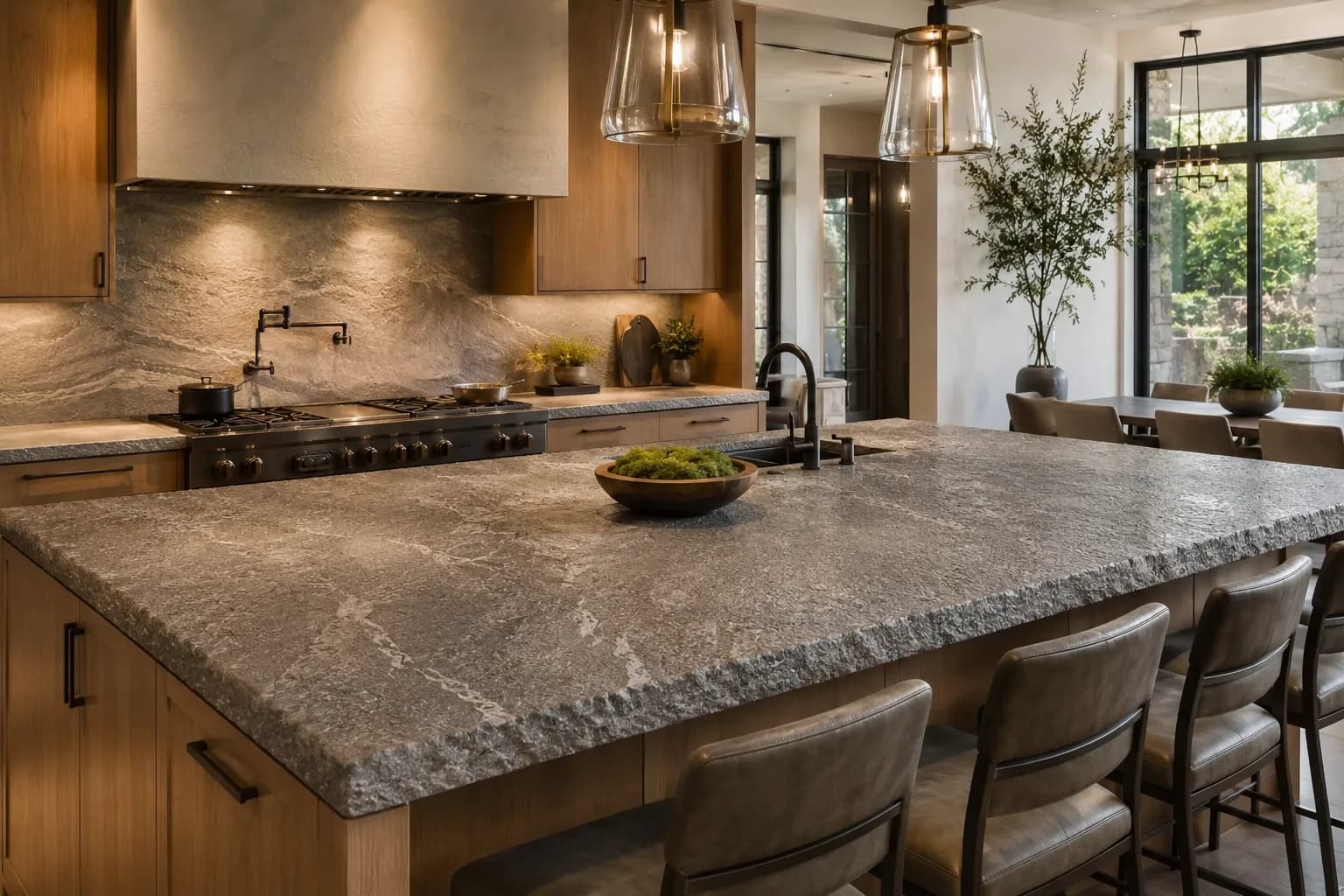
Leathered Stone: Texture and Depth With a Natural Look
Leathered stone brings a more tactile quality to a kitchen. Its subtle texture and low sheen can emphasize the natural character of the material while creating a relaxed alternative to highly polished surfaces.
What Is a Leathered Stone Finish?
A leathered stone finish has a textured surface with a low-sheen appearance. It is typically created by adding texture to the stone while retaining much of its natural color and pattern.
Unlike a highly reflective polished finish, leathered stone has a more subdued look. Its texture can make natural veining and variations feel more pronounced without creating the glossy appearance associated with polished stone.
Leathered finishes can be especially appealing when you want a kitchen countertop with visual depth and a tactile quality. They work well with natural, contemporary, rustic, and transitional kitchen designs.
Benefits of Leathered Stone in Kitchens
One of the main advantages of leathered stone countertops is their distinctive texture. The surface has more character than a completely smooth finish and can give an island or countertop a strong architectural presence.
The lower sheen also reduces the amount of direct reflection compared with polished stone. This can create a softer appearance under pendant lights, recessed lighting, and natural daylight.
Leathered finishes are available on certain natural stones, so the final appearance depends on the material itself.
Things to Consider With a Leathered Finish
Texture can make leathered stone feel more substantial, but it may also require more attention when cleaning. Food particles, crumbs, or residue can settle into surface texture more easily than on a very smooth countertop.
The finish should also be evaluated with the specific stone. Not every stone is offered in the same range of finishes, and the appearance can vary considerably from one slab to another.
Honed Stone: A Soft, Matte Finish for Modern Kitchens
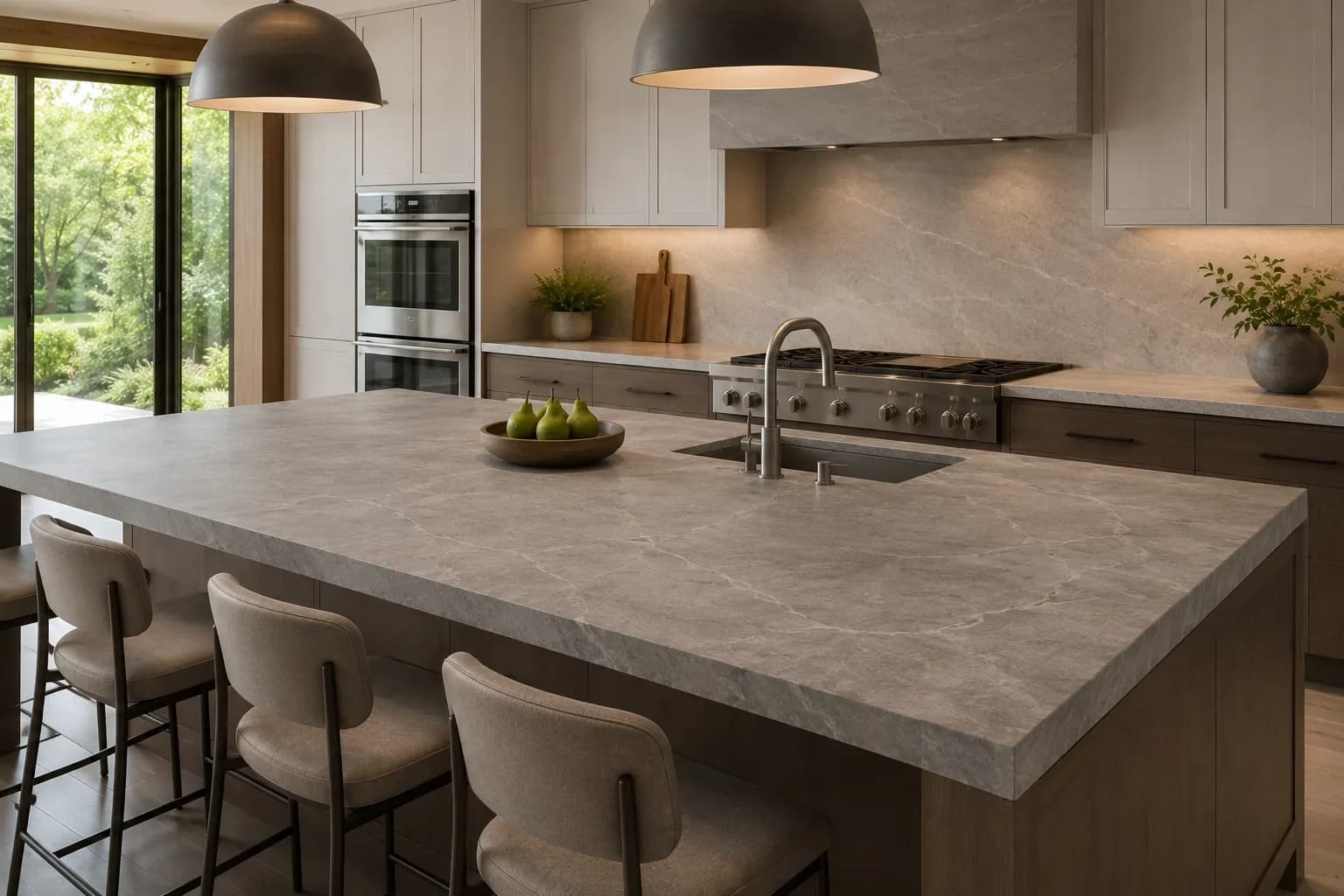
Honed stone offers a middle ground between strong polish and pronounced texture. Its smooth, matte appearance works particularly well when the goal is a refined kitchen that feels comfortable rather than overly formal.
What Is a Honed Stone Finish?
A honed stone finish is smooth to the touch but has little to no reflective sheen. Instead of producing a glossy surface, honing leaves the stone with a soft, matte appearance.
This finish can make natural stone look understated and contemporary. It is particularly popular when homeowners want to emphasize the stone's color and character without making the surface highly reflective.
Honed stone countertops can work with both traditional and modern kitchens. The softer finish is also useful when a polished surface would create too much visual shine in a space with strong natural or artificial lighting.
Benefits of Honed Stone for Countertops and Islands
A honed finish creates a calm, refined appearance that can complement cabinetry, wood flooring, metal fixtures, and other kitchen materials. It can also make a large island feel less formal than the same stone with a glossy finish.
Because there is less reflected light, honed stone can provide a more muted visual effect. This makes it a practical design choice for kitchens where the homeowner wants the stone to contribute texture and color without becoming the brightest element in the room.
Things to Consider With a Honed Finish
A matte finish does not mean a surface is maintenance-free. The specific stone remains an important factor in how the countertop should be cleaned, sealed, and cared for.
Honed surfaces can also make certain marks more noticeable depending on the stone's color and composition. Before choosing a finish, consider how the countertop will be used and how its appearance may change under everyday kitchen conditions.
Polished Stone: Gloss and Classic Elegance
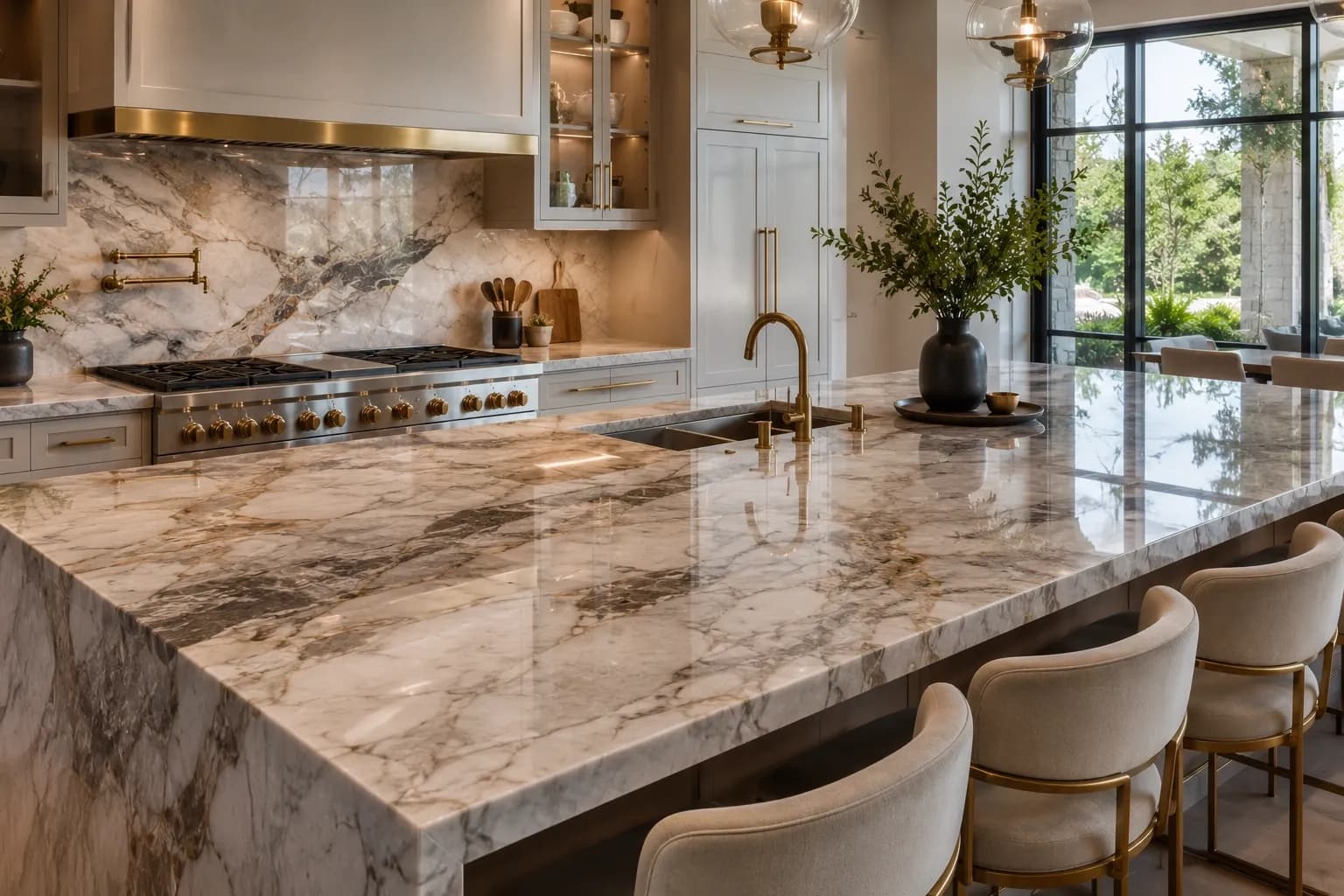
Polished stone remains a popular choice for homeowners who want their kitchen surfaces to have a crisp, elegant appearance. Its reflective finish can bring out depth and contrast in natural stone patterns.
What Is a Polished Stone Finish?
A polished stone finish has a smooth surface with a high level of light reflection. It brings out depth, color, and natural patterns while creating the glossy appearance often associated with traditional stone countertops.
Polishing can make veining appear more dramatic and give a kitchen a crisp, finished appearance. It is a common choice for homeowners who want their natural stone countertops to serve as a prominent design feature.
Benefits of Polished Stone in Kitchens
The reflective quality of polished stone can make colors and patterns appear richer. A polished marble island, for example, can become a strong focal point in a kitchen, while polished granite can provide a clean and classic countertop appearance.
Polished stone is also smooth and easy to wipe down during normal countertop cleaning. However, ease of cleaning should not be confused with the overall maintenance requirements of the stone itself.
Things to Consider With a Polished Finish
Glossy surfaces can show fingerprints, smudges, and reflections more readily than matte finishes. Strong lighting can also emphasize the reflective nature of the surface.
The stone itself remains critical. For example, marble requires consideration of etching and staining regardless of whether the finish is polished or another type. Homeowners should evaluate both the material and finish rather than choosing a finish in isolation.
Leathered vs Honed vs Polished Stone: Key Differences
The three finishes can all produce beautiful kitchen surfaces, but they create noticeably different results.
Feature | Leathered | Honed | Polished |
|---|---|---|---|
Appearance | Textured with low sheen | Soft and matte | Glossy and reflective |
Surface feel | Tactile and textured | Smooth and soft | Very smooth |
Light reflection | Low | Low | High |
Design character | Natural and dimensional | Subtle and understated | Elegant and dramatic |
Cleaning considerations | Texture may require extra attention | Depends on stone and use | Smooth surface is easy to wipe |
Best suited to | Natural, rustic, and contemporary kitchens | Modern and relaxed designs | Classic, elegant, and formal kitchens |
There is no universally best finish. The right choice depends on the stone, kitchen style, lighting, countertop location, and your expectations for everyday care.
Which Stone Finish Works Best for Different Kitchen Applications
For kitchen countertops and islands, all three finishes can work when matched with the right stone and design. Polished stone is a strong choice when you want natural veining and color to stand out. Honed stone offers a softer appearance, while leathered stone adds tactile depth.
For backsplashes and feature areas, appearance may carry more weight because these surfaces typically do not receive the same direct food-preparation use as countertops. A polished finish can emphasize dramatic veining, while honed stone can create a quieter backdrop. Stone selection can range from marble and granite to quartzite and other materials, depending on the desired design.
For high-use kitchen surfaces, consider how often the area will be touched, cleaned, exposed to food, and used for preparation. The finish should complement the stone's inherent properties rather than being selected only for its appearance.
Conclusion
Leathered vs honed vs polished stone is ultimately a choice between different combinations of texture, sheen, visual character, and everyday practicality. Leathered finishes bring tactile depth, honed finishes provide a soft matte appearance, and polished finishes emphasize gloss, color, and natural veining.
The stone itself is just as important as the finish. Consider the material's characteristics, the location of the surface, your kitchen's lighting, and how you use the space every day. Seeing full slabs can also reveal variations that small samples may not show.
For a kitchen project, working with an experienced stone supplier and fabricator can help you compare materials and finishes before fabrication begins. Features such as custom edges, cutouts, and detailed fabrication also influence the finished result, particularly for large islands and specialty designs.