
How to Mix and Match Tile Sizes and Patterns in a Master Bathroom
You can mix and match tile sizes and patterns in a bathroom by combining different scales while keeping colors, materials, and finishes visually connected. The key is to give each tile a clear role instead of using several competing patterns at once.
A well-planned master bathroom can use large-format floor tile, smaller shower tile, and a patterned accent without looking cluttered. The right bathroom tile combinations can also define different areas, add visual depth, and create a more custom look. From floor and shower walls to niches, vanities, and tub surrounds, this guide explains how to coordinate tile sizes, patterns, colors, materials, and finishes for a cohesive master bathroom tile design.
Start With a Master Bathroom Tile Layout Plan
Before choosing individual tiles, decide how the bathroom should look as a complete space. Consider the floor, shower walls, niche, vanity area, and tub surround together rather than selecting each surface independently.
Start by choosing one dominant tile that establishes the overall style. This could be a large-format stone-look tile, a natural stone tile, or a simple porcelain tile. Then select one or two complementary options for smaller areas or accents.
A useful approach is to assign each tile a specific purpose:
- Main tile: Covers the largest surface and establishes the visual foundation.
- Secondary tile: Adds variation through a different size, shape, or subtle pattern.
- Accent tile: Creates a focal point in a shower niche, backsplash, or feature wall.
This approach makes mixing bathroom tiles easier because every choice has a defined role. For inspiration, exploring different bathroom tile styles and applications can help you compare materials and layouts before narrowing down your selection.
Choose Tile Sizes for Different Bathroom Surfaces
Different surfaces can benefit from different tile sizes. Using the same size everywhere can make a bathroom feel flat, while too many sizes can make the design feel disconnected.
Floor Tile Sizes
Large-format floor tiles are a popular choice for master bathrooms because their larger surface area can create a clean, open appearance. Fewer grout lines can also give the floor a more continuous visual effect.
Medium-format tiles can provide more flexibility in smaller bathrooms or spaces with multiple floor angles. Smaller tiles, including mosaics, are useful where additional grout lines can improve traction or help accommodate curves and detailed layouts.
When selecting floor tile sizes, consider the actual dimensions of the room and the placement of fixtures. The goal is not simply to use the largest tile available but to create a layout that looks intentional and works with the room's proportions.
Shower Wall and Niche Tile Sizes
Shower walls are an excellent place to introduce a different tile size. For example, a large-format wall tile can provide a calm backdrop while a smaller mosaic creates contrast inside a niche or along a specific feature area.
Subway-style rectangular tiles, elongated formats, and smaller mosaics can all work well, depending on the overall design. Keep the shower's visual hierarchy in mind: if the walls already feature a strong pattern, a quieter niche tile may create better balance.
Waterproofing and proper installation are also important considerations in shower areas. Tile selection should work with the practical requirements of the space rather than being based on appearance alone.
Accent and Border Tile Sizes
Accent tiles should generally occupy less visual space than the main tile. A mosaic strip, decorative border, or smaller-format accent can add detail without competing with the room's primary surfaces.
Instead of placing an accent everywhere, use it strategically. A shower niche, vanity backsplash, or narrow feature wall can provide enough space for a distinctive pattern to stand out.
Mix Tile Patterns Without Making the Bathroom Feel Busy
Mixing bathroom tile patterns works best when there is a clear relationship between the patterns. You do not need every surface to make a statement. In most master bathrooms, one strong pattern paired with simpler surrounding tiles creates a more balanced result.
Pair Large-Format Tiles With Smaller Patterns
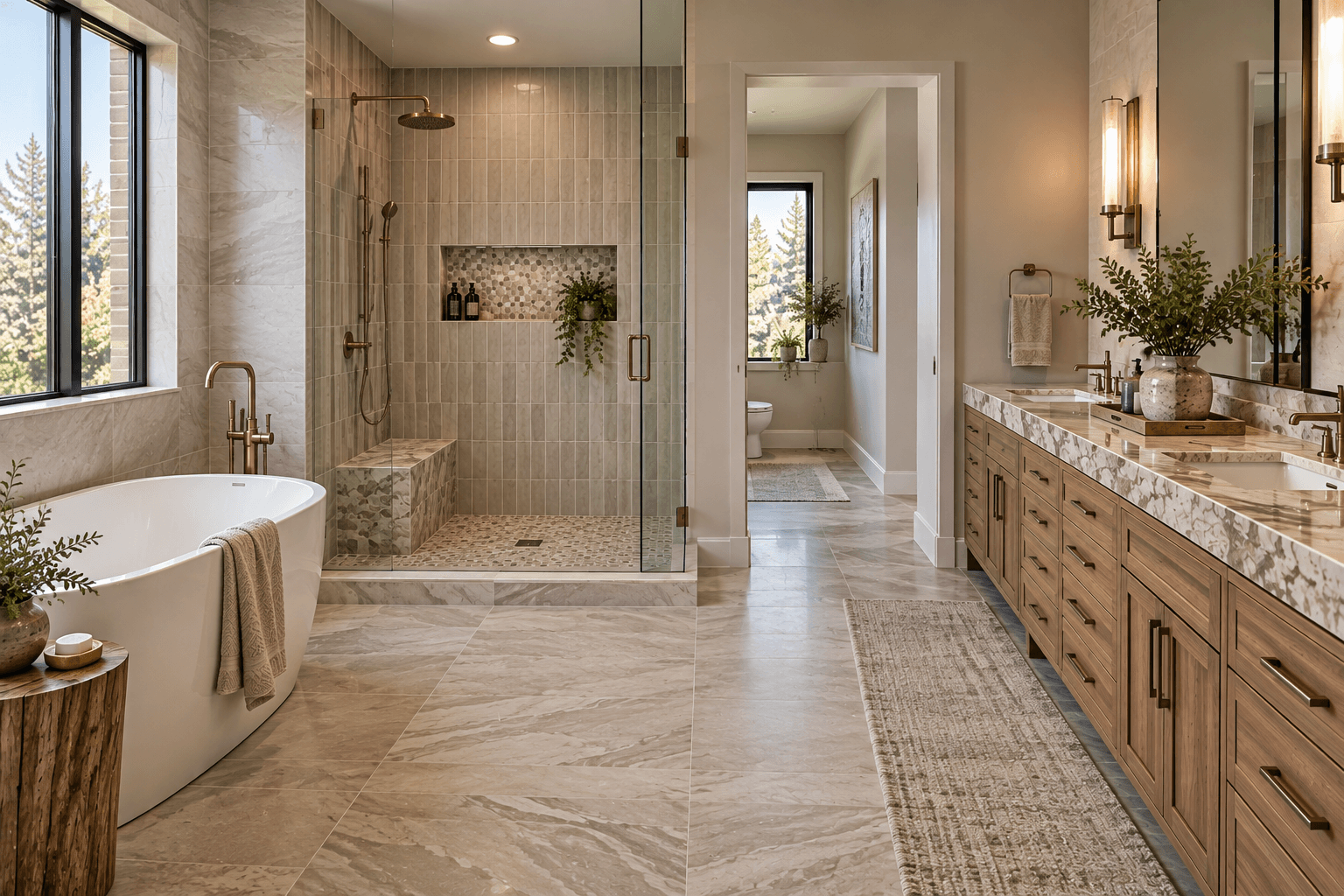
Large and small bathroom tiles can work together because their different scales naturally create contrast. A large-format floor tile, for example, can provide a quiet foundation for a smaller geometric shower mosaic.
The important part is to avoid introducing too many unrelated patterns. If the floor has a strong geometric design, consider using simpler tiles on the walls. If the shower contains an intricate mosaic, a more restrained floor may provide the balance it needs.
Think in terms of visual weight: one surface can attract attention while the surrounding surfaces support it.
Use Patterned Tiles as a Focal Point
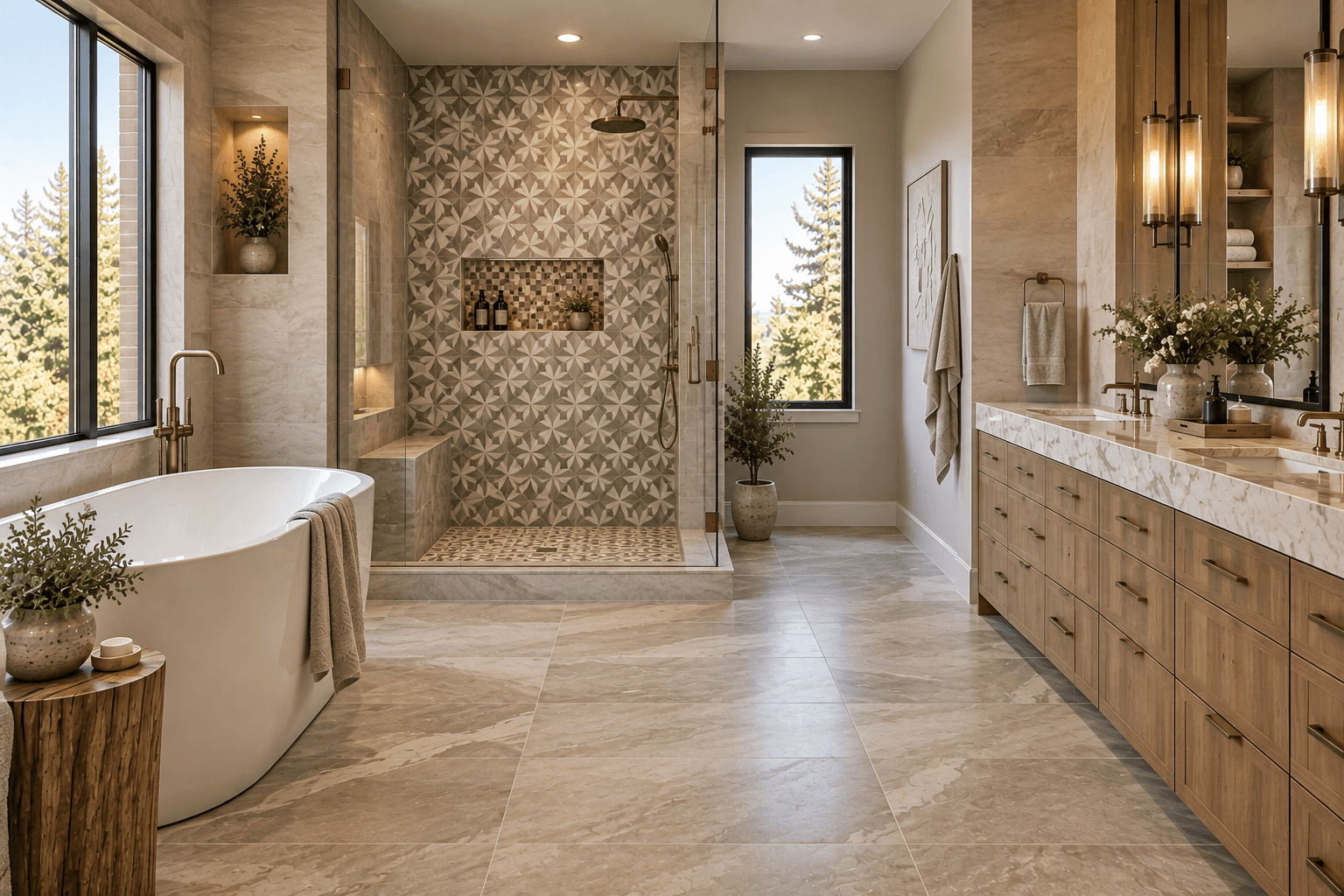
Patterned bathroom tiles are most effective when they have a defined focal area. A decorative tile behind the vanity or within a shower niche can draw attention without overwhelming the entire room.
Before installing a bold pattern, identify what you want people to notice first. In a large master bathroom, this might be a freestanding tub, a feature shower wall, or a custom vanity.
A focal point also makes bathroom tile layout ideas easier to organize because the rest of the tile selection can be coordinated around that central feature.
Balance Bold and Subtle Tile Designs
If you choose a bold pattern, keep at least some surrounding elements relatively simple. This does not mean every other tile has to match exactly. Instead, look for shared characteristics such as color, undertone, material, or finish.
For example, a patterned tile containing soft gray and warm white can be paired with a solid tile that uses one of those colors. The connection creates consistency even when the tile sizes and patterns differ.
Match Tile Colors, Materials, and Finishes
Tile size and pattern are only part of the design. Color, material, and surface finish can determine whether different tiles look intentionally coordinated or randomly combined.
Coordinate Tile Colors With the Bathroom Design
Start with a limited color palette. Neutral master bathrooms can combine several tile shapes and sizes without becoming visually overwhelming because the colors provide continuity.
When selecting bathroom tile color combinations, compare samples under the lighting used in the bathroom. Natural daylight, recessed lighting, vanity lighting, and warm bulbs can all affect how a tile appears.
You can also use variations of the same color rather than forcing an exact match. A warm white wall tile, soft beige floor tile, and subtly darker accent can create depth while maintaining a unified palette.
Combine Natural Stone and Porcelain Tiles
Natural stone and porcelain can be combined when their colors, textures, and visual character complement each other. Natural stone can introduce distinctive veining and variation, while porcelain can provide a consistent appearance in areas where a uniform surface is preferred.
For homeowners comparing these materials, factors such as maintenance, appearance, application, and installation requirements should be considered together. The differences between porcelain and natural stone can affect where each material makes the most sense in a bathroom.
Bay Stone Depot offers both natural stone and porcelain options, making it possible to compare materials while developing a cohesive bathroom tile design.
Balance Matte and Glossy Finishes
Mixing tile finishes can add subtle dimension, but the combination should feel deliberate. A matte floor with a slightly reflective wall tile can create contrast without requiring a bold pattern.
Glossy finishes can help reflect light, while matte surfaces can provide a softer, understated appearance. Avoid using multiple highly reflective surfaces unless that effect is intentional.
The safest approach is to choose one finish as the dominant look and use another finish selectively for contrast.
Create a Cohesive Tile Layout From Floor to Ceiling
A cohesive bathroom does not require identical tiles on every surface. Instead, the materials should relate visually as your eye moves through the room.
Continue Visual Lines Between Surfaces
Pay attention to grout lines, tile direction, and transitions between surfaces. Aligning tile layouts where practical can make the design feel more intentional.
For example, a rectangular wall tile installed vertically can emphasize ceiling height, while a horizontal arrangement can visually widen a wall. Large-format tiles can establish broad visual lines, while smaller accent tiles can interrupt them in controlled areas.
When using multiple tiles, compare their actual dimensions and grout joint requirements before finalizing the layout. Small differences can become noticeable once several surfaces meet.
Define Shower, Vanity, and Tub Zones
Tile can help visually separate functional areas without building physical walls. A distinctive shower tile can establish the shower as its own zone, while a coordinating backsplash or accent behind the vanity can add another layer of detail.
The key is repetition. If an accent color or material appears in the shower, repeating a related tone near the vanity or tub can make the entire room feel connected.
How to Choose the Right Tile Combination for Your Master Bathroom
The best tile combination depends on the bathroom's size, architecture, lighting, fixtures, and desired style. Instead of starting with a collection of tiles you like individually, begin with the overall atmosphere you want to create.
A practical selection process is:
- Choose the main floor or wall tile.
- Select a complementary tile in a different size or shape.
- Add one accent pattern only if the room needs additional visual interest.
- Coordinate the colors and undertones.
- Compare finishes under the bathroom's actual lighting.
- Check how grout color affects each tile.
- Review the complete layout before installation.
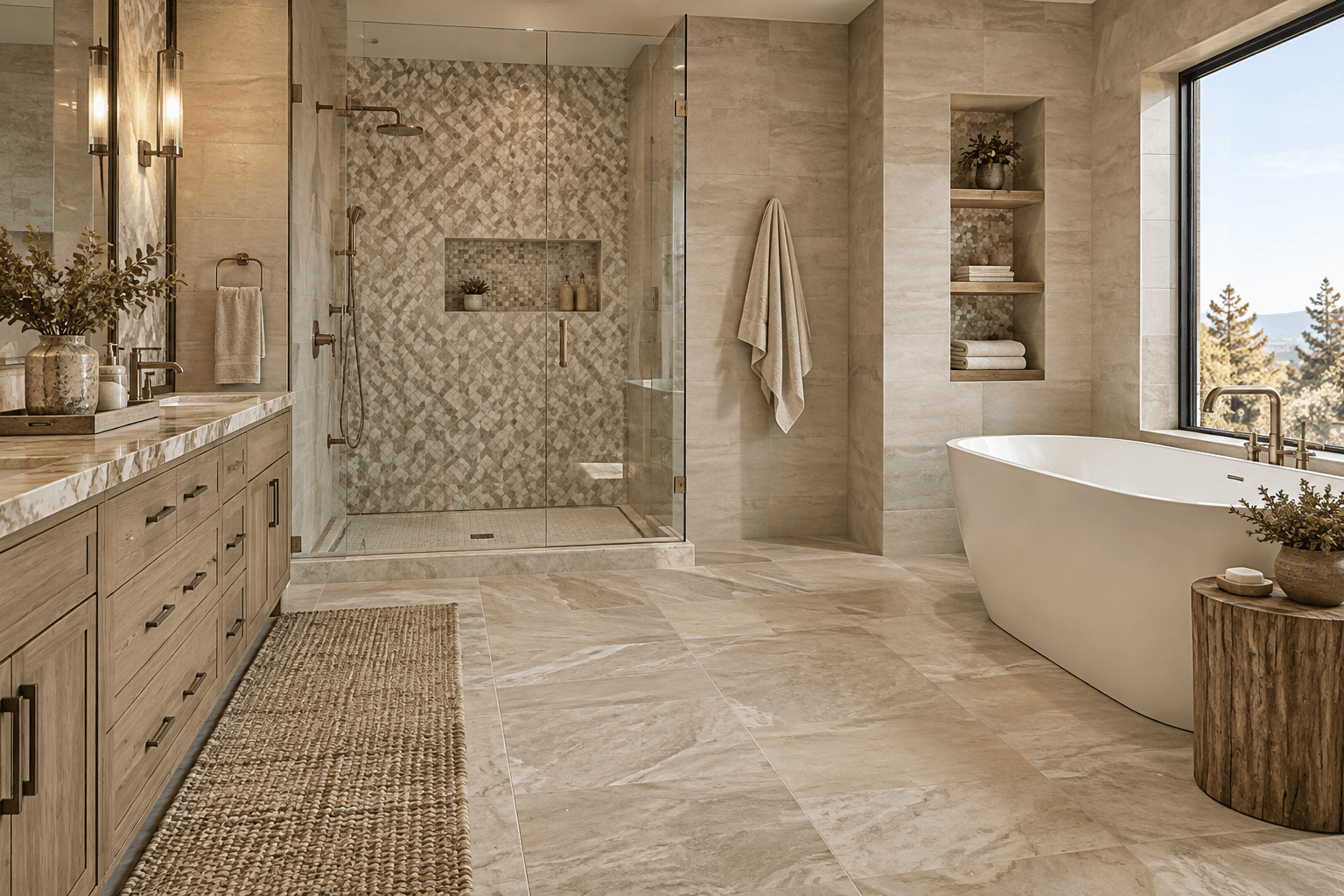
For example, a sophisticated master bathroom might combine a large-format neutral floor tile with a subtle rectangular shower tile and a small geometric mosaic in the niche. A more decorative design might use natural stone on the main surfaces with a distinctive patterned accent around the vanity.
The most important principle is balance. Mixing different tile sizes in bathroom design should create contrast without making every surface compete for attention.
Conclusion
The best way to mix and match tile sizes and patterns in a bathroom is to create a clear visual hierarchy. Choose a dominant tile, introduce complementary sizes or patterns, and use accents selectively. Coordinating color, material, finish, grout, and layout will help different tiles feel like parts of the same design.
For a master bathroom, thoughtful planning is especially important because multiple surfaces are visible at once. Exploring tile options in person can make it easier to compare scale, texture, color, and finish before making a final decision.