
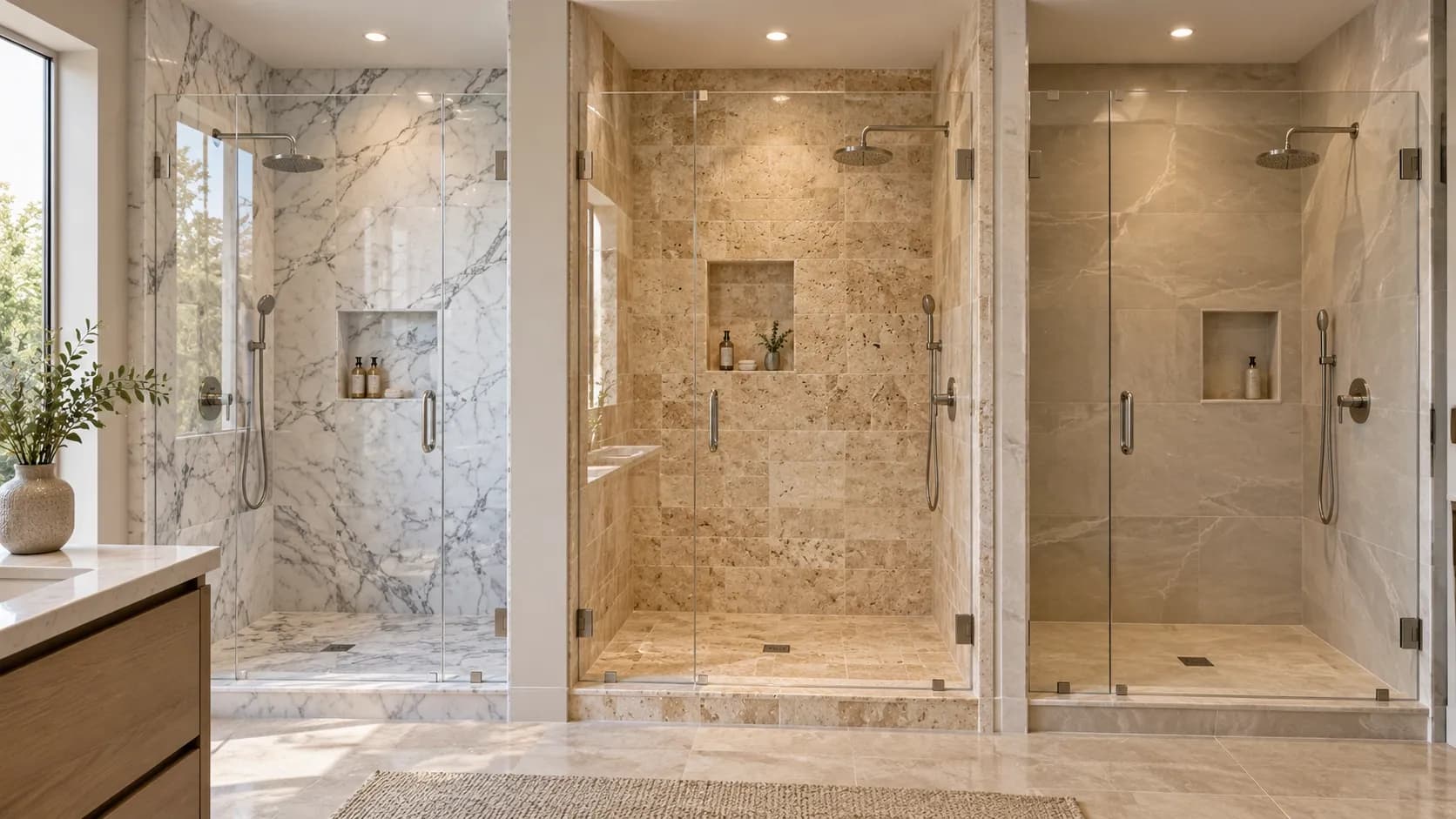
Natural Stone Shower Walls: Is Marble, Travertine or Porcelain Right for Your Shower?
Marble, travertine, and porcelain can all create beautiful shower walls, but they differ in maintenance, appearance, and cost. Marble offers natural elegance, travertine adds warm texture, and porcelain provides a practical, low-maintenance option.
The best choice depends on your bathroom style, budget, and willingness to maintain the surface. Understanding these differences will help you choose a material that looks good and performs well in a wet environment.
Marble vs Travertine vs Porcelain Shower Walls: Key Differences
Marble and travertine are natural stones, while porcelain is a manufactured material made from refined clay and other minerals. Each offers different benefits for shower walls.
Feature | Marble | Travertine | Porcelain |
|---|---|---|---|
Appearance | Elegant veining and natural patterns | Warm colors and textured surfaces | Wide range of colors and stone-look designs |
Water resistance | Requires proper sealing and installation | Requires careful sealing and installation | Low water absorption |
Maintenance | Moderate to high | Moderate to high | Generally low |
Pattern consistency | Naturally varied | Naturally varied | More consistent, depending on design |
Typical cost | Often premium | Varies by grade and finish | Varies by tile size and quality |
Best for | Luxury bathroom designs | Warm, natural interiors | Practical, easy-care bathrooms |
All three can work well when installed correctly. The key differences are their appearance, care requirements, and overall project cost.
Marble Shower Walls: Elegant and Timeless
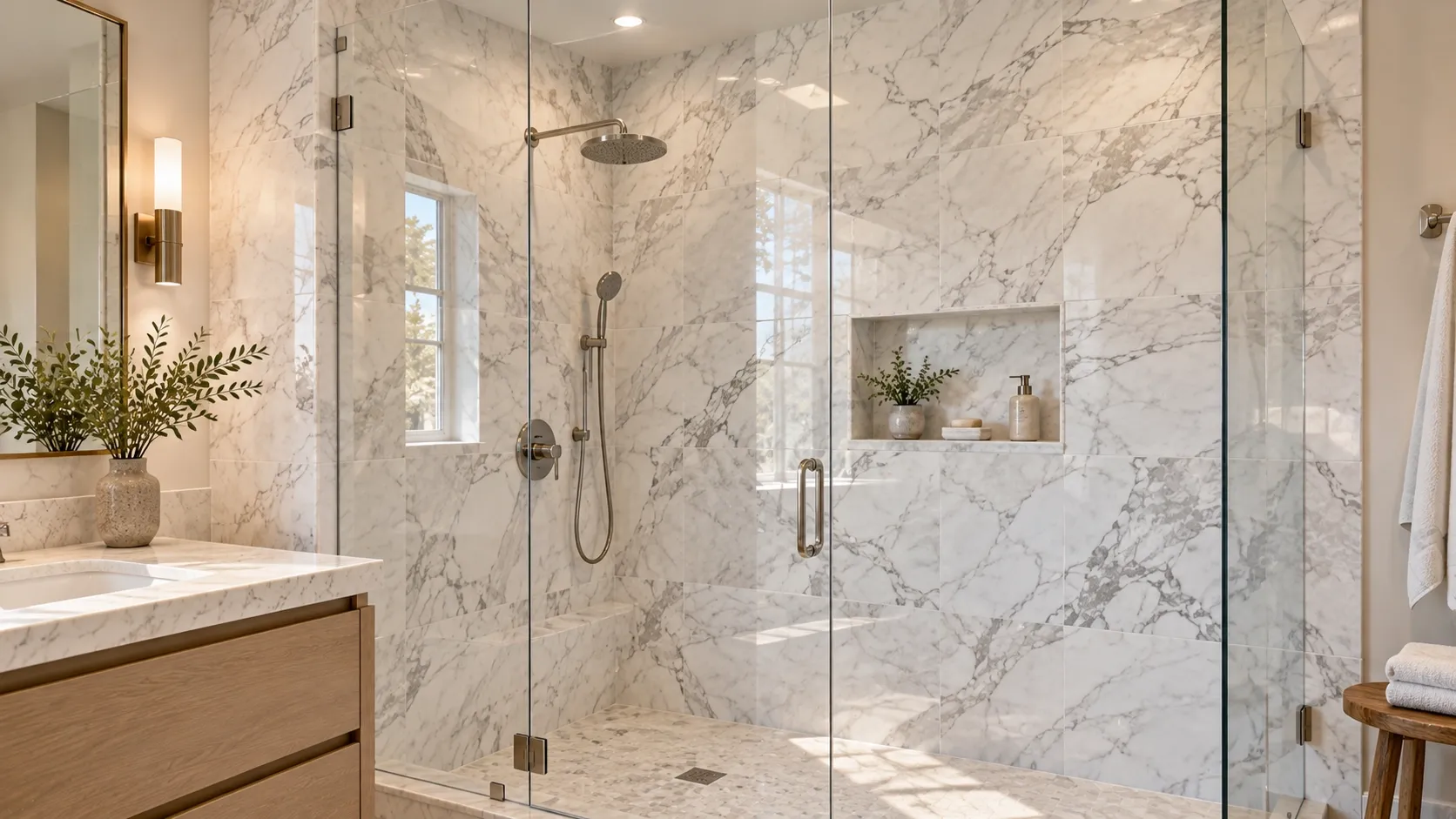
Marble shower walls bring natural patterns and a refined appearance to a bathroom. Each slab has unique veining, so no two installations look exactly alike.
White marble can make a bathroom feel bright, while darker varieties create contrast. Large slabs also reduce the number of visible grout lines.
Benefits of Marble Shower Walls
Marble is a good choice if you want a natural stone surface with distinctive patterns.
Its main benefits include:
- Unique veining and natural color variations.
- A premium appearance for traditional and modern bathrooms.
- Options for slabs, tiles, and different surface finishes.
- The ability to coordinate shower walls with marble vanities and other stone surfaces.
Marble works especially well when the stone is the main design feature. However, it requires more care than many porcelain products.
Marble Maintenance and Sealing Requirements
Marble contains calcium carbonate, which reacts with acids. Products such as vinegar and acidic cleaners can leave dull marks called etching.
Water and soap residue can also affect the surface if cleaning is neglected. Use a stone-safe cleaner and follow the supplier's recommendations for sealing.
Sealing helps reduce liquid absorption, but it does not make marble stainproof or prevent etching. Proper waterproofing behind the stone is also essential.
Travertine Shower Walls: Natural Warmth and Texture
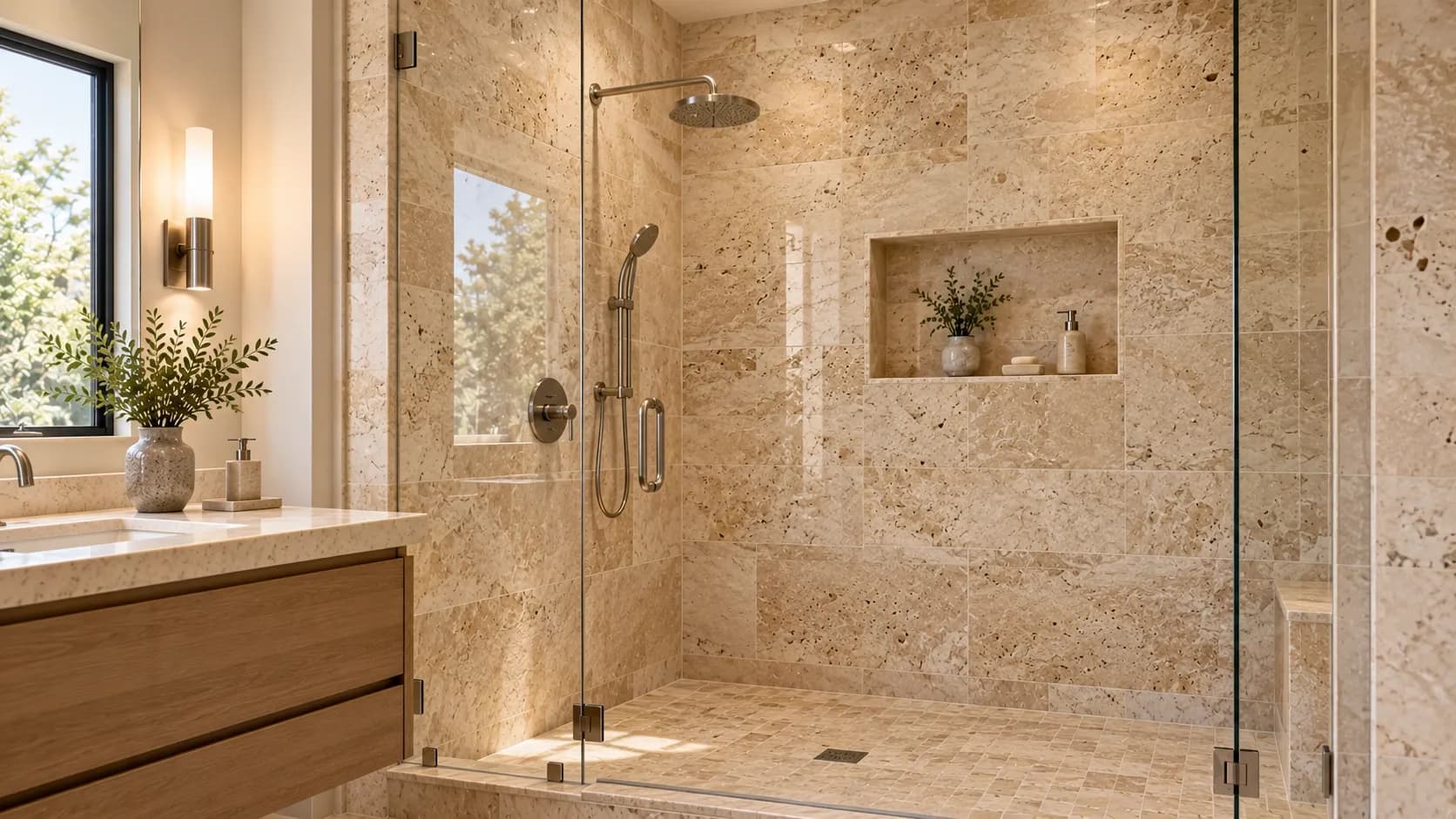
Travertine is a natural stone known for its earthy colors, including beige, cream, tan, and light brown. Its subtle patterns and textured appearance create a warm, relaxed bathroom style.
Travertine can have visible pores and small natural openings. Depending on the product, these may be filled during processing or remain part of the finished surface.
Benefits of Travertine Shower Walls
Travertine is suitable for homeowners who prefer natural materials and softer colors.
Its benefits include:
- Warm, earthy tones that complement wood and neutral finishes.
- Natural texture and variation.
- A good fit for rustic, Mediterranean, and traditional bathrooms.
- Options for different tile sizes and surface finishes.
Travertine can create a cohesive look when paired with matching stone floors or vanity surfaces. However, its porous nature means the material and finish need careful consideration in a shower.
Travertine Maintenance and Water Resistance
Travertine requires proper sealing and regular cleaning. Its pores can absorb moisture and cleaning products if the stone is not protected appropriately.
Use a cleaner designed for natural stone and avoid acidic products that can damage the surface. Follow the recommendations for resealing based on the stone, finish, and sealer used.
Most importantly, travertine must be installed over a suitable waterproofing system. The stone and sealer alone do not prevent water from reaching the wall structure.
Porcelain Shower Walls: Practical and Low Maintenance
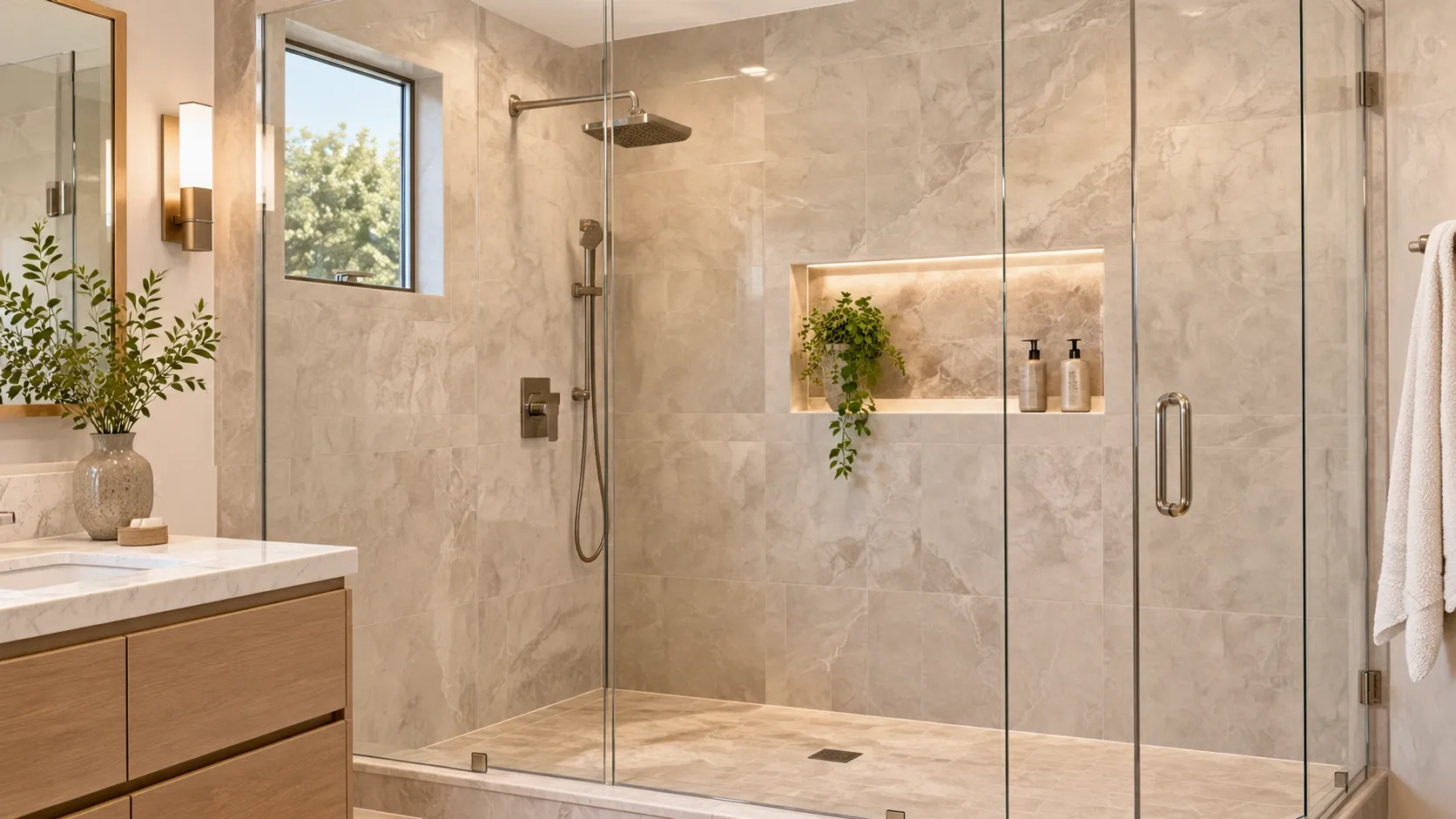
Porcelain is a manufactured surface available in many colors, patterns, and sizes. Some products imitate marble or travertine, while others feature solid colors or contemporary designs.
Porcelain generally absorbs very little water, making it a practical choice for shower walls when the entire installation is designed for wet areas.
Benefits of Porcelain Shower Walls
Porcelain is often a good option for homeowners who want attractive surfaces without the upkeep associated with natural stone.
Key benefits include:
- Low water absorption.
- Many colors and stone-inspired designs.
- No natural stone sealing requirement for standard porcelain surfaces.
- Options for conventional tiles and large-format panels.
- Generally straightforward routine cleaning.
Grout joints still need appropriate care, and the installation must include proper waterproofing. Porcelain is low maintenance, but it is not maintenance-free.
Porcelain Tile vs Large-Format Porcelain Panels
Traditional porcelain tiles come in various sizes and require grout joints between individual pieces. They offer flexibility for patterns, niches, and detailed layouts.
Large-format porcelain panels cover more wall area with fewer seams. This can create a cleaner appearance and reduce the amount of grout that needs routine cleaning.
However, large panels can require specialized handling, precise cutting, and experienced installation. The best option depends on your shower dimensions, design, and budget.
How Much Do Marble, Travertine, and Porcelain Shower Walls Cost?
The cost depends on material quality, tile or slab size, surface finish, labor, and the condition of the existing bathroom. Demolition, waterproofing, plumbing changes, and custom niches can also affect the final price.
Material | Approximate Installed Cost per Sq. Ft. |
|---|---|
Marble | $25–$70+ |
Travertine | $20–$60+ |
Porcelain tile | $15–$45+ |
Large-format porcelain panels | $30–$80+ |
Premium materials, complex layouts, and difficult installations can exceed these ranges. Ask contractors whether their estimates include demolition, waterproofing, materials, and finishing work.
For example, a shower with 100 square feet of wall coverage at $30 per square foot would cost about $3,000 for the priced scope. Additional work may increase the total.
Compare complete project estimates rather than material prices alone. A lower-cost tile may require more grout work, while a large panel may have higher installation costs.
Which Shower Wall Material Is Best for Your Bathroom?
The right material depends on what matters most to you.
Marble suits bathrooms where natural veining and a premium appearance are priorities. Travertine is a strong choice for warm, earthy designs. Porcelain is often best for people who prefer easy cleaning and lower routine maintenance.
Consider how much care you are willing to provide, how the material coordinates with your floor and vanity, and the total installation budget.
Conclusion
Marble, travertine, and porcelain can all work beautifully for shower walls when properly selected and installed.
Choose marble for distinctive veining, travertine for natural warmth, or porcelain for low water absorption and easier routine care. Whatever material you choose, proper waterproofing and installation are essential.
Bay Stone Depot offers natural stone and porcelain surfaces for residential projects. Comparing samples and discussing your project requirements can help you select a material that fits your bathroom and budget.