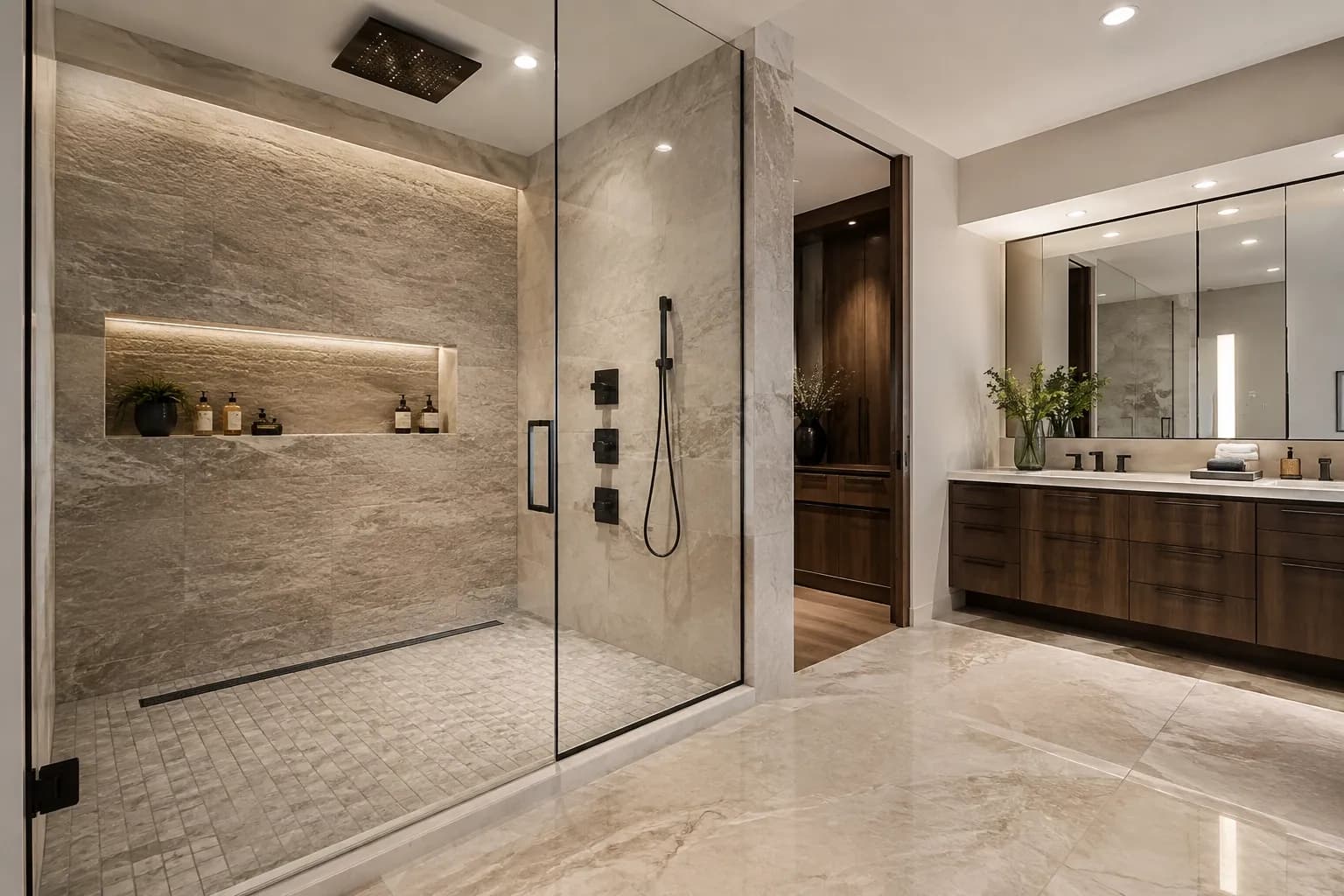
The Importance of Professional Waterproofing in Custom Shower Tile Installations
Professional shower waterproofing protects the structure beneath your tile from moisture. Tile and grout alone are not enough to create a waterproof shower enclosure.
A custom shower includes corners, joints, plumbing openings, niches, and drains where moisture can penetrate. Proper waterproofing addresses these areas before tile installation, helping create a durable and well-finished shower.
Why Waterproofing Matters in a Custom Shower
Water constantly contacts shower walls and floors. Without a proper waterproofing layer, moisture can move behind the tile and reach the underlying structure.
Over time, this can contribute to moisture damage, deterioration, and expensive repairs. Proper waterproofing creates a protective barrier beneath the finished surface.
This becomes especially important in custom showers with benches, niches, curbless entries, and multiple transitions. Each feature creates additional areas that require careful waterproofing.
How Professional Shower Waterproofing Works
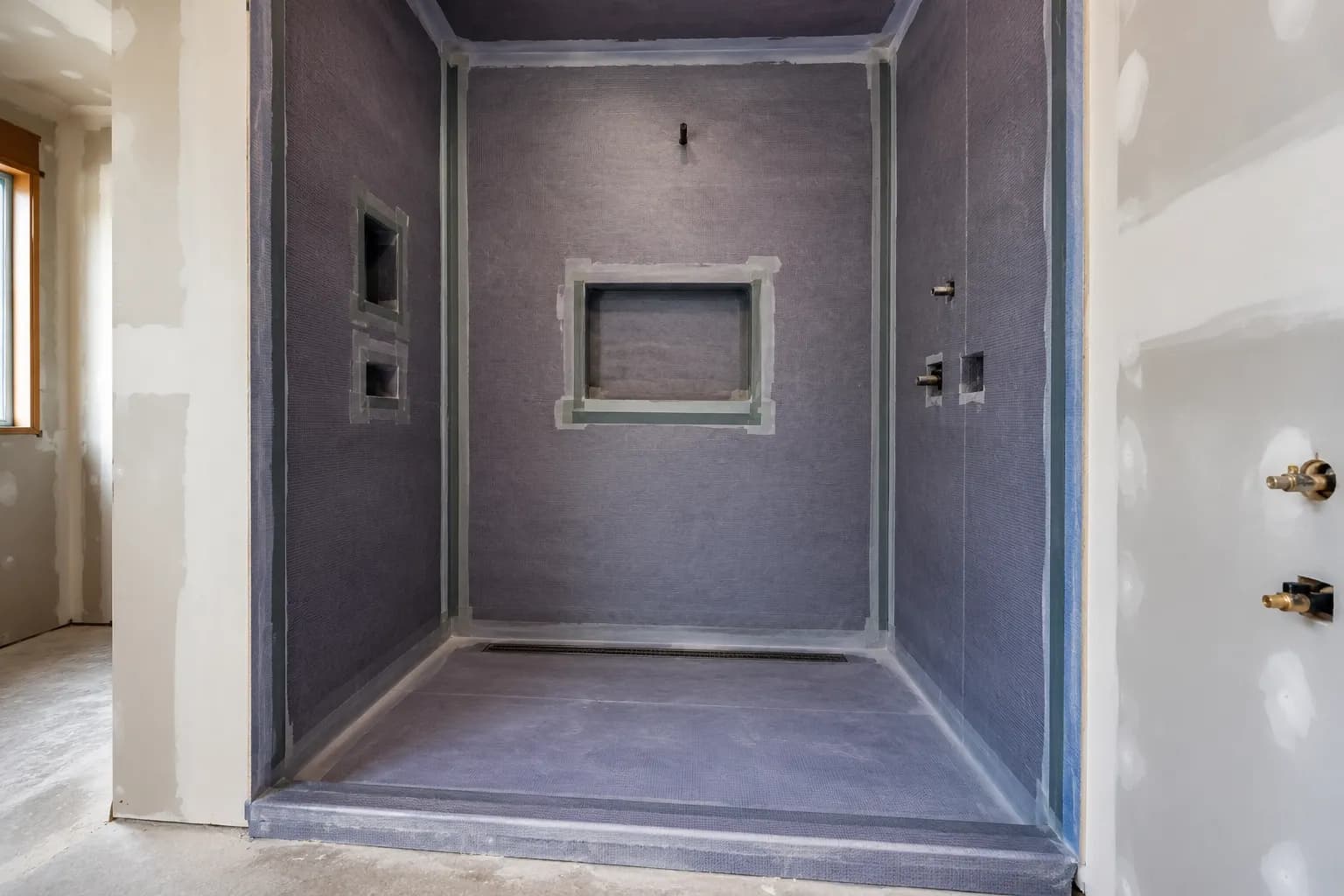
Professional shower waterproofing creates a moisture-resistant layer beneath the finished tile. The exact approach depends on the waterproofing system selected for the project.
Preparing the Shower Structure
The substrate must be stable, clean, and suitable for the selected waterproofing system. Installers also need to account for the shower slope, corners, niches, benches, and plumbing locations.
Proper preparation gives the waterproofing system a reliable foundation and helps create a suitable surface for the shower tile materials selected for the project.
Installing the Waterproofing System
A shower waterproofing system may use a sheet membrane, liquid-applied membrane, or another approved method.
The system must cover the required areas continuously. Installation should follow the manufacturer's requirements to maintain the system's intended performance.
Sealing Critical Joints and Penetrations
Corners, plumbing penetrations, niches, and other transitions require careful attention. These areas can interrupt an otherwise continuous waterproofing layer.
Proper detailing helps maintain protection around these vulnerable points before they are covered with tile.
Creating Proper Drainage
Waterproofing and drainage work together. The shower floor needs an appropriate slope so water moves toward the drain rather than collecting on the surface.
Drain connections must also integrate correctly with the waterproofing system, especially in custom and curbless showers.
How Proper Waterproofing Protects Custom Shower Tile
Waterproofing protects the materials beneath your custom shower tile while providing a properly prepared foundation for installation.
The tile itself remains important for appearance and performance. Porcelain, ceramic, and natural stone can all create beautiful shower surfaces when properly selected and installed.
Large-format porcelain can provide a clean appearance with fewer grout joints, while natural stone offers distinctive variations in color and texture. Homeowners comparing both materials can see how their characteristics differ in this porcelain and natural stone comparison.
Choosing the Right Materials for a Waterproof Shower
A successful shower requires coordination between the waterproofing system, tile, setting materials, substrate, and drainage.
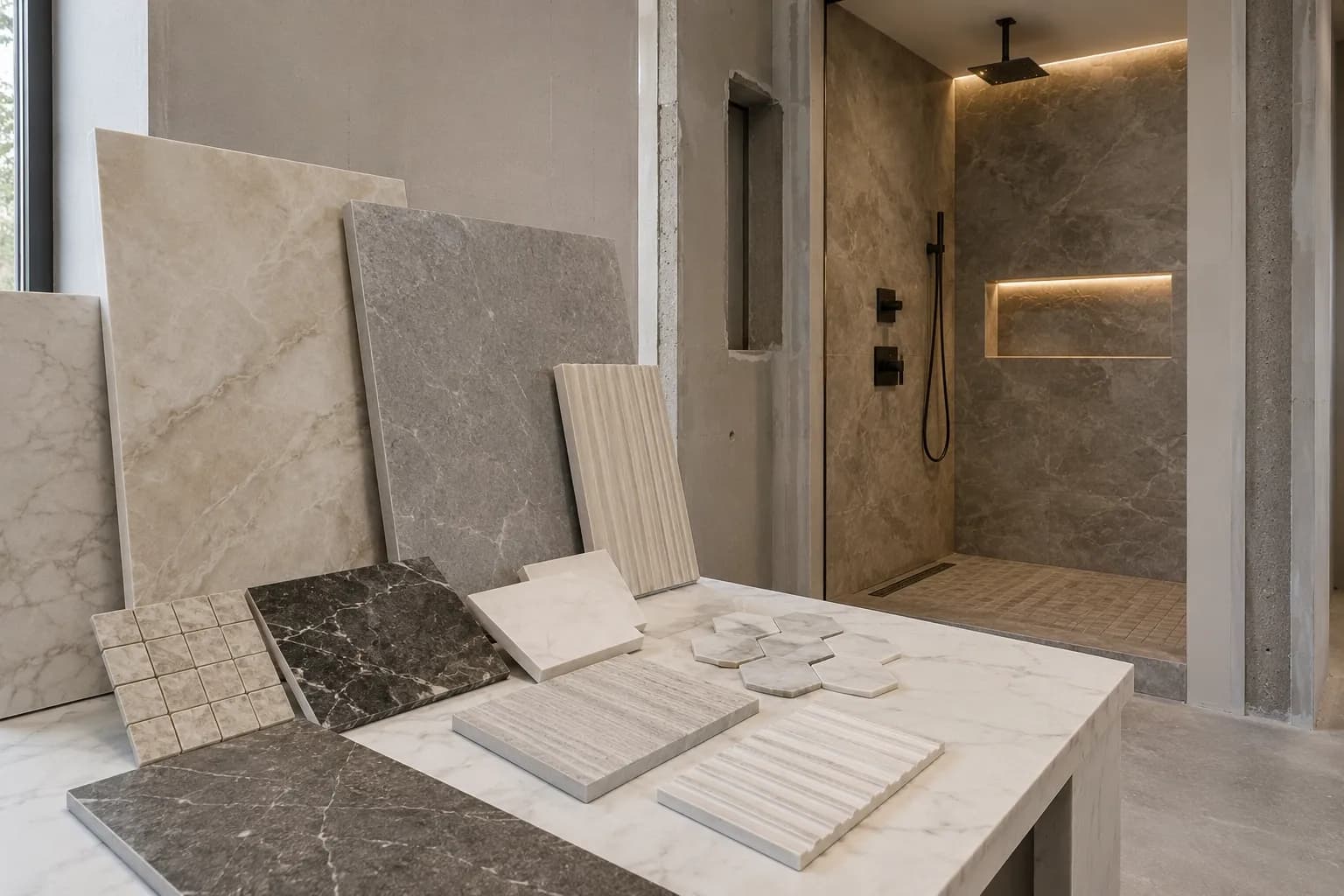
Selecting Shower Tile for Wet Areas
Tile should be selected according to its intended application. Porcelain and ceramic are common choices for shower surfaces, while natural stone can provide a distinctive appearance when properly selected and maintained.
Tile size also affects installation. Large-format tile creates a clean, modern look, while smaller formats can provide greater flexibility around curves and detailed areas.
For homeowners planning a contemporary bathroom, large-format porcelain surfaces can also influence the overall visual balance by reducing the number of visible joints.
Choosing Compatible Waterproofing Materials
Waterproofing products should work together as a complete system. Membranes, sealants, drains, and setting materials need to be compatible with the installation method.
Installers should follow the manufacturer's requirements rather than combining products without confirming compatibility.
Planning Tile and Waterproofing Together
The tile layout should be considered before waterproofing and installation are completed.
Niches, benches, drains, fixtures, and grout joints can all affect the final layout. Planning these details early helps create a cleaner finished design and reduces installation conflicts.
Material selection can also be influenced by current design preferences, including natural textures, larger formats, and decorative surfaces featured in today's luxury bathroom tile designs.
Why Professional Installation Makes a Difference
Waterproofing is hidden beneath the finished tile, so mistakes can be difficult to identify once the shower is complete.
Professional installation brings together substrate preparation, waterproofing, drainage, tile placement, and finishing details. This coordination becomes particularly important in custom showers with complex layouts.
An experienced installer should also understand the requirements of both the selected tile and waterproofing system. Discussing these details with the project team before installation can help avoid unnecessary changes later.
Conclusion
Professional shower waterproofing is a critical part of any custom shower tile installation. Tile provides the finished appearance, while waterproofing helps protect the structure beneath it from moisture.
Planning waterproofing, drainage, tile selection, and installation together can help create a shower that looks beautiful and performs reliably for years.
For homeowners planning a custom tile project, discussing the material and installation requirements early can make the process more straightforward. Bay Stone Depot's contact team can help with tile and surface selection for residential and commercial projects.