
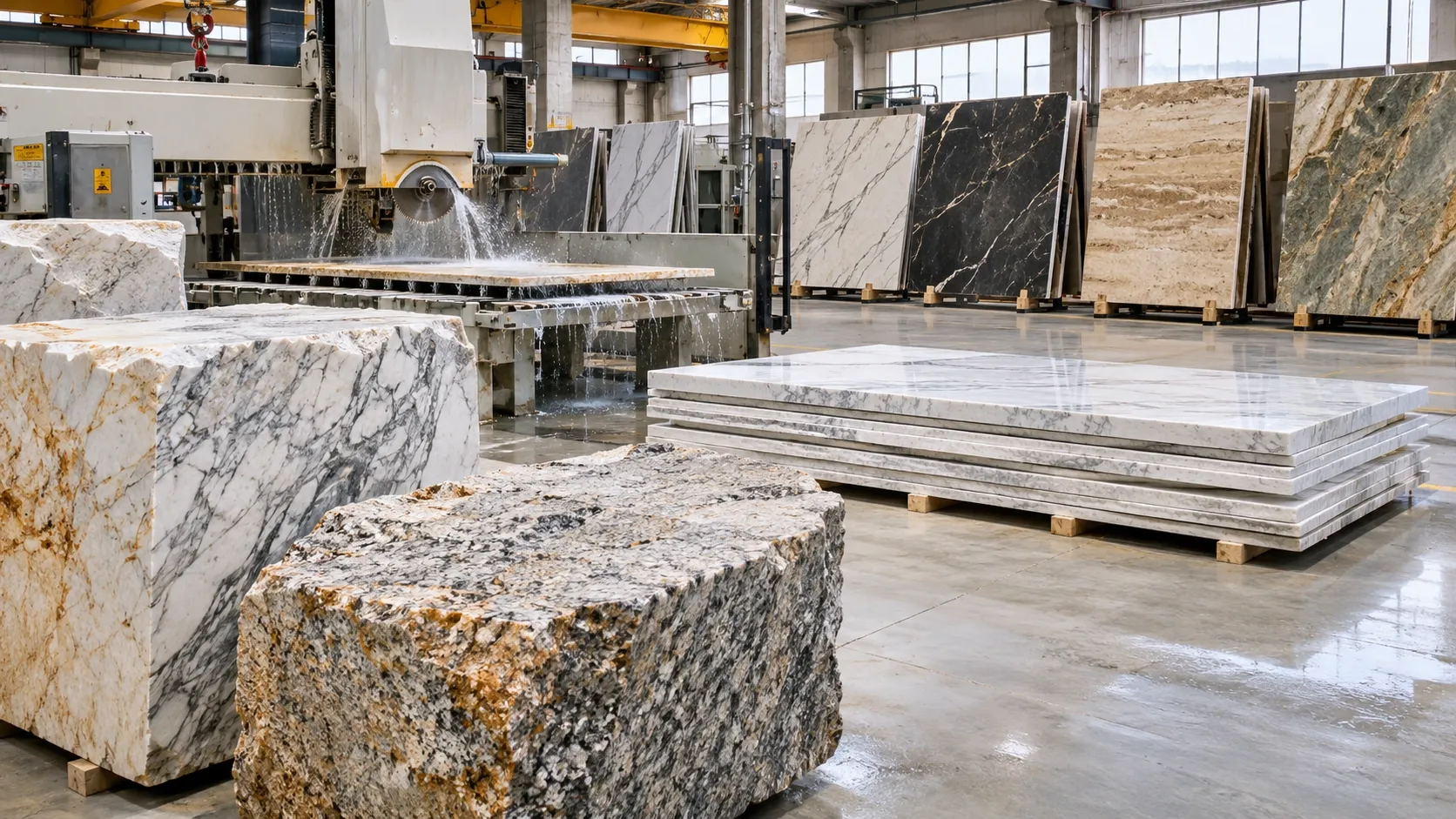
Stone Fabrication Process: From Raw Quarry Block to Finished Masterpiece
The stone fabrication process transforms large blocks of natural stone into finished surfaces for countertops, flooring, walls, and other applications. It includes quarry extraction, block preparation, slab cutting, polishing, inspection, and custom fabrication.
Each stage requires suitable equipment and skilled workmanship. Understanding this process helps homeowners, designers, and contractors choose materials and plan their projects more effectively.
What Is Stone Fabrication?
Stone fabrication involves cutting, shaping, and finishing stone to meet specific project requirements. It transforms raw materials into products such as kitchen countertops, bathroom vanities, backsplashes, and flooring.
Natural stone fabrication starts at the quarry. Large blocks are extracted and transported to processing facilities, where workers cut them into slabs and apply suitable finishes.
The process has two main stages:
- Stone processing: Turning quarry blocks into finished slabs through cutting, reinforcement, and polishing.
- Custom fabrication: Measuring, cutting, and shaping slabs for specific projects.
These stages may happen at different facilities. The equipment and techniques also depend on the stone type and its intended use.
Step by Step Stone Fabrication Process
The journey from quarry block to finished surface involves several stages. Each one affects the stone's appearance, quality, and suitability for its final application.
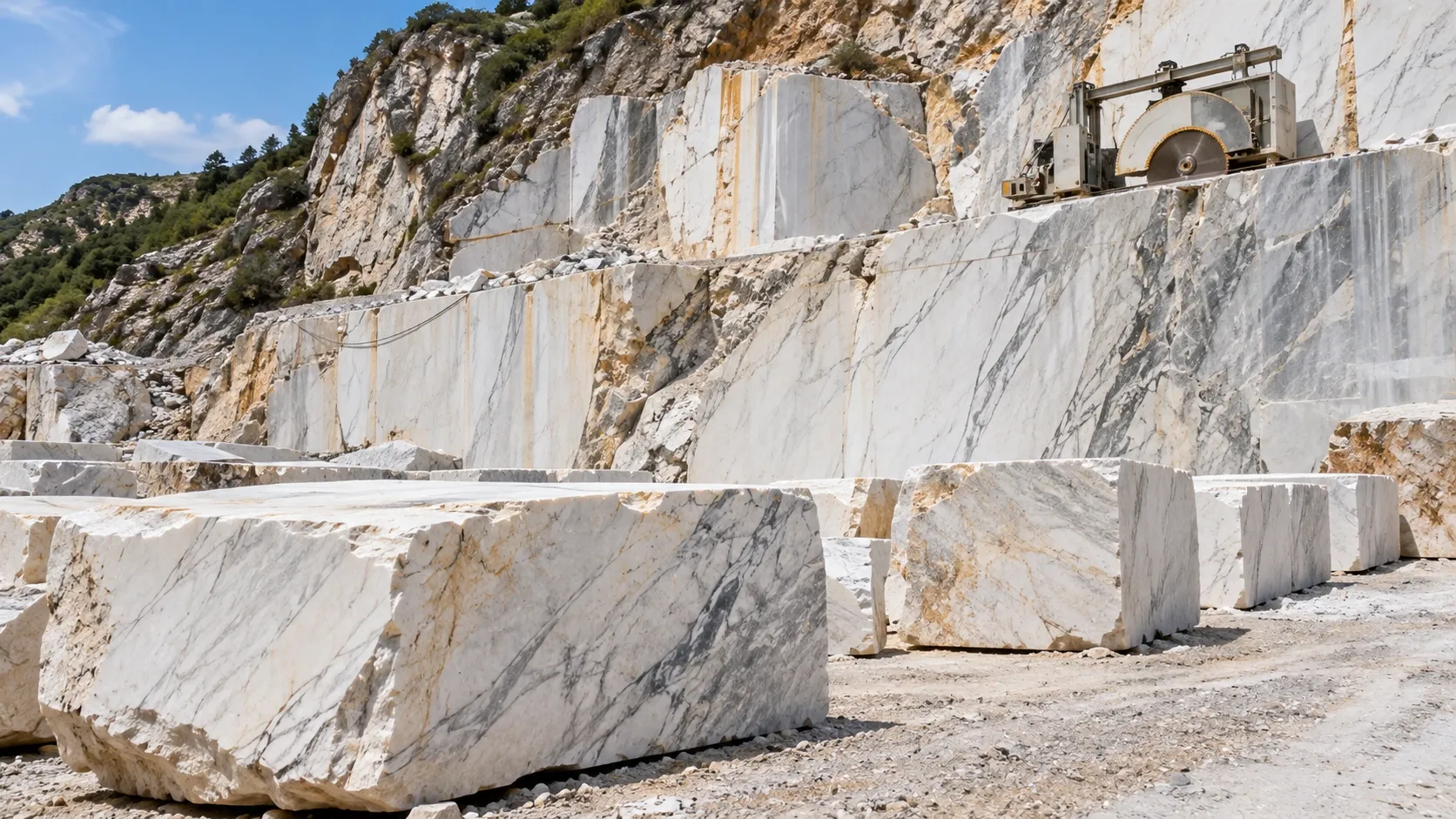
Step 1: Extracting Natural Stone from the Quarry
The process begins with selecting and extracting suitable stone from a quarry. Marble, granite, quartzite, and travertine form naturally over long geological periods. Their colors, patterns, and physical characteristics depend on their origins.
Quarry operators examine deposits for visible fractures, color consistency, and overall quality. Once they identify suitable stone, workers separate large blocks using specialized equipment.
Common extraction methods include:
- Diamond wire cutting: Separates large sections of rock using diamond-coated wire.
- Drilling: Creates holes to guide the separation process.
- Controlled splitting: Separates stone along selected planes using mechanical methods.
Careful extraction helps limit damage and preserve usable material.
Step 2: Transporting and Preparing Quarry Blocks
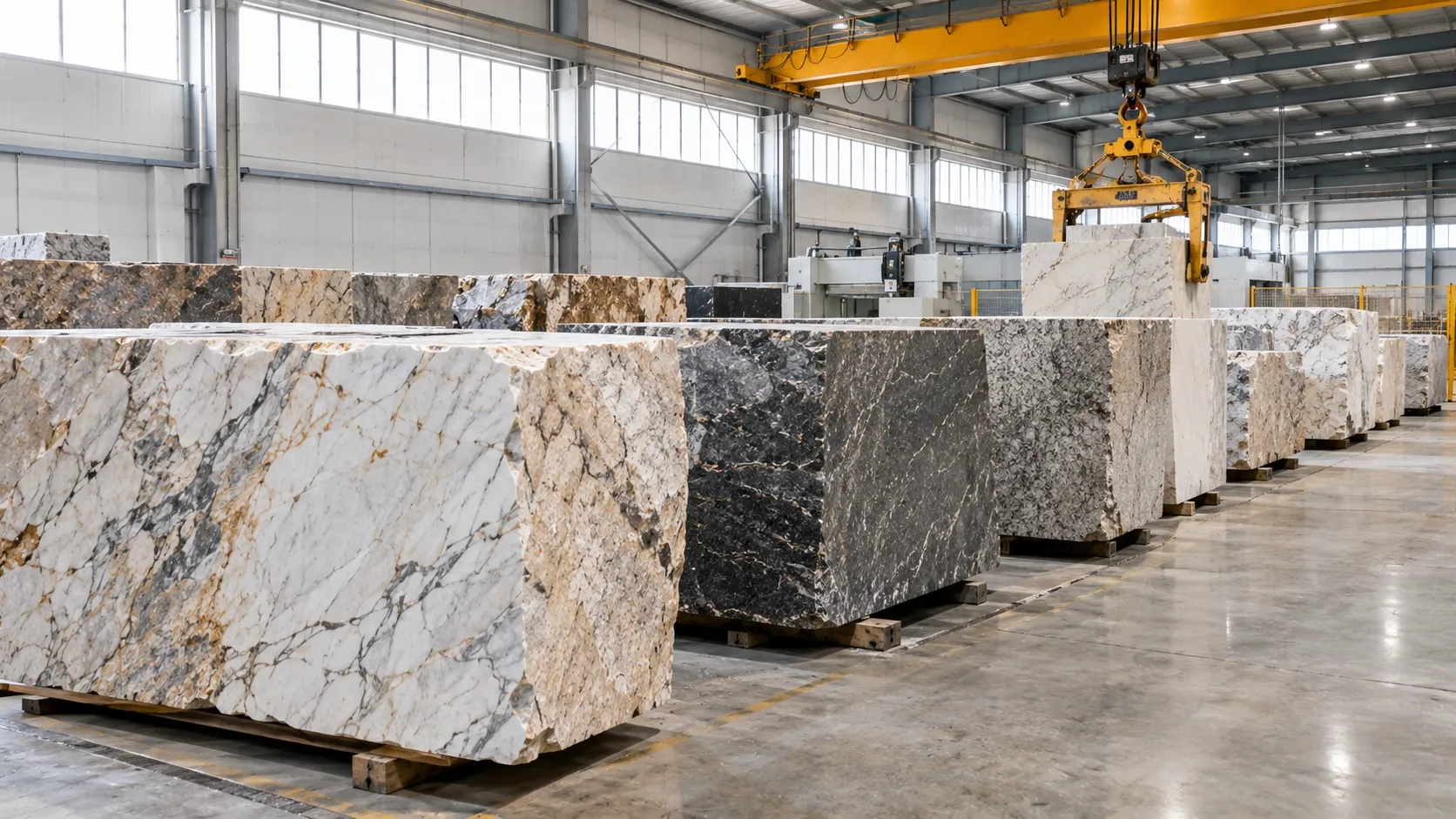
After extraction, large blocks are transported to processing facilities using specialized lifting and transportation equipment. Since these blocks can weigh several tons, proper support and secure loading are essential.
At the facility, workers inspect each block and remove irregular or damaged sections when necessary. They may also square the blocks to create more uniform shapes.
This preparation makes the blocks easier to position in cutting machines. It also helps processors plan slab dimensions and preserve attractive natural patterns.
Step 3: Cutting Stone Blocks into Slabs
Prepared blocks are cut into large, flat pieces called slabs. This stage determines slab thickness, dimensions, and how natural veining appears across the surface.
Common cutting equipment includes:
- Gang saws: Cut large blocks into multiple slabs.
- Diamond wire saws: Use diamond-coated wire to cut through hard stone.
- Bridge saws: Make precise cuts in slabs and smaller pieces.
- Waterjet machines: Use high-pressure water, often with abrasive material, for detailed cutting.
Slab thickness depends on the intended application. Countertops, flooring, and wall cladding may require different specifications.
Cutting direction also affects the appearance of natural stone. Careful planning helps preserve distinctive colors and veining.
Step 4: Reinforcing and Calibrating Stone Slabs
Some slabs need additional treatment after cutting. Natural stone may contain small fissures, pores, and other imperfections that require attention before finishing.
Processors may apply resin or suitable fillers to selected areas. This helps fill small openings and stabilize certain fissures. Some slabs also receive mesh backing when additional support is needed.
Not every slab requires reinforcement. The treatment depends on the stone's condition and intended use.
Calibration involves grinding uneven areas to achieve a more consistent thickness. This prepares the slab for surface finishing and further fabrication.
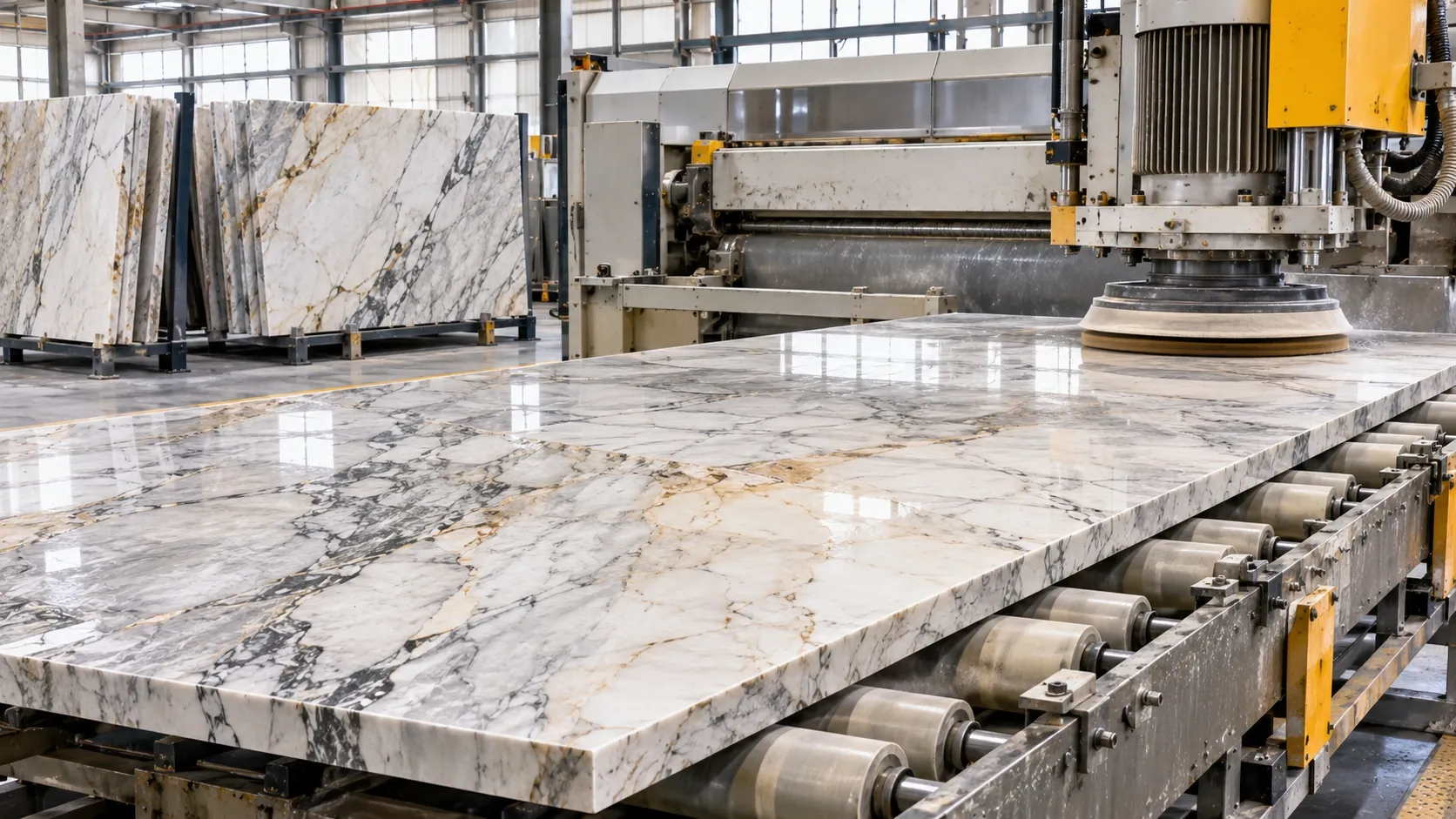
Step 5: Polishing and Applying Surface Finishes
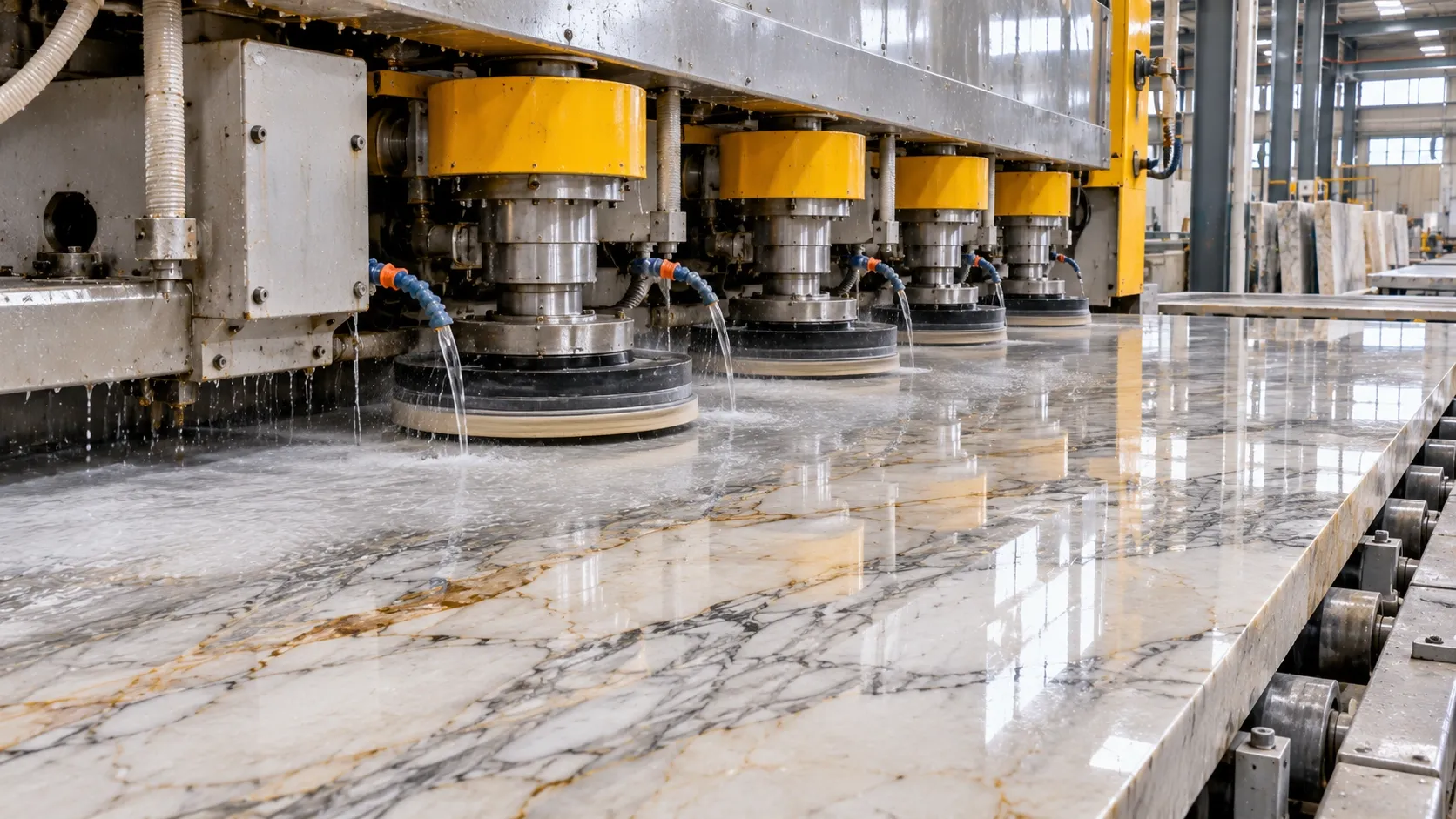
Surface finishing improves the stone's appearance and creates its final texture. The polishing process typically uses abrasive pads and grinding equipment to refine the surface.
Common finishes include:
- Polished: Creates a smooth, reflective surface that highlights color and veining.
- Honed: Produces a smooth, matte appearance.
- Leathered: Creates a textured surface with a soft sheen.
- Brushed: Uses mechanical brushing to create a textured finish.
The right finish depends on the material, design preferences, and intended application. Granite, marble, and quartzite may respond differently to finishing techniques.
Step 6: Inspecting and Grading Finished Slabs
Finished slabs undergo quality inspection before distribution or custom fabrication. This stage helps identify surface defects, dimensional problems, and finishing inconsistencies.
Inspectors typically check:
- Surface smoothness and finish quality.
- Slab thickness and dimensions.
- Visible cracks, chips, and filled areas.
- Natural color variations and veining.
- Imperfections that may affect appearance or use.
Natural stone contains variations in color and pattern. These differences are normal and should not automatically be treated as defects.
Grading helps suppliers classify slabs according to their condition and appearance. Buyers can then review the actual material before making a selection.

Step 7: Preparing Stone Slabs for Custom Projects
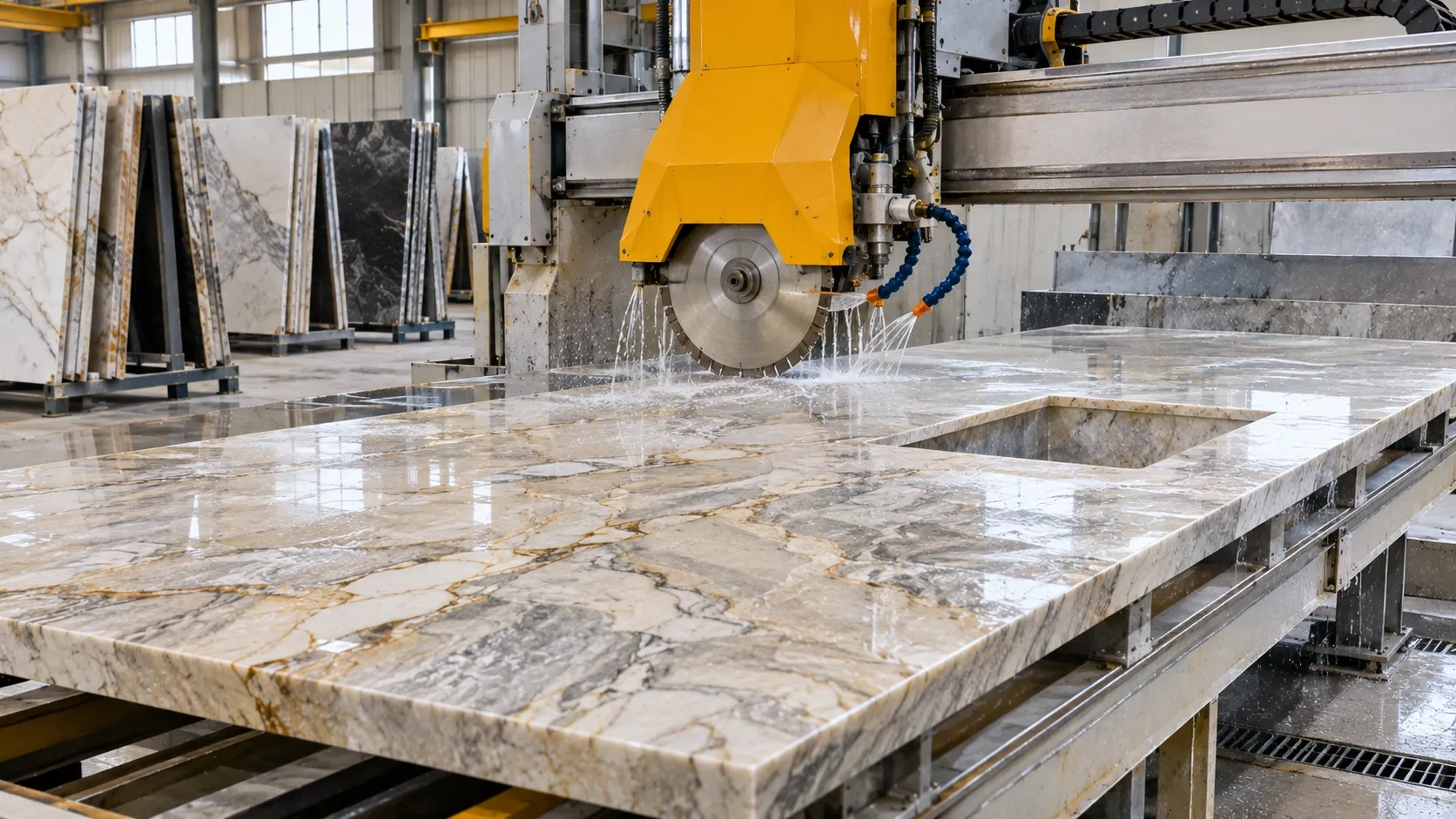
Once a slab is selected, custom fabrication begins. Fabricators measure the project and plan how to cut the material to match the required dimensions.
Digital templating helps capture accurate measurements. CNC machines follow programmed instructions, while waterjet systems handle detailed shapes and openings.
Common fabrication tasks include:
- Cutting countertops and surfaces to size.
- Creating sink and cooktop openings.
- Shaping decorative or straight edges.
- Preparing backsplash and wall pieces.
- Planning seams and matching visible patterns.
Edge profiles such as eased, bevel, bullnose, and ogee also influence the finished appearance.
Careful layout is especially important when working with distinctive natural veining.
Step 8: From Fabricated Stone to Final Installation
After cutting and shaping, stone components receive final checks before installation. Fabricators inspect dimensions, finish exposed edges, and prepare seams where multiple pieces meet.
The pieces are then carefully packaged and transported to the project site. Installers position each component, check alignment, and complete the required connections.
For countertops, this may involve aligning sink and cooktop openings, joining sections, and sealing the surface when appropriate.
The installation process depends on the material, design, and site conditions. Accurate measurements and good coordination help prevent fitting problems.

What Factors Affect the Quality of Stone Fabrication?
Several factors influence the quality of a finished stone surface:
- Stone selection: Different materials have different hardness levels, patterns, and natural characteristics.
- Cutting accuracy: Poor measurements can cause fitting problems and material waste.
- Surface preparation: Proper grinding and finishing create a consistent appearance.
- Equipment: Suitable saws and CNC machines support accurate processing.
- Workmanship: Skilled professionals manage natural variations, edges, and seams.
- Installation: Proper measurements, support, and placement affect the final result.
How Modern Technology and Skilled Craftsmanship Work Together
Modern stone fabrication combines computer-controlled equipment with hands-on expertise. Digital tools improve measurements and cutting accuracy, while skilled workers make important decisions about the material.
Digital templating captures project dimensions. CNC machines produce programmed cuts, and waterjet equipment creates detailed shapes and openings.
However, technology cannot replace the judgment needed to work with natural stone. Fabricators still assess veining, slab condition, and potential weak points.
Careful planning also helps reduce the visibility of countertop seams. Their final appearance depends on the stone's pattern, color, and layout. These techniques for managing countertop seams explain some of the considerations involved.
Conclusion
The stone fabrication process involves more than cutting a block into a slab. It includes extraction, transportation, processing, polishing, inspection, custom cutting, and installation.
Every stage affects the finished surface. Understanding these steps helps homeowners and contractors make informed decisions about materials, finishes, and project requirements.
If you are planning a stone surface project, start by selecting a suitable material and discussing your design with a qualified supplier. You can explore available options at Bay Stone Depot in San Jose.