
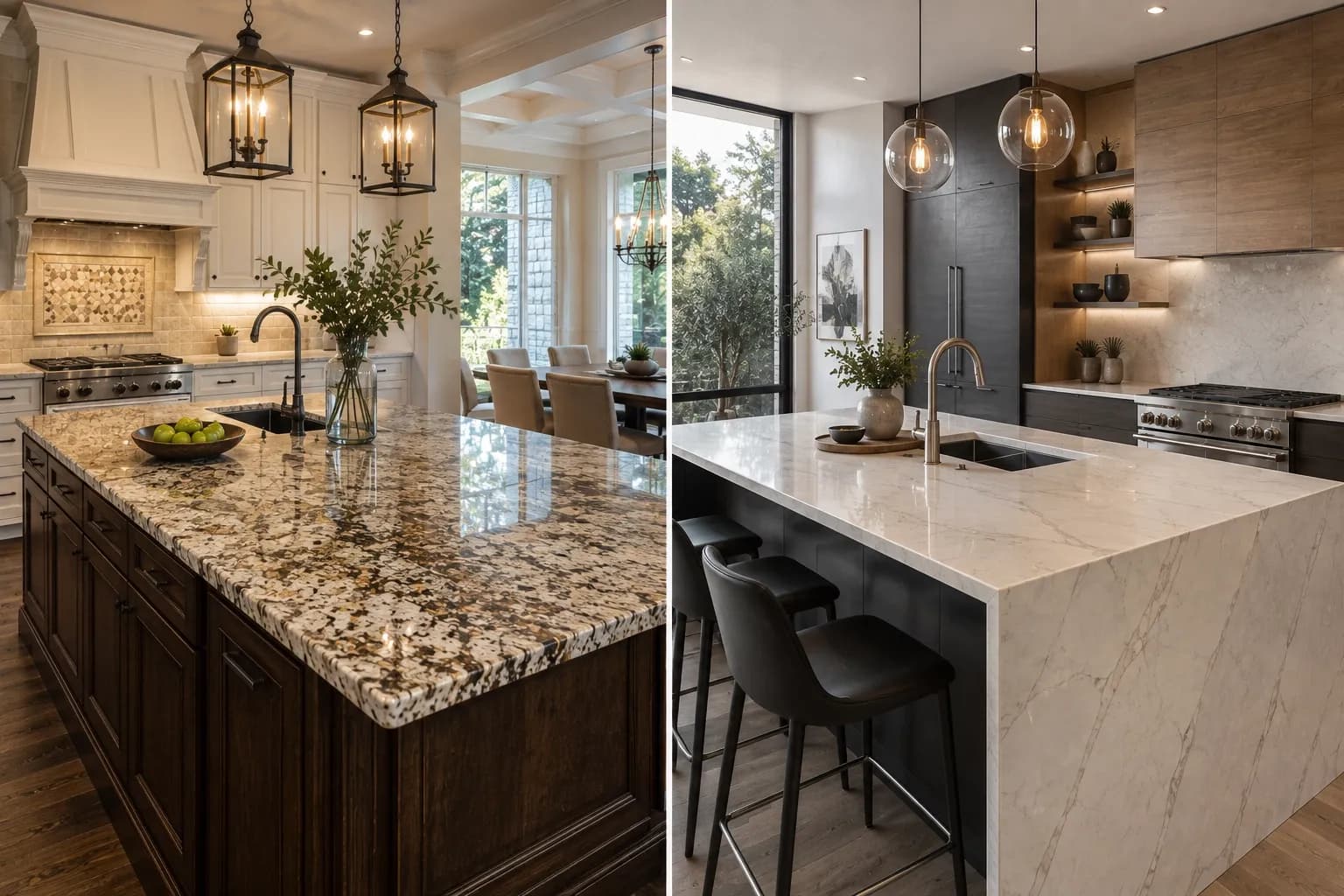
Granite vs Quartz: A Comprehensive Cost and Durability Guide
Choosing between Granite vs Quartz depends on your priorities, budget, and lifestyle. Granite offers natural beauty and excellent heat resistance, while quartz provides a low-maintenance surface with consistent patterns and strong stain resistance. Both are durable countertop materials, but each has advantages that make it better suited for different applications.
If you're planning a kitchen or bathroom renovation, understanding the differences between granite and quartz can help you make a confident investment. This guide compares their costs, durability, maintenance needs, and overall value, so you can determine which material is the right fit for your home or commercial project.
What Is Granite?
Granite is a natural stone formed deep beneath the Earth's surface through the slow cooling of molten rock. This natural process creates a dense, durable material with distinctive mineral patterns that cannot be exactly duplicated.
Every granite slab is unique. Variations in color, veining, and texture make it a popular choice for homeowners, designers, and architects looking for one-of-a-kind surfaces. Because it is quarried directly from nature, granite brings authentic character to kitchens, bathrooms, fireplaces, and other interior spaces.
Granite countertops are known for their strength and ability to withstand daily use. When properly sealed, they resist stains and moisture while maintaining their appearance for many years.
Common benefits of granite countertops include:
- Unique natural patterns and colors
- Excellent heat resistance
- High scratch resistance
- Long lifespan with proper care
- Strong resale appeal for many homes
At Bay Stone Depot, customers can explore a wide selection of premium granite slabs sourced from leading quarries around the world, making it easier to find a stone that complements any design style.
What Is Quartz?
Unlike granite, quartz countertops are engineered surfaces made by combining natural quartz minerals with resins and pigments. This manufacturing process creates a durable, non-porous surface that offers a consistent appearance across every slab.
Quartz has become increasingly popular because it requires very little maintenance while delivering excellent durability. Since it is non-porous, it does not require regular sealing like natural stone.
Another advantage is design flexibility. Quartz is available in a wide range of colors and patterns, including styles that resemble marble, concrete, or natural stone. This consistency is especially valuable for large kitchen islands or projects where matching multiple slabs is important.
Some key advantages of quartz countertops include:
- Non-porous surface
- Excellent stain resistance
- Low maintenance
- Wide variety of colors and finishes
- Consistent patterns throughout each slab
Bay Stone Depot offers an extensive collection of quartz surfaces from trusted manufacturers, helping homeowners and design professionals select materials that match both modern and traditional spaces.
Granite vs Quartz Cost Comparison
Price is often one of the biggest deciding factors when choosing countertop materials. However, comparing granite vs quartz cost involves more than simply looking at the price per square foot. Material selection, fabrication complexity, installation requirements, and long-term maintenance all contribute to the total investment.
Material Costs
The cost of granite countertops varies because every slab is naturally unique. Factors such as rarity, color, country of origin, thickness, and pattern all influence pricing. Exotic granite with dramatic veining generally costs more than widely available varieties.
Quartz countertop cost also depends on the manufacturer, design, finish, and slab size. Premium brands and designer collections typically carry higher prices than standard options.
In many projects, granite and quartz fall within similar price ranges. Rather than assuming one is always less expensive, it's best to compare specific materials based on your design goals and budget.
If you're still exploring different countertop materials, check the guide to Quartz vs Natural Stone provides additional insights into how these surfaces compare in both appearance and performance.
Fabrication and Installation Costs
Installation costs depend on more than the material itself. The complexity of your project plays a significant role in the final price.
Several factors can affect fabrication and installation costs:
- Kitchen or bathroom size
- Number of sink and faucet cutouts
- Edge profile selection
- Waterfall edges or full-height backsplashes
- Appliance openings
- Seam placement
- Custom shapes and corner details
Both granite and quartz require professional fabrication using specialized equipment. Accurate measuring, precision cutting, polishing, and installation are essential to achieving a high-quality finished surface.
Projects with custom layouts or intricate edge designs generally require additional labor regardless of which countertop material you choose.
Homeowners interested in the installation process can also learn what to expect by reading guide on the granite and quartz countertop installation timeline.
Long-Term Value and Return on Investment
While the initial purchase price matters, long-term value should also influence your decision.
Granite has remained a desirable countertop material for decades because of its natural appearance and lasting durability. Well-maintained granite countertops can continue looking beautiful for many years, making them an attractive feature for future buyers.
Quartz also delivers excellent long-term value thanks to its durability and minimal maintenance requirements. Homeowners who prefer a countertop that rarely needs additional care often find quartz to be a practical investment.
Instead of focusing only on upfront costs, consider the total ownership experience. A countertop that matches your lifestyle, complements your home's design, and performs well over time often provides greater value than choosing solely based on initial price.
Granite vs Quartz Durability Comparison
Durability is one of the most important factors when comparing Granite vs Quartz. Both materials are built to handle everyday use, but they perform differently under heat, impact, stains, and long-term wear. Understanding these differences can help you choose a countertop that matches your lifestyle and the demands of your space.
Resistance to Scratches and Chips
Both granite and quartz are highly durable countertop materials, making them suitable for busy kitchens and commercial environments.
Granite is an extremely hard natural stone that resists scratches from normal daily activities. Cutting directly on the surface is not recommended, but routine food preparation is unlikely to damage it. However, because granite is a natural material, strong impacts on corners or edges may cause small chips.
Quartz countertops are also highly resistant to scratches thanks to their engineered composition. The resins used during manufacturing add flexibility, which can help reduce the risk of chipping compared to some natural stone surfaces. Even so, dropping heavy cookware on an edge can still cause damage.
For either material, using cutting boards and avoiding heavy impacts will help preserve the countertop's appearance for years.
Heat Resistance
Heat resistance is one area where granite often has an advantage.
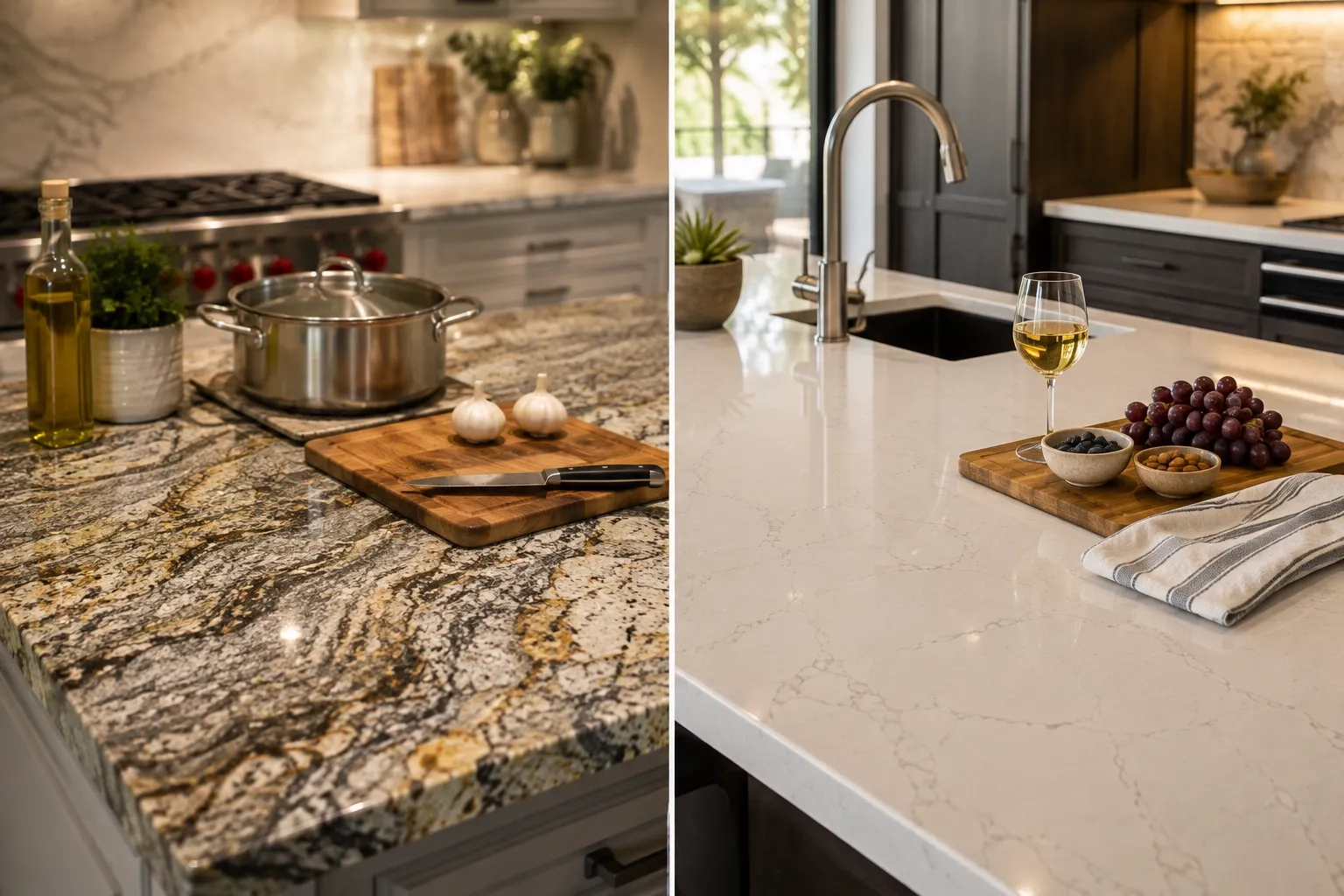
Since granite forms naturally under extreme temperatures, it handles heat very well. Hot pots and pans are generally less likely to damage the surface, although using trivets remains a good practice to protect the countertop's finish and maintain its long-term appearance.
Quartz is also durable, but it contains resins that can be affected by excessive heat. Placing extremely hot cookware directly on the surface may lead to discoloration or thermal damage over time.
If your kitchen involves frequent cooking with hot cookware, granite may provide additional peace of mind. However, regardless of the material you choose, using heat pads or trivets is always recommended.
Stain and Moisture Resistance
Both materials perform well against stains, but they achieve this in different ways.
Granite is naturally porous, which means it should be sealed periodically to reduce moisture absorption and improve stain resistance. When properly sealed, granite countertops can withstand everyday spills from coffee, wine, cooking oils, and other common kitchen ingredients.
Quartz offers a naturally non-porous surface because of its engineered manufacturing process. Liquids remain on the surface rather than soaking into the material, making quartz particularly easy to clean and maintain.
Whether you choose granite or quartz, wiping spills promptly is still the best practice to keep countertops looking their best.
Lifespan and Everyday Performance
Both granite and quartz are considered long-term investments that can provide decades of reliable performance with proper care.
Granite has been used in homes and commercial buildings for generations because of its exceptional durability and timeless appearance. When maintained correctly, it continues to perform well even in high-traffic environments.
Quartz also offers impressive longevity. Its consistent composition helps it resist everyday wear, making it an excellent choice for families seeking a low-maintenance countertop that retains its appearance over time.
Ultimately, the best option depends on your priorities:
- Choose granite if you value natural beauty, exceptional heat resistance, and one-of-a-kind patterns.
- Choose quartz if you prefer easy maintenance, strong stain resistance, and a consistent design.
Maintenance Requirements for Granite and Quartz
Maintenance is another key consideration in the Granite vs Quartz comparison.
Granite requires periodic sealing to help protect its naturally porous surface from moisture and stains. The frequency depends on the specific stone and how heavily the countertop is used. Regular cleaning with a pH-neutral stone cleaner helps preserve both the finish and protective seal.
Quartz is generally easier to maintain because it does not require sealing. Routine cleaning with mild soap, water, or a manufacturer-approved cleaner is usually enough to keep the surface looking clean.
Regardless of which material you select, a few simple habits can extend the life of your countertops:
- Clean spills as soon as possible.
- Avoid abrasive cleaners and harsh chemicals.
- Use cutting boards instead of cutting directly on the surface.
- Place hot cookware on trivets or heat pads.
- Avoid dropping heavy objects on countertop edges.
Following these basic maintenance practices helps both granite and quartz maintain their beauty for many years.
Appearance and Design Options
Appearance often becomes the deciding factor after homeowners compare granite vs quartz cost and durability.
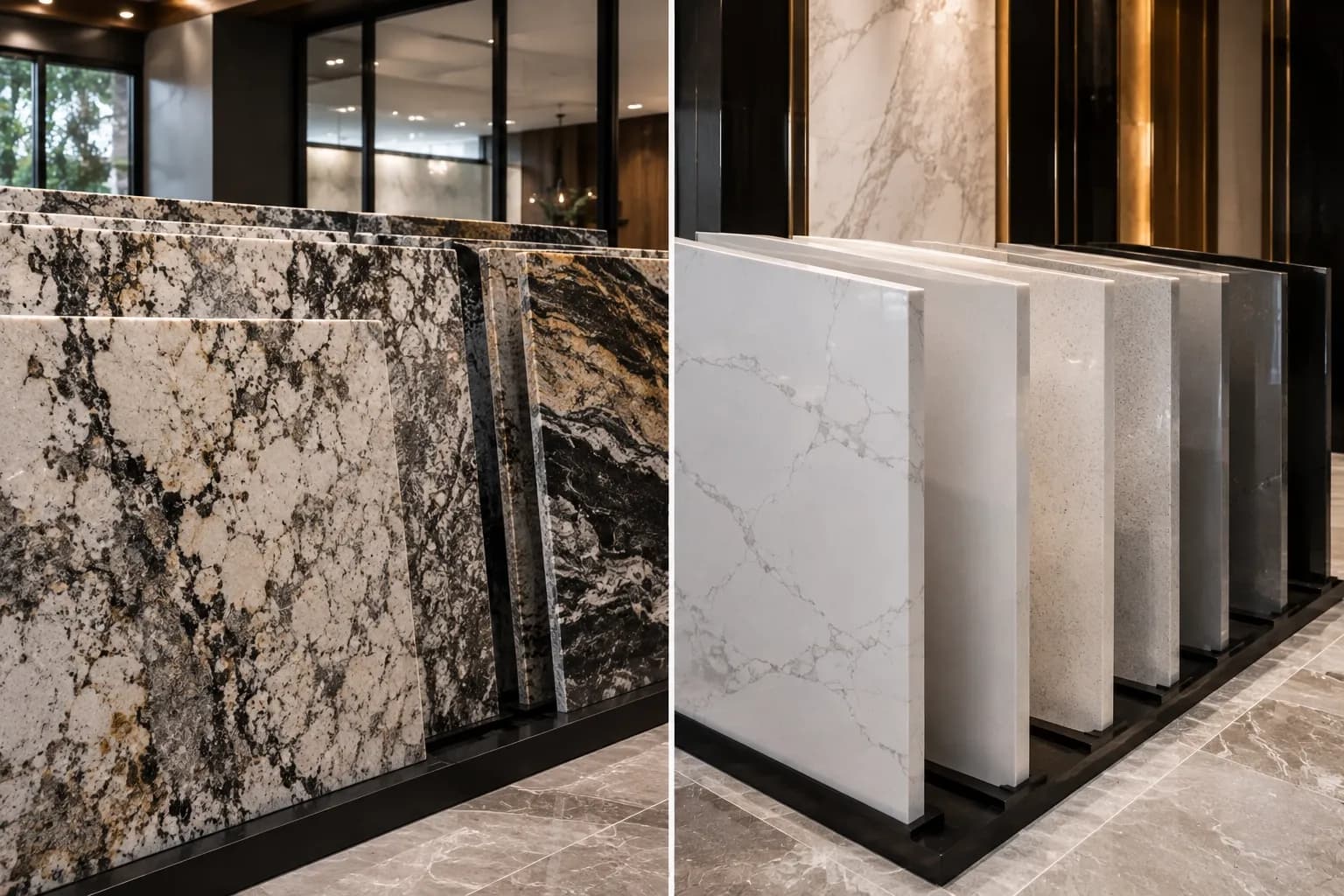
Granite showcases the beauty of nature. Every slab features unique veining, mineral movement, and color variations that cannot be replicated. This individuality makes granite a favorite for homeowners who want a countertop that serves as the focal point of their kitchen or bathroom.
Quartz offers a different advantage: consistency. Because it is engineered, manufacturers can create uniform colors and patterns across multiple slabs. This makes quartz especially appealing for contemporary interiors, large kitchen islands, and projects requiring a seamless appearance.
Both materials are available in a wide range of finishes, edge profiles, and colors, allowing them to complement traditional, transitional, and modern design styles.
If you're comparing quartz with other premium countertop materials, Checkout these helpful guides on Marble vs Quartzite Kitchen Countertops and Quartz vs Quartzite Countertops to help you make a more informed decision.
The best way to appreciate the differences between granite and quartz is to view full slabs in person. Natural lighting, surface finishes, and large-format displays reveal details that are difficult to evaluate through small samples alone.
Which Material Is Better for Different Spaces?
The right countertop material depends on where it will be installed and how the space is used. While both granite and quartz offer excellent durability, certain environments may benefit more from one material than the other.
Kitchen Countertops
Kitchens experience constant activity, from meal preparation to entertaining guests. Countertops in this space must withstand daily wear while complementing the overall design.
Granite countertops are an excellent choice for homeowners who appreciate natural stone and frequently cook with hot pots and pans. Their unique patterns make every kitchen feel distinctive.
Quartz countertops are ideal for busy households that prioritize easy maintenance. Their non-porous surface resists everyday stains and simplifies cleaning, making them a practical option for families with active lifestyles.
Bathroom Vanities
Bathrooms require surfaces that can handle moisture, cosmetics, soap, and frequent cleaning.
Quartz performs particularly well in bathroom vanities because its non-porous surface resists moisture and requires minimal maintenance. It also offers consistent colors that pair well with modern bathroom designs.
Granite is equally suitable for bathrooms when properly sealed. Its natural movement and rich textures create an elegant, high-end appearance that enhances both traditional and contemporary spaces.
If you're planning a complete bathroom renovation, Checkout the 2026 Bathroom Tile Trends that offers additional inspiration for creating a cohesive design.
Commercial Applications
Both granite and quartz are commonly used in commercial settings such as offices, restaurants, hotels, retail spaces, and reception areas.
Granite is often selected for statement installations where natural beauty and durability are priorities.
Quartz is frequently chosen for commercial projects that require a consistent appearance across large installations while minimizing ongoing maintenance.
The best commercial solution depends on the project's design goals, traffic levels, and maintenance expectations.
Granite vs Quartz Pros and Cons
Comparing the advantages and limitations of each material can make your decision easier.
Granite | Quartz |
|---|---|
Natural stone with one-of-a-kind patterns | Engineered surface with consistent colors and designs |
Excellent heat resistance | Excellent stain resistance |
Highly scratch resistant | Highly scratch resistant |
Requires periodic sealing | No sealing required |
Each slab is unique | Uniform appearance across slabs |
Adds natural character to any space | Low-maintenance and easy to clean |
There is no universal winner in the Granite vs Quartz debate. The better choice depends on your budget, maintenance preferences, design style, and how you use the space.
Conclusion
When comparing Granite vs Quartz, both materials offer exceptional performance, lasting durability, and timeless appeal. Granite stands out for its natural beauty, distinctive patterns, and impressive heat resistance. Quartz, on the other hand, provides outstanding stain resistance, minimal maintenance, and a consistent appearance that suits many modern interiors.
Whether you're remodeling a kitchen, upgrading a bathroom, or planning a commercial project, Bay Stone Depot offers an extensive selection of premium natural stone and engineered surfaces to help you find the right fit. Browse the collection online or contact the team to schedule a visit and receive expert guidance for your next project.